Drug Safety Scientist Salary and Qualifications US: Why Your CRA Applications Are Failing (and the Aggregate Reporting Alternative)

Drug Safety Scientist — In the US, drug safety scientist salary and qualifications us benchmarks sit at $95,000–$130,000 per year for aggregate reporting roles. Employers require a life sciences, PharmD, or MPH degree, 2–4 years of pharmacovigilance experience, MedDRA coding, Argus Safety proficiency, and hands-on PBRER, DSUR, and signal detection work.
If you have sent 150+ applications for CRA I and CRC roles and heard nothing back, you are not unqualified. You are aimed at the wrong door.
Public Health and Health Informatics graduates keep flooding monitoring and site-coordination postings that draw 600+ applicants each. Meanwhile, drug safety scientist salary and qualifications us data points to a quieter lane with fewer competitors, faster promotions, and far less travel.
Build These Skills Now
Programs from ZANE ProEd Academy that directly address the skill gaps discussed above.
This is a comparison, not a pep talk. Pay bands, tools, regulatory citations, and what US recruiters actually screen for — side by side.
What Is the Drug Safety Scientist Salary and Qualifications US Employers Really Want?
A Drug Safety Scientist owns the science layer of pharmacovigilance: aggregate reports, signal evaluation, and the written benefit-risk narrative. It is not individual case intake.
That distinction is what drives the pay gap most job seekers never see.
- Safety Associate (entry): $65,000–$85,000
- Drug Safety Scientist: $95,000–$130,000
- Senior or Principal Scientist: $130,000–$165,000
- Top-paying hubs: Boston, San Diego, Research Triangle Park, Philadelphia, South San Francisco
Cost of living matters, but the differential follows role scope, not zip code. A Scientist in RTP can out-earn an Associate in Boston.
What qualifications do you need to be a Drug Safety Scientist?
US postings converge on four qualification buckets. Most candidates fail because they only have the first one.
- Education: BS or BA in biology, biochemistry, nursing, pharmacy, or public health. MPH and health informatics degrees are strong for the analytics side. Epidemiology coursework aligned with NIH frameworks helps.
- Experience: 2–4 years in pharmacovigilance, clinical research, or regulatory affairs. Bench lab time is never counted as equivalent.
- Tooling: Argus Safety or ARISg for case processing, MedDRA and WHO Drug coding, Veeva Vault for submissions, SAS or Power BI for data review.
- Regulatory literacy: ICH E2A, E2B(R3), E2C(R2), E2D, E2E plus FDA 21 CFR 312.32 and 314.80.
Read the primary texts directly at ICH.org and FDA.gov. Interviewers quote those guidelines verbatim, and they expect you to quote them back.
What is the salary difference between a Safety Associate and a Safety Scientist?
Roughly $25,000–$45,000 in base pay at the same company. The gap is not seniority — it is report ownership.
- Safety Associate: processes ICSRs, performs triage, codes events, drafts MedWatch 3500A forms, and meets 15-day and 7-day timelines.
- Safety Scientist: authors PBRER and DSUR sections, runs signal detection, writes benefit-risk analysis, and defends the safety narrative to regulators.
Associates who stay on pure case intake plateau near $85,000. Associates who learn aggregate writing cross $100,000 within one move.
For the step-by-step route, read our entry-level drug safety associate jobs USA roadmap.
What are aggregate safety reports like PBRER and DSUR?
These are the deliverables that define the PBRER DSUR safety scientist role. They are scheduled, cumulative, and audited.
- DSUR (Development Safety Update Report): governed by ICH E2F. An annual report during clinical development covering the investigational drug's global safety profile.
- PBRER and PSUR: governed by ICH E2C(R2). Periodic benefit-risk evaluation after approval, including line listings, exposure data, signal summaries, and a benefit-risk conclusion.
- PADER: the US-specific periodic adverse drug experience report under 21 CFR 314.80.
A scientist assembles the safety sections, reconciles line listings against the global safety database, and writes the integrated analysis.
Understanding how ClinicalTrials.gov records feed the DSUR safety update cycle is a genuinely differentiating skill in interviews.
How do PharmD graduates enter drug safety and signal detection?
PharmD graduates carry the pharmacology depth employers want for the PharmD to drug safety scientist career path. What they usually lack is database and analytics proof.
Signal detection pharmacovigilance jobs screen for disproportionality methods and the tools that run them:
- PRR — proportional reporting ratio
- ROR — reporting odds ratio
- EBGM — empirical Bayes geometric mean
- Platforms: Empirica Signal, ArisGlobal, Oracle Argus, SAS, R
Entry routes include Safety Associate at a CRO, PV Scientist I at a mid-size biotech, or a safety surveillance fellowship. A credential from ACRP adds a signal of seriousness, but it never replaces documented output.
What does an FDA safety audit evaluate in pharmacovigilance?
An FDA inspection under 21 CFR 312.32 or 314.80 tests whether your clinical safety surveillance US system is documented, traceable, and timely.
- Serious unexpected suspected adverse reaction reports filed within 15 calendar days
- 7-day expedited reports for fatal or life-threatening cases
- Reconciliation between clinical and postmarketing safety databases
- Signal logs with documented evaluation and follow-up actions
- Aggregate report submission dates and version control
- Staff training records and SOP currency
FDA conducts hundreds of GCP and pharmacovigilance inspections each year. Most citations point to documentation failures, not scientific failures.
If you cannot describe the report you wrote, the date you submitted it, and the SOP you followed, you will not survive the interview let alone an audit.
Why Do MPH and Health Informatics Graduates Get Screened Out of Drug Safety Roles?
Because graduate programs teach population health, and pharmacovigilance employers hire on deliverables. The mismatch is specific and brutal.
- Degree teaches: epidemiology, biostatistics, health data standards, study design.
- Employer expects: a completed PBRER section, a signal evaluation memo, an Argus case with correct MedDRA coding.
- Degree teaches: regulatory frameworks at policy level.
- Employer expects: you to defend an E2C(R2) benefit-risk conclusion live in an interview.
No hiring manager will train you on the job for work you claimed you could already do. That is the exact gap behind 150 silent applications.
How Do You Break Into Drug Safety in 3–6 Months?
- Weeks 1–3: Choose one sub-track — aggregate reporting or signal detection. Learn ICH E2C(R2), E2F, and E2D cold.
- Weeks 4–8: Build tool fluency. Practice Argus Safety ICSR processing, MedDRA coding, and one complete DSUR draft.
- Weeks 9–14: Produce portfolio artifacts — a PBRER line-listing review, a PRR and ROR signal analysis, and a benefit-risk summary.
- Weeks 15–20: Rewrite your resume around deliverables and metrics instead of duties. Two pages maximum.
- Weeks 21–26: Target CROs and mid-size biopharma in Boston, RTP, and San Diego, plus remote CRO postings. Apply to Safety Associate and PV Scientist I titles in the same cycle.
Why Is a Simulation-Built Portfolio More Convincing Than a Degree Alone?
Recruiters reject on skill gaps, not effort. A portfolio answers the only question that decides the hire: can you produce the artifact?
Simulation-based learning reproduces the real workflows — Argus Safety case processing, Veeva Vault submissions, Medidata Rave EDC review, and FDA 21 CFR-compliant documentation. You finish with verifiable work you can walk an interviewer through, screen by screen.
That is the bridge from silence to a shortlist call.
Build These Skills Now
Programs from ZANE ProEd Academy that directly address the skill gaps discussed above.
Which Professional Certifications Close the Drug Safety Qualification Gap?
ZANE ProEd Academy is a professional career-certification platform built around industry-grade simulation toolkits rather than lectures. Programs are structured for working graduates who need documented proof, not more theory.
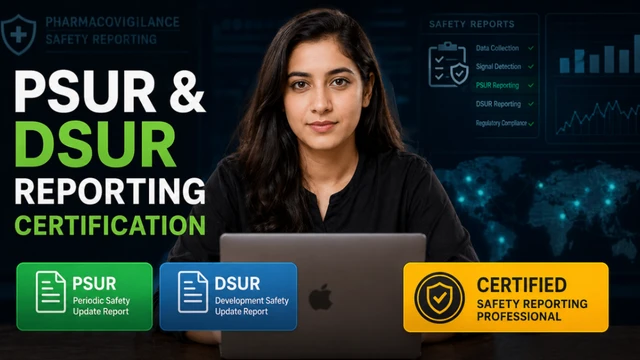
- PSUR and DSUR Reporting Certification: aggregate report architecture, line-listing reconciliation, benefit-risk narrative drafting, and submission-ready documentation practices.
- Pharmacovigilance Signal Detection with AI: PRR, ROR, and EBGM computation, case-series review, and AI-assisted screening — the exact skills listed in today's signal detection pharmacovigilance jobs.
The return on professional certification is concrete: it closes the specific qualification gap that triggers recruiter rejection and produces an audit-ready portfolio that hiring managers can evaluate.
Compare full benchmark data in our drug safety scientist salary and qualifications US industry blueprint. To understand the team behind the curriculum, visit ZANE ProEd.
How Do You Audit Your Industry Readiness Before You Apply Again?
Stop counting applications. Start counting artifacts.
Audit your readiness by listing every deliverable you can hand a hiring manager today. If that list is empty, your next six months belong to skill-building, not job-board refreshing.
Review the simulation curriculum and map your MPH or informatics background against the Safety Scientist requirement set. Then identify the two artifacts you need before your next submission.
Build These Skills Now
Programs from ZANE ProEd Academy that directly address the skill gaps discussed above.
Follow Zane ProEd on Google
Preferred SourceAdd our publication as a preferred source to get the latest clinical research guides, industry updates, and career intel directly in your Google Top Stories & AI Overviews.