Drug Safety Scientist Salary and Qualifications in the US: Aggregate Reporting Career Roadmap

Drug Safety Scientist salary and qualifications in the US typically require a life-sciences degree (BS, RN, PharmD, or MS) plus 2-4 years of pharmacovigilance experience. Salaries range from $85,000 to $130,000 in hubs like Boston, RTP, and San Diego, with aggregate reporting (PBRER, DSUR) skills driving the premium.
If you feel stuck at a bench, underpaid, and invisible to your institution, this path was built for you. Understanding drug safety scientist salary and qualifications in the US is the fastest way for an academic lab technician or bench scientist to find the exit door — and walk through it in the next hiring cycle.
Academic labs pay bench scientists under $48,000 with no visible ladder. Pharma pays Drug Safety Scientists $85,000 to $130,000 for work that is structured, documented, and increasingly remote-friendly.
Build These Skills Now
Programs from ZANE ProEd Academy that directly address the skill gaps discussed above.
Here is the catch: degrees alone are not enough anymore. Employers want proof you can author an aggregate report, defend a signal, and survive an FDA inspection. That is a learnable workflow — not a decade-long retraining project.
What qualifications do you need to be a Drug Safety Scientist?
A Drug Safety Scientist needs a science degree, 2-4 years of pharmacovigilance exposure, deep regulatory literacy, and hands-on safety database skills. Here is the real qualification stack US employers screen for:
- Education: BS/BA in biology, biochemistry, nursing, or pharmacy. PharmD, RN, or MS candidates often jump in one level higher.
- Regulatory knowledge: ICH E2A through E2F, plus 21 CFR 312.32 (IND safety reports) and 21 CFR 314.80 (postmarketing reporting).
- Coding: MedDRA terms, System Organ Class hierarchy, and version updates.
- Systems: Argus Safety, ARISg, or Veeva Vault Safety for case processing; Empirica Signal or Spotfire for analytics.
- Writing: Clear, defensible narratives and aggregate sections written under deadline.
- Experience: 2-4 years in case processing, literature surveillance, or clinical safety surveillance in the US.
Notice what is missing from that list: pipetting speed, Western blot count, or publication record. Those are academic currencies. Industry runs on documentation and audit trails.
What is the salary difference between a Safety Associate and a Safety Scientist?
The jump from Safety Associate to Drug Safety Scientist is typically $20,000 to $35,000 in base pay — and it happens in 18 to 30 months when you own aggregate reporting work. Here is the US ladder:
| Role | Typical Experience | US Salary Range | Core Output |
|---|---|---|---|
| Safety Associate / Case Processor | 0-2 years | $60,000 - $78,000 | ICSR intake, MedDRA coding, follow-up |
| Drug Safety Scientist | 2-5 years | $85,000 - $130,000 | PBRER and DSUR authoring, signal evaluation |
| Senior Safety Scientist / Aggregate Lead | 5-8 years | $125,000 - $160,000 | Benefit-risk strategy, mentoring, inspection lead |
| PV Manager / QPPV Delegate | 8+ years | $150,000 - $190,000 | System ownership, regulatory commitments, QA |
Location matters. Biopharma hubs like Boston, Research Triangle Park, San Diego, and New Jersey pay 10-20% above national medians. Remote roles usually split the difference and widen your search to the entire US market.
The salary gap is not about intelligence. It is about scope. Associates process cases. Scientists interpret data, write the report, and sign their name to the benefit-risk conclusion.
What are aggregate safety reports like PBRER and DSUR?
Aggregate reports are scheduled documents where a company reviews all safety data on a product and concludes whether the benefit-risk profile still holds. Mastering them is the single fastest way to move from associate pay to scientist pay.
- PBRER — Periodic Benefit-Risk Evaluation Report, defined under ICH E2C(R2). It replaced the older PSUR and is submitted post-approval at 6-month, 1-year, 3-year, and then 5-year intervals.
- DSUR — Development Safety Update Report, defined under ICH E2F. It is filed annually during clinical development and covers the investigational drug worldwide.
A standard PBRER or DSUR includes: worldwide marketing or development status, regulatory actions taken, changes to the reference safety information, estimated patient exposure, a full data summary, signal evaluation, and the benefit-risk conclusion.
In the PBRER DSUR safety scientist role, your week looks like this: pull line listings, reconcile exposure numbers, review literature hits, draft sections, route for medical review, and lock the version before submission through the FDA gateway.
This is also where pharmacovigilance aggregate reports become an FDA priority. Inspectors want to see that your reports were written on time, supported by source data, and reviewed by qualified staff.
How do PharmD graduates enter drug safety and signal detection?
PharmD graduates have the clinical judgment employers want, but most enter through the associate door and get promoted fast. The realistic US path looks like this:
- Enter as a Safety Associate or Case Processor at a CRO, biotech, or large pharma.
- Own the workflow: triage, MedDRA coding, narrative writing, and follow-up queries.
- Add signal detection skills: disproportionality analysis using PRR and ROR, FAERS querying, and periodic literature review.
- Move into scientist scope: own a product's aggregate reporting calendar and present signals to the safety review committee.
The PharmD to drug safety scientist career transition is fast because a PharmD already speaks pharmacology, dosing, and adverse event causality. What is usually missing is the database and documentation layer.
Signal detection pharmacovigilance jobs are growing in the US as AI-assisted screening tools expand. Companies need people who can interpret a statistical signal, not just generate it. That interpretation skill is what protects your salary band over time. See FDA and ICH resources for the source guidance behind all of this.
What does an FDA safety audit evaluate in pharmacovigilance?
An FDA inspection of a pharmacovigilance system evaluates whether your company catches, processes, and reports safety information correctly — every time. Inspectors work under the BIMO program and review these areas:
- Written procedures: current SOPs for intake, triage, coding, and submission.
- Timeliness: expedited 15-day reports, periodic report submission dates, and follow-up tracking.
- Data integrity: complete audit trails, no backdating, and Part 11 compliant systems.
- Signal management: documented detection, evaluation, and action on signals.
- Training records: proof that staff were qualified at the time they did the work.
- CAPA: corrective actions closed with evidence, not promises.
Aggregate reports are prime inspection targets because they summarize everything else. If your PBRER missed a signal that appeared in the literature three months earlier, that becomes a finding. Read more at FDA.gov.
Why are your academic lab skills not enough for a Drug Safety Scientist role?
This is the gap that keeps talented bench scientists trapped. Academic training builds a scientist's brain. Industry hiring builds a compliance professional.
| What Academic Labs Teach | What Pharma Employers Actually Expect |
|---|---|
| Independent experiments, open-ended timelines | Scheduled deliverables with hard regulatory deadlines |
| Data in lab notebooks and figures | Data in validated systems with 21 CFR Part 11 audit trails |
| Publication writing for journals | PBRER, DSUR, and ICSR narrative writing for regulators |
| Qualitative interpretation of results | MedDRA coding, PRR and ROR signal analysis |
| Individual ownership of a project | Cross-functional authoring with medical, regulatory, and QA review |
| One principal investigator as your audience | FDA, EMA, and internal auditors as your audience |
You do not need another degree to close this gap. You need documented practice on the exact tools and document types employers already use.
What is the step-by-step pathway from bench scientist to Drug Safety Scientist?
- Map your transferable skills. Write down every experience with data review, protocol adherence, documentation, and quality control. That is your raw material.
- Learn the regulatory backbone. Study ICH E2A-E2F, 21 CFR 312.32, 21 CFR 314.80, and MedDRA hierarchy basics.
- Get hands-on with a safety database. Practise ICSR intake, coding, triage, and narrative writing in Argus Safety.
- Author two mock aggregate reports. Build one PBRER and one DSUR from a realistic dataset, start to submission-ready.
- Document your portfolio. Save your coding logs, narratives, signal analyses, and report sections as verifiable work samples.
- Apply with precision. Target 'Drug Safety Associate' and 'PV Case Processing' roles in Boston, RTP, San Diego, and remote-first CROs — then move up fast.
Review the industry landscape at ClinicalTrials.gov and ACRP to see how safety surveillance fits into the wider clinical research pipeline.
How do you prove industry readiness without industry experience?
Employers cannot hire what they cannot verify. That is why simulation-based learning matters more than another certificate PDF sitting in a folder.
When you practise on real industry workflows — case intake, MedDRA coding, signal evaluation, PBRER and DSUR authoring, submission formatting — you walk into interviews with artifacts instead of adjectives. You can say: here is the DSUR I authored, here is how I coded the cases, here is the signal I flagged and why.
That is the difference between 'I am interested in pharmacovigilance' and 'I have done the work.' The first gets screened out. The second gets an offer.
Explore the full career tracks in detail at Drug Safety Scientist Salary and Qualifications: Complete US Guide and Entry-Level Drug Safety Associate Jobs in the USA: Complete Roadmap.
Build These Skills Now
Programs from ZANE ProEd Academy that directly address the skill gaps discussed above.
Which certifications actually close the drug safety qualification gap?
ZANE ProEd Academy is built as a premier professional career-certification platform for people making exactly this transition. The training is industry-grade, simulated, and portfolio-producing.
Two programs map directly onto the roles described in this article:
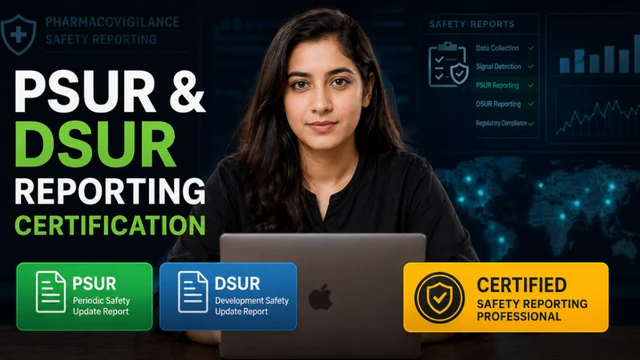
- PSUR and DSUR Reporting Certification — you build aggregate reports end to end, including exposure calculations, signal evaluation, benefit-risk conclusions, and submission-ready formatting aligned to ICH E2C(R2) and E2F.
- Pharmacovigilance Signal Detection with AI — you work through disproportionality metrics, literature screening, signal triage, and AI-assisted surveillance, the exact skills behind growing signal detection pharmacovigilance jobs.
Both tracks sit inside a simulation toolkit that mirrors industry systems: Argus Safety for ICSR case processing, Medidata Rave EDC, Veeva Vault eTMF, and FDA 21 CFR submission workflows.
The return on professional certification is simple: you close a qualification gap that a degree never covered, you build an audit-ready portfolio, and you arrive at interviews prepared for high-paying industry roles instead of hoping someone takes a chance on you.
How do you audit your industry readiness before the next hiring cycle?
Ask yourself three honest questions:
- Can I code an adverse event in MedDRA and write a defensible narrative?
- Can I explain the difference between a PBRER and a DSUR without looking it up?
- Do I have a portfolio that proves it?
If any answer is no, you now have a concrete to-do list rather than a vague career anxiety. The next US hiring cycle will reward the candidates with demonstrable workflow skills.
Audit your industry readiness. Review the simulation curriculum, explore professional certification blueprints, and map your own transition from bench to Drug Safety Scientist. Your salary ceiling should not be set by a grant budget.
Build These Skills Now
Programs from ZANE ProEd Academy that directly address the skill gaps discussed above.
Follow Zane ProEd on Google
Preferred SourceAdd our publication as a preferred source to get the latest clinical research guides, industry updates, and career intel directly in your Google Top Stories & AI Overviews.