Drug Safety Scientist Salary and Qualifications US: A Recruiter's Insider Guide

Drug Safety Scientist In the US, a drug safety scientist typically earns $90,000–$140,000 per year, with entry-level roles starting near $75,000. Qualifications usually include a PharmD, MD, or life sciences degree plus pharmacovigilance experience, knowledge of FDA regulations, ICH guidelines, and hands-on aggregate reporting skills like PBRER and DSUR.
You've spent years mastering Western blots, cell cultures, or 12-hour clinical shifts. But you're ready for a career with better pay, less physical burnout, and remote flexibility. That's where the drug safety scientist salary and qualifications us market comes in—a hidden gem for bench scientists and nurses who want to pivot into pharmacovigilance without going back to medical school.
But here's the reality: degrees alone are not enough anymore. In today's AI-driven healthcare industry, recruiters are filtering for candidates who can demonstrate hands-on aggregate reporting and signal detection workflows, not just theoretical knowledge.
Build These Skills Now
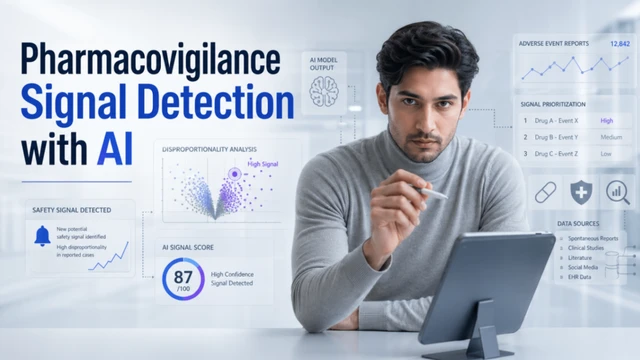
Programs from ZANE ProEd Academy that directly address the skill gaps discussed above.
We surveyed active recruiters in Boston, Research Triangle Park, and San Diego. They revealed exactly what they look for in drug safety scientist candidates—and what disqualifies most applicants.
What qualifications do you need to be a Drug Safety Scientist?
To maximize your drug safety scientist salary and qualifications us, you need a specific mix of education, experience, and regulatory knowledge. Most US employers require:
- Education: PharmD, MD, PhD in life sciences, or BSN with clinical experience. A master's in pharmacovigilance or drug safety is a strong advantage.
- Experience: 2–5 years in pharmacovigilance, clinical safety, or medical writing. For career switchers, direct experience with aggregate reports is key.
- Regulatory Knowledge: Deep familiarity with FDA post-marketing safety requirements, ICH E2E guidelines, and CIOMS forms.
- Technical Skills: Proficiency in safety databases (Argus, ArisG), signal detection tools, and Microsoft Excel for data reconciliation.
- Soft Skills: Ability to write clear medical narratives, collaborate with cross-functional teams, and manage deadlines under audit pressure.
What is the salary difference between a Safety Associate and a Safety Scientist?
Many candidates confuse these two roles. The drug safety scientist salary and qualifications us benchmark is significantly higher than a Safety Associate because of the strategic oversight required.
- Drug Safety Associate: Entry-level, focuses on case processing, data entry, and triage. Typical US salary: $55,000 – $80,000 per year, with hubs like Boston and San Diego at the higher end due to cost of living.
- Drug Safety Scientist: Mid-to-senior level, owns aggregate reports, signal detection, and risk management. Typical US salary: $90,000 – $140,000, with senior scientists at large pharma firms earning up to $160,000+.
The jump from associate to scientist often requires demonstrated experience in PBRER, DSUR, and signal detection, not just case processing volume.
What are aggregate safety reports like PBRER and DSUR?
Aggregate reports are the backbone of a PBRER DSUR safety scientist role. They consolidate safety data from multiple sources to evaluate the benefit-risk profile of a drug.
- PBRER (Periodic Benefit-Risk Evaluation Report): Required by the FDA and EMA for marketed products. Evaluates new safety findings, patient exposure, and overall benefit-risk balance.
- DSUR (Development Safety Update Report): Required for investigational drugs during clinical trials. Summarizes safety data from ongoing and completed studies, protocol changes, and regulatory actions.
- FDA Aggregate Reporting: The FDA mandates specific timelines and formats under 21 CFR 314.80 and 312.32. A pharmacovigilance aggregate reports FDA specialist ensures compliance.
Recruiters look for candidates who can draft these reports independently, not just review them.
How do PharmD graduates enter drug safety and signal detection?
The PharmD to drug safety scientist career path is one of the fastest routes. Pharmacists already understand pharmacology, adverse events, and patient counseling—which translates directly to safety surveillance.
- Step 1: Gain clinical experience in hospital or retail pharmacy to understand real-world drug use.
- Step 2: Complete a pharmacovigilance certificate or fellowship. This roadmap for chemistry grads also applies to PharmDs looking to enter signal detection.
- Step 3: Learn signal detection pharmacovigilance jobs tools like disproportionality analysis, Bayesian data mining, and case series review.
- Step 4: Target entry-level roles like Drug Safety Associate or Pharmacovigilance Scientist I, then progress to Scientist II/III within 2–3 years.
What does an FDA safety audit evaluate in pharmacovigilance?
An FDA safety audit is the ultimate test of your clinical safety surveillance US readiness. Auditors assess whether your company's pharmacovigilance system meets regulatory standards and protects patient safety.
- Documentation: Complete, accurate, and timely case reports. Missing or late serious adverse event reports are a red flag.
- Aggregate Reporting: On-time submission of PBRER, DSUR, and PSUR. Reviewers check for scientific rigor and consistency.
- Signal Detection: Evidence of routine signal detection activities, including validated methods and documented decisions.
- Training and SOPs: Staff qualifications, training records, and adherence to standard operating procedures.
- IT Systems: Safety database validation, audit trails, and data integrity.
Recruiters value candidates who have participated in mock audits or simulation-based training, as they can speak to these expectations with confidence.
Why Your Bench Science Degree Isn't Enough for Drug Safety Roles
You've mastered PCR, flow cytometry, or patient assessment. But in the world of drug safety scientist salary and qualifications us, employers are not asking for pipetting speed.
What conventional education teaches
- Molecular biology, lab techniques, clinical nursing fundamentals
- Academic research writing and peer-reviewed publications
- Basic statistics and experimental design
What modern employers actually expect
- Hands-on experience with safety databases (Argus, ArisG)
- Ability to draft PBRER and DSUR sections independently
- Understanding of FDA post-marketing safety regulations (21 CFR, ICH E2E)
- Signal detection methodology and risk-benefit analysis
- Cross-functional communication with regulatory affairs, clinical operations, and medical affairs
Most academic scientists have zero exposure to these industry-specific workflows. That's the gap.
A 5-Step Roadmap to Break Into Drug Safety Science
- Assess your transferable skills: Highlight data analysis, scientific writing, and regulatory awareness on your resume.
- Complete focused training: Earn a certification in aggregate reporting and signal detection. Simulation-based training mirrors real PBRER/DSUR workflows.
- Build a portfolio: Create sample PBRER sections, signal detection reports, and SOP reviews. Use these to demonstrate practical ability, not just coursework.
- Network strategically: Attend ACRP or DIA meetings in Boston, RTP, or San Diego. Connect with pharmacovigilance recruiters on LinkedIn.
- Apply to entry-level safety roles: Start as a Drug Safety Associate or Pharmacovigilance Specialist, then leverage your portfolio to skip ahead.
The fastest way to bridge the gap is through simulation-based learning that mirrors real industry workflows. Instead of watching videos, you'll process mock safety cases, draft aggregate report sections, and run signal detection queries—building a verifiable portfolio that recruiters actually respect.
This approach ensures you can speak to audit expectations and regulatory nuances during interviews, not just recite definitions.
Build These Skills Now
Programs from ZANE ProEd Academy that directly address the skill gaps discussed above.
ZANE ProEd's industry training system is built with ICH-GCP compliance and audit readiness at its core. The PSUR/DSUR Reporting Certification walks you through every section of aggregate reports, while the Pharmacovigilance Signal Detection with AI program teaches modern data mining and risk assessment. Both programs use real case simulations and provide portfolio projects that demonstrate your competency to hiring managers.
Audit your industry readiness. Review a sample aggregate report and compare your skill set against the FDA's expectations. Or explore our simulation workflows to see how bench scientists like you are making the leap. The pharmacovigilance jobs roadmap also offers practical steps, even if you're new to the field.
Build These Skills Now
Programs from ZANE ProEd Academy that directly address the skill gaps discussed above.
Follow Zane ProEd on Google
Preferred SourceAdd our publication as a preferred source to get the latest clinical research guides, industry updates, and career intel directly in your Google Top Stories & AI Overviews.