Drug Safety Scientist Salary and Qualifications US: 2025 Career Blueprint

Drug Safety Scientist salary in the US ranges from $85,000 to $130,000 annually. Qualifications include a life sciences degree (MPH, PharmD, RN), expertise in pharmacovigilance aggregate reporting (PBRER/DSUR), signal detection, and FDA regulations. Certification and hands-on tool experience (Argus, Veeva) accelerate entry.
If you have applied to 150+ CRA I and CRC postings on LinkedIn and Indeed with zero callbacks, you are not alone. As a public health or health informatics graduate, you have the analytical foundation—but the market is telling you something different. The drug safety scientist salary and qualifications US employers actually pay for are not built into your MPH curriculum.
Recruiters reject candidates who lack specific, verifiable skills in pharmacovigilance aggregate reports and signal detection. The good news: these are learnable, demonstrable, and highly valued in the US biopharma hubs of Boston, Research Triangle Park, and San Diego.
Build These Skills Now
Programs from ZANE ProEd Academy that directly address the skill gaps discussed above.
This Q&A blueprint exposes the exact qualifications, salary benchmarks, and step-by-step pathway to transition from a frustrated applicant to a shortlisted Drug Safety Scientist.
What qualifications do you need to be a Drug Safety Scientist?
US employers require a blend of formal education, technical tool proficiency, and regulatory knowledge. For an MPH or health informatics graduate, the fastest route is to supplement your degree with industry-specific certifications and a portfolio of simulated work.
- Education: Bachelor's in life sciences, MPH, PharmD, or RN. Advanced degrees help but are not mandatory if you have proven skills.
- Core knowledge: Pharmacovigilance principles, ICH guidelines (E2B, E2C), FDA 21 CFR Part 312/314, and aggregate reporting (PBRER, DSUR).
- Technical tools: Argus Safety (ICSR case processing), Medidata Rave EDC, Veeva Vault eTMF, and signal detection platforms (Empirica, ArisGlobal).
- Soft skills: Medical writing, critical thinking, and cross-functional communication.
Most job postings list 'experience with aggregate reports' as a hard requirement. You can meet this through simulation-based training that produces verifiable artifacts.
What is the salary difference between a Safety Associate and a Safety Scientist?
In the US, the compensation jump from associate to scientist reflects a shift from task execution to independent signal evaluation and report authorship.
- Safety Associate (entry-level): $65,000 – $85,000. Focus: ICSR triage, data entry, case follow-up.
- Drug Safety Scientist: $85,000 – $130,000. Focus: aggregate report writing (PBRER/DSUR), signal detection, benefit-risk assessment, and FDA audit support.
- Senior Scientist / Manager: $130,000 – $170,000+.
Location matters: Boston and San Diego pay 10–15% above the national average; RTP is competitive with lower cost of living. The salary gap widens when you can demonstrate PBRER DSUR safety scientist role competencies—specifically authoring and defending these reports.
What are aggregate safety reports like PBRER and DSUR?
These are periodic safety documents required by regulators. The PBRER (Periodic Benefit-Risk Evaluation Report) is submitted to the FDA and other agencies every 6 months to 5 years, depending on the product. The DSUR (Development Safety Update Report) is annual and focuses on investigational drugs.
Your role as a scientist: gather safety data from clinical trials and post-marketing sources, analyze trends, and write a narrative that evaluates the benefit-risk profile. This is not data entry—it is medical writing with regulatory consequences.
- PBRER sections: Introduction, worldwide marketing status, actions taken, changes to reference safety information, exposure, case narratives, signal evaluation, benefit-risk analysis.
- DSUR sections: Background, exposure, safety data, and risk assessment.
- FDA expectation: Compliance with ICH E2C(R2) and 21 CFR 314.80. Auditors check for timeliness and signal follow-through. See FDA guidance for details.
To stand out for signal detection pharmacovigilance jobs, you must show you can write these reports using real or simulated datasets. Employers want to see a portfolio, not just a certificate.
How do PharmD graduates enter drug safety and signal detection?
PharmD graduates often enter through medical information or clinical pharmacy roles, but a direct path exists. The key is to reframe your clinical knowledge into pharmacovigilance language.
- Complete a specialized certification in aggregate reporting and signal detection. This signals you understand the regulatory workflow.
- Build a portfolio with a simulated PBRER, a DSUR, and a signal evaluation memo. Use anonymized or synthetic data.
- Target 'Safety Scientist' or 'Pharmacovigilance Scientist' titles at CROs (IQVIA, Parexel, Syneos) and biotech companies.
- Highlight clinical safety surveillance US experience—even from hospital rotations—and map it to post-marketing safety.
For MPH graduates, the same pathway works. Your epidemiology and biostatistics training is a secret weapon for signal detection. The missing piece is tool fluency and report-writing proof. The PharmD to drug safety scientist career transition is well-trodden when you have demonstrable outputs.
What does an FDA safety audit evaluate in pharmacovigilance?
An FDA inspection (often under the Bioresearch Monitoring Program) evaluates whether your safety systems consistently capture, assess, and report adverse events. Key areas:
- ICSR processing timeliness: Were serious cases reported within 15 days? Were follow-ups documented?
- Aggregate report accuracy: Do PBRERs and DSURs match the underlying data? Are signals adequately evaluated?
- Signal management: Is there a documented process for detecting and acting on signals?
- Training records: Can you prove staff are qualified?
- CAPA effectiveness: Are corrective actions closing gaps?
Audit-ready scientists keep meticulous documentation. Simulation training that mimics an FDA audit—including mock 483 observations—is the fastest way to internalize these expectations. For professional standards, see ACRP. For a deeper dive, see the Drug Safety Scientist Salary & Qualifications Blueprint.
What skills gap holds MPH and Health Informatics graduates back?
Conventional MPH programs teach epidemiology, biostatistics, and health policy—all valuable. But they rarely cover:
- Hands-on Argus Safety (or other ICSR databases).
- Writing an actual PBRER/DSUR from raw data.
- Running a signal detection query in Empirica or similar tools.
- FDA 21 CFR Part 11 compliance and audit trails.
Employers expect you to hit the ground running. A certificate alone won't cut it—they want to see a portfolio of work products. This is where simulation-based learning closes the gap.
What is the step-by-step pathway to become a Drug Safety Scientist in the US?
- Master the vocabulary and regulations: Read ICH E2C(R2), FDA guidance on safety reporting, and the FDA website. Understand PBRER, DSUR, and signal management.
- Complete a professional certification in PSUR/DSUR reporting and signal detection with AI. This should include hands-on tool simulations (Argus, Veeva).
- Build a portfolio: Create a simulated PBRER, a DSUR, a signal evaluation report, and a case narrative. Use templates from your certification.
- Network and apply strategically: Target CROs and biopharma companies in Boston, RTP, and San Diego. Use LinkedIn to connect with safety scientists and ask for informational interviews.
- Prepare for audit questions: Know how to answer 'walk me through your last PBRER' and 'how do you handle a signal that becomes a safety concern?'
- Consider a fellowship or internship: Some CROs offer pharmacovigilance fellowships for MPH graduates. Apply to those while building your portfolio. Also check ClinicalTrials.gov for active studies.
For entry-level roles, see the Entry-Level Drug Safety Associate Jobs USA Playbook.
How can simulation-based learning make you stand out?
Reading about PBRERs is not the same as writing one. Employers shortlist candidates who can show a verifiable portfolio of simulated work: a completed aggregate report, a signal detection log, and an audit-ready case file.
ZANE ProEd Academy provides industry-grade simulation toolkits—including Argus Safety for ICSR case processing, Medidata Rave EDC, Veeva Vault eTMF, and FDA 21 CFR submission templates. You don't just learn concepts; you produce artifacts that prove your competence.
Build These Skills Now
Programs from ZANE ProEd Academy that directly address the skill gaps discussed above.
Which ZANE ProEd programs accelerate your transition?
Two professional certifications are designed for MPH, PharmD, and health informatics graduates targeting drug safety roles:
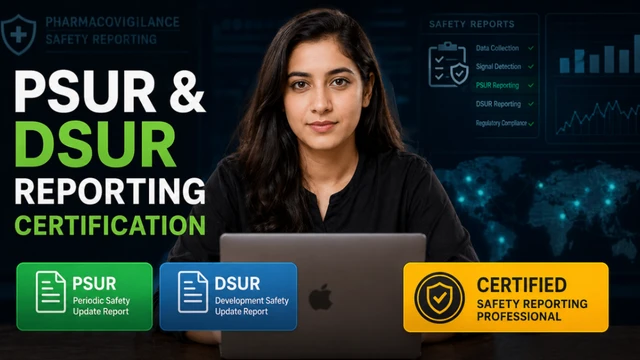
- PSUR/DSUR Reporting Certification: Master aggregate report writing from data collection to final narrative. Includes simulated PBRER and DSUR projects, signal evaluation, and benefit-risk assessment. You leave with a portfolio-ready report.
- Pharmacovigilance Signal Detection with AI: Learn to run disproportionality analyses, evaluate signals, and use AI tools for case triage. Includes hands-on exercises with real-world datasets.
These are not passive courses. They are professional preparation systems that close the exact qualification gaps US employers screen for. The ROI is clear: a $85K–$130K salary versus continued rejection. Certification signals commitment and provides tangible proof of skill.
Explore the ZANE ProEd Academy to audit your industry readiness.
What should you do in the next 6 months?
If you are stuck in the 150+ application cycle, shift your strategy from volume to skill proof. Start with a structured certification that includes simulation and portfolio building. Then apply to roles with a link to your work products.
Review the simulation curriculum and professional certification blueprints. Your future salary and qualifications in the US drug safety market depend on demonstrable competence—not just another application.
Build These Skills Now
Programs from ZANE ProEd Academy that directly address the skill gaps discussed above.
Follow Zane ProEd on Google
Preferred SourceAdd our publication as a preferred source to get the latest clinical research guides, industry updates, and career intel directly in your Google Top Stories & AI Overviews.