Drug Safety Scientist Salary and Qualifications US: RN to Remote Pharmacovigilance Career

Drug Safety Scientist Salary and Qualifications US: typically earn $85,000–$130,000 annually with a life sciences degree, 2+ years of pharmacovigilance experience, and strong expertise in aggregate reports (PBRER/DSUR), signal detection, and FDA regulations. RN/BSN transitions are common with targeted certifications.
If you are a bedside RN or BSN burned out from 12-hour shifts and dreaming of a remote clinical research role, the drug safety scientist salary and qualifications us landscape offers a structured exit. You already have the clinical judgment—now you need the industry-specific workflow skills.
Certifications without practice are useless. Employers want proof you can handle aggregate reports, signal detection, and FDA audits. This guide breaks down the exact qualifications, salary benchmarks, and step-by-step pathway to become job-ready.
Build These Skills Now
Programs from ZANE ProEd Academy that directly address the skill gaps discussed above.
The urgency is real: automation is already replacing basic data entry roles. But high-level safety surveillance remains human-driven. Here is how to position yourself.
What qualifications do you need to be a Drug Safety Scientist? (Drug Safety Scientist Salary and Qualifications US)
To become a Drug Safety Scientist in the US, you need a blend of education, experience, and technical skills. Most employers require:
- Education: BSN, PharmD, or life sciences degree (biology, biochemistry).
- Experience: 2+ years in pharmacovigilance, clinical research, or a related safety role.
- Technical Skills: Proficiency in aggregate reporting (PBRER, DSUR), signal detection, and safety databases like Argus Safety or ArisG.
- Certifications: Specialized training in PBRER DSUR safety scientist role and signal detection is highly valued.
Salary ranges vary by experience and location. Entry-level Safety Scientists earn $85,000–$100,000, while senior roles reach $130,000+. Biopharma hubs like Boston, Research Triangle Park (RTP), and San Diego offer the highest pay.
What is the salary difference between a Safety Associate and a Safety Scientist?
The jump from Safety Associate to Safety Scientist is significant—both in responsibility and compensation.
- Safety Associate: $60,000–$80,000. Tasks include ICSR case processing, data entry, and initial triage. This is an entry point for RNs/BSNs.
- Safety Scientist: $85,000–$130,000. Tasks include authoring pharmacovigilance aggregate reports FDA submissions, conducting signal detection, and leading benefit-risk assessments.
The difference lies in strategic thinking. Associates process; Scientists analyze and decide. Certification in aggregate reporting and signal detection accelerates this transition.
What are aggregate safety reports like PBRER and DSUR?
Aggregate reports are comprehensive safety documents required by regulators. Two key types are:
- PBRER (Periodic Benefit-Risk Evaluation Report): Submitted to FDA and other agencies periodically (e.g., annually) to evaluate the overall benefit-risk profile of a marketed drug.
- DSUR (Development Safety Update Report): Annual report during clinical trials, summarizing safety data for investigational drugs.
In the PBRER DSUR safety scientist role, you gather data from multiple sources, analyze trends, and write clear narratives. You also collaborate with medical monitors and regulatory affairs. Mastery of these reports is non-negotiable for career advancement.
How do PharmD graduates enter drug safety and signal detection?
PharmD graduates have a strong clinical foundation, making them ideal for PharmD to drug safety scientist career transitions. The typical path:
- Start as a Safety Associate or Clinical Safety Surveillance Associate.
- Gain hands-on experience with signal detection pharmacovigilance jobs, using tools like Empirica or AI-driven platforms.
- Pursue specialized certification in signal detection and aggregate reporting.
- Transition to Safety Scientist within 2–3 years.
Clinical safety surveillance US roles often require knowledge of FDA regulations and ICH guidelines. PharmDs can leverage their pharmacology expertise to excel in causality assessment and risk management.
What does an FDA safety audit evaluate in pharmacovigilance?
FDA audits are rigorous. They evaluate whether your pharmacovigilance system complies with regulations. Key areas include:
- ICSR Processing: Timeliness and accuracy of case intake, coding, and reporting.
- Aggregate Reports: Completeness and quality of PBRERs, DSURs, and other submissions.
- Signal Detection: Documentation of signal evaluation and actions taken.
- Training Records: Proof that staff are qualified and trained.
- CAPA: Corrective and preventive actions for any deficiencies.
Audit readiness requires a verifiable portfolio of your work. Simulation-based training can help you build that.
Skill Gap: What Nursing Education Misses vs. What Employers Expect
As an RN/BSN, you learned patient care, anatomy, and clinical judgment. But employers in drug safety expect a different skill set:
- Regulatory Writing: You must write clear, concise safety narratives—not chart notes.
- Data Analysis: Signal detection requires statistical thinking, not just vital signs.
- Software Proficiency: Argus Safety, Medidata Rave, Veeva Vault—these are not in nursing school.
- FDA Regulations: 21 CFR Part 11, ICH E2E, and other guidelines are foreign concepts.
The gap is bridgeable with focused, simulation-based training that mimics real industry workflows.
Your 6-Step Pathway to Become a Drug Safety Scientist
- Assess Transferable Skills: Map your clinical experience to pharmacovigilance competencies.
- Get Foundational Training: Learn ICSR processing, aggregate reporting, and signal detection through hands-on simulations.
- Build a Portfolio: Create mock PBRERs, DSURs, and signal detection reports to show employers.
- Earn Specialized Certification: Complete industry-recognized programs in PSUR/DSUR reporting and signal detection.
- Apply for Entry-Level Roles: Target Safety Associate positions at CROs, biopharma, or pharma companies.
- Advance to Scientist: With experience and a strong portfolio, move into Scientist roles within 2–3 years.
System Bridge: Simulation-Based Learning & Verifiable Proof
Reading about PBRERs won't make you job-ready. You need to practice on the same tools and workflows used in industry. ZANE ProEd provides simulation-based toolkits that let you process ICSR cases in Argus Safety, write aggregate reports, and perform signal detection on realistic datasets.
This creates a verifiable portfolio—proof of your skills that hiring managers can trust. It's not just a certificate; it's a demonstration of competence.
Build These Skills Now
Programs from ZANE ProEd Academy that directly address the skill gaps discussed above.
Academy Integration: Professional Certification for Real Careers
ZANE ProEd Academy offers premier career-certification programs designed for professionals like you. Two standout programs are:
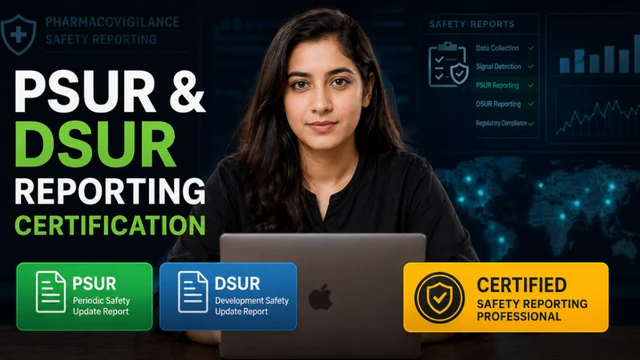
- PSUR/DSUR Reporting Certification: Master the end-to-end process of authoring aggregate safety reports, from data gathering to benefit-risk evaluation.
- Pharmacovigilance Signal Detection with AI: Learn to use AI-powered tools for signal detection, causality assessment, and risk management.
Our simulation toolkits include Argus Safety ICSR case processing, Medidata Rave EDC, Veeva Vault eTMF, and FDA 21 CFR submissions. You'll graduate with an audit-ready portfolio and the confidence to step into high-paying roles.
This is not about collecting certificates—it's about closing qualification gaps and proving you can do the job. The ROI is clear: a structured path to a remote, rewarding career.
Ready to Transition? Start Here.
Explore our professional certification blueprints to audit your industry readiness. Review the simulation curriculum and see how ZANE ProEd can accelerate your move from bedside to drug safety.
For deeper insights, read our related blogs: Drug Safety Scientist Salary & Qualifications and Entry-Level Drug Safety Associate Jobs USA: RN Roadmap.
External resources: FDA, ICH, ACRP, and ClinicalTrials.gov.
Build These Skills Now
Programs from ZANE ProEd Academy that directly address the skill gaps discussed above.
Follow Zane ProEd on Google
Preferred SourceAdd our publication as a preferred source to get the latest clinical research guides, industry updates, and career intel directly in your Google Top Stories & AI Overviews.