Hospital Quality Assurance Jobs India: A Complete Guide for Freshers

Hospital quality assurance jobs India are roles that focus on maintaining and improving patient care standards under NABH guidelines. Even if you come from a non-healthcare background, you can start with the right certification and practical skills. Recruiters often reject candidates due to a lack of understanding of quality systems, not their degree.
You’ve applied to dozens of hospital quality assurance jobs India, but got no callback. Recruiters reveal that the gap isn’t your degree—it’s your awareness of NABH standards and quality management. Whether you’re a BSc, BCA, BTech, or switching from IT/BPO, the hospital QA sector has entry-level roles, but you need to speak the recruiter’s language.
This guide is built from a recruiter’s point of view. It lists the exact mistakes freshers make and how you can avoid them, so your next application gets shortlisted. Let’s start with the basics.
Build These Skills Now
Programs from ZANE ProEd Academy that directly address the skill gaps discussed above.
What is NABH accreditation and why does it matter?
NABH stands for National Accreditation Board for Hospitals & Healthcare Providers. It’s a board under the Quality Council of India that sets high standards for patient safety and care. If you’re targeting hospital quality assurance jobs India, knowing NABH is a must because most good hospitals use these standards to run their quality departments.
Why does it matter for your career? Recruiters look for candidates who already understand NABH because it reduces their training time. A hospital with NABH accreditation follows strict protocols, and QA executives help maintain them. Without this knowledge, your resume will be ignored. Think of NABH as the entry ticket to a NABH accreditation career.
How to become a Quality Officer in a hospital?
The quality officer hospital job description typically includes monitoring patient care processes, conducting audits, and managing incident reports. Here’s a realistic path for freshers from any stream:
- Get the right certification: Enroll in a healthcare quality management course that covers NABH standards and practical tools. This is your fastest way to bridge the skill gap.
- Build practical skills: Learn incident reporting, root cause analysis, and audit techniques. Simulation-based training helps you practice without being in a hospital.
- Prepare your resume: Highlight your certification, any projects, and your understanding of NABH chapters. Non-healthcare graduates should emphasize transferable skills like data analysis or process improvement.
- Apply smart: Target NABH-accredited hospitals and entry-level roles like QA trainee or executive. Use keywords from the job description in your application.
Many hospital QA executive roles do not require a medical degree. What matters is you can demonstrate quality thinking.
What is the salary of a hospital QA executive in India?
The hospital QA executive salary varies by city and hospital size. For freshers, typical pay ranges between ₹2.5 lakhs to ₹4 lakhs per annum. With 2–3 years of experience, you can expect ₹4–6 LPA. Senior roles like Quality Manager can go up to ₹8–10 LPA.
These numbers are based on NABH-accredited hospitals in metro cities. Smaller hospitals may pay a bit less initially, but the experience is valuable. Note that having a recognized certification can often start you at the higher end of the range.
What are the key NABH standards a fresher should know?
NABH standards for freshers might seem vast, but recruiters expect you to know the basics. Focus on these five areas:
- Patient Rights and Education (PRE): How hospitals must respect patient consent and information.
- Infection Control (IC): Protocols to prevent hospital-acquired infections.
- Continuous Quality Improvement (CQI): The cycle of measuring, analyzing, and improving processes.
- Incident Management: Reporting and learning from errors or near misses.
- Document Control: Maintaining accurate records and standard operating procedures.
These topics come straight from the WHO patient safety guidelines and are embedded in NABH standards. Understanding them shows recruiters you are ready for healthcare quality management roles.
What skills are needed for hospital quality assurance?
Hospital quality assurance combines technical knowledge with soft skills. Here’s what employers look for:
- Knowledge of NABH standards: This is non-negotiable. Even as a fresher, you must know the key chapters.
- Audit and inspection skills: You’ll regularly check if departments follow protocols. Courses often include mock audits.
- Root cause analysis: Tools like the 5-Whys or fishbone diagram help solve quality issues.
- Communication: You’ll train staff, present reports to management, and interact with patients.
- Data analysis: Tracking infection rates or patient feedback requires basic Excel and reporting.
Colleges rarely teach these skills together. That’s where targeted training comes in, especially for hospital QA executive aspirants.
Skill Gap: What Colleges Teach vs What Recruiters Want
Most BSc or BPharm programs cover general quality control but not hospital-specific systems. BTech and BCA graduates may have process-thinking but no healthcare context. Recruiters tell us they reject 80% of applicants because they can’t answer simple questions like “What would you do if you saw a nurse not washing hands?”
Employers expect you to understand NABH standards, use quality tools, and know how to handle real incidents. This gap is why career switchers from IT/BPO must invest in a structured program to learn the domain.
A clear pathway helps you close this gap within 3–6 months, making you interview-ready for the next hiring cycle.
Your Step-by-Step Plan to Land a Hospital QA Job
- Week 1–2: Learn NABH Basics. Read the official NABH guide from the CDSCO website and understand the accreditation process.
- Week 3–4: Enroll in a Simulation-Based Program. Choose a course that covers incident management, quality tools, and mock audits.
- Week 5–6: Practice with Real-Life Scenarios. Work through case studies and incident simulations to build confidence.
- Week 7–8: Build Your Resume and Apply. List your certification and describe your hands-on training. Start applying to entry-level roles in NABH hospitals.
This plan is designed for busy graduates who need quick, actionable steps. The key is practical experience—even simulated—on your resume.
How Simulation Training Bridges the Gap
Reading theory is not enough. Recruiters want to see that you have handled quality-related tasks. Simulation-based learning lets you practice incident reporting, root cause analysis, and audit preparation in a virtual hospital setting. This builds the exact skills needed for hospital quality assurance jobs India.
Build These Skills Now
Programs from ZANE ProEd Academy that directly address the skill gaps discussed above.
Programs That Match Recruiter Expectations
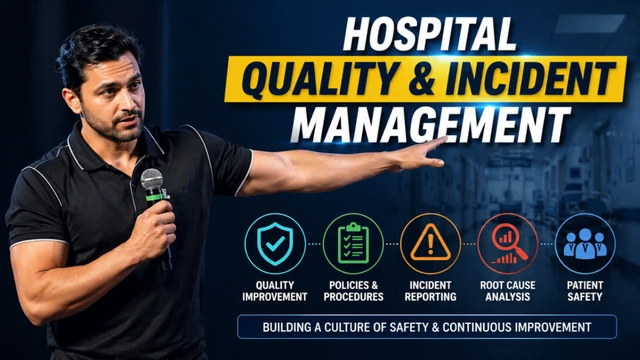
ZANE ProEd has designed its approach around a system of mastering quality skills. For example, the Hospital Quality Incident Management track puts you in real-world scenarios where you identify hazards and report them correctly. The Hospital Quality Management Certification covers NABH standards end-to-end with audits and quality tools. These programs are built with input from hospital quality heads, so you learn exactly what’s needed on the job. See more at this detailed guide.
Such focused training can transform a non-healthcare graduate into a strong candidate for hospital QA executive roles. It’s about showing you can perform, not just pass an exam.
Ready to make your move? Check your job readiness today or see how your current skills compare against what top hospitals demand.
Build These Skills Now
Programs from ZANE ProEd Academy that directly address the skill gaps discussed above.
Follow Zane ProEd on Google
Preferred SourceAdd our publication as a preferred source to get the latest clinical research guides, industry updates, and career intel directly in your Google Top Stories & AI Overviews.