The Unspoken Roadmap: How to Become a Regulatory Affairs Associate (from IT/BPO)

The Hidden Career Path for IT & BPO Professionals: Regulatory Affairs Associate
You're an expert in process, quality control, and technology. Your career in IT or BPO has honed your ability to manage complex workflows and ensure flawless execution. Yet, you see the landscape shifting. AI is automating routine tasks, and the pressure to find a more strategic, recession-proof domain is mounting. You've likely never considered that your exact skill set is in high demand within one of the world's most stable industries: pharmaceuticals. There's a hidden career path waiting for you, and it leads to the role of a Regulatory Affairs Associate.
This isn't about going back to college for a pharmacy degree. This is about a strategic pivot. The global healthcare industry operates on a complex web of rules and submissions, managed by Regulatory Affairs (RA) teams. They are the critical interface between pharmaceutical companies and government agencies like the FDA and EMA. In today's digital-first world, their work is heavily dependent on technology, precision, and process management—the very skills you already possess.
The problem is, you've probably applied and been met with silence or a polite rejection citing a 'lack of domain experience.' This is where the standard advice fails and an insider's roadmap becomes essential. Your IT background isn't a weakness; it's your hidden advantage, but only if you know how to bridge it to the industry's specific needs.
Build These Skills Now
Programs from ZANE ProEd Academy that directly address the skill gaps discussed above.
Reality Disruption: Why Your Rejection Letters Are Misleading You
Let's be blunt. The hiring manager who rejected you doesn't care that you don't have a B.Pharm degree. They are concerned about one thing: risk. The cost of a single error in a regulatory submission can be millions of dollars in delays and potential rejection of a life-saving drug. They see 'IT/BPO' on your resume and assume you don't understand the high-stakes language of global health authorities like the World Health Organization or the granular details of submission guidelines.
The common assumption is that a life sciences degree is the only entry ticket. This is fundamentally wrong. Many pharmacy graduates enter the job market with deep theoretical knowledge but zero practical skills in the critical software and processes used for electronic submissions. They face their own set of challenges, which we've detailed in the unwritten rules of regulatory affairs interviews. The real barrier isn't your degree; it's the demonstrated ability to execute specific, high-stakes tasks from day one.
The Industry Insider View: What We Look for in a New Hire
Behind closed doors, the conversation isn't about your college major. It's about operational readiness. Can you navigate the eCTD (Electronic Common Technical Document) structure? Do you understand the difference between a submission to the FDA versus one to India's CDSCO? Do you know what to do when the validation tool throws a critical error an hour before the deadline?
We are looking for candidates who can reduce risk, not add to it. A person with a background in process-driven IT and a demonstrated understanding of eCTD publishing is often a more valuable and faster-to-deploy asset than a fresh graduate with only textbook knowledge. Your path forward is not about becoming a scientist; it's about becoming a specialist in regulatory operations.
The Critical Skill Gap: Academic Theory vs. Operational Reality
Here’s the core disconnect that holds career switchers back. It’s the gap between what traditional education provides and what the industry desperately needs.
- Academic Output: Understands the *what*. Knows the names of different regulatory bodies and can define what a drug submission is. Has theoretical knowledge of the ICH guidelines.
- Industry Expectation: Understands the *how*. Can build a compliant eCTD sequence using publishing software, troubleshoot XML backbone errors, manage lifecycle updates (like variations and renewals), and navigate the specific electronic submission gateways for different health authorities.
Your IT background in managing ticketing systems, ensuring data integrity, and following strict protocols is the perfect foundation. But it's just that—a foundation. You need to build the specific regulatory structure on top of it.
The Domain Application Bridge™ Framework
At ZANE ProEd, we don't believe in retraining you from zero. We believe in building a strategic bridge. We call this the Domain Application Bridge™. Your existing skills in technology, logic, and process are the pillars. The bridge itself is the targeted, application-specific knowledge required to perform the job. For a Regulatory Affairs Associate, this bridge consists of three core planks:
- Structural Mastery: Deep, practical knowledge of the eCTD format—the global standard for electronic submissions.
- Technological Fluency: Hands-on skill with the software used to compile, validate, and publish these submissions.
- Navigational Intelligence: The ability to interpret and apply the specific rules and nuances of different health agencies.
This framework shifts the goal from 'learning a new field' to 'applying your existing expertise to a new set of high-value problems.'
Your 4-Phase Playbook for a Successful Transition
Stop sending out resumes and start building your bridge. Follow this execution-level plan.
Phase 1: Deconstruct the Submission Workflow
Forget memorizing drug names. Instead, map the entire lifecycle of a regulatory submission as a process flow. It starts with receiving documents from various departments (Clinical, Nonclinical), moves to compilation ('publishing'), then to quality control (validation), and finally to dispatch through an electronic gateway. Your BPO/IT mind is perfectly suited to master this workflow.
Phase 2: Master the Core Technology (eCTD)
Focus 100% of your initial effort on the eCTD. This is the bedrock technical skill. Understand its modular structure (Modules 1-5), the importance of the XML backbone, and how hyperlinks and bookmarks create a reviewable document for the health authority assessor. This is the technical language of modern RA, and mastering it is non-negotiable. For a deeper dive into this, our IT to eCTD Specialist Playbook provides a granular look.
Phase 3: Acquire Agency-Specific Intelligence
Once you understand the eCTD structure, layer on the agency-specific rules. For example, Module 1 is region-specific. Learn the key differences in submission requirements between the US, Europe, and a key emerging market like India. This demonstrates strategic value beyond just technical execution.
Phase 4: Build a Portfolio of Simulated Submissions
You need to prove you can do the work. The only way to do this without having the job is to build a portfolio of evidence through simulated projects. This means working on case studies where you compile a mock dossier, run it through validation software, identify and fix errors, and document the entire process.
Micro-Scenario: The 4 PM Validation Crisis
It's Friday afternoon. A 'Critical Error' message appears from the eCTD validation software for a major submission due Monday. The error reads: "Orphan Designation reference in Module 1.2 is invalid." The Head of RA is on chat asking for a status update. What do you do? A textbook-trained candidate freezes. An operationally-trained professional knows this is a metadata issue within the XML backbone. They immediately open the file, navigate to the correct leaf-title tag, correct the reference based on the approved documentation, re-validate, and confirm resolution within minutes. This is the level of readiness that gets you hired.
The System Bridge: From Theory to Muscle Memory
How do you prepare for that 4 PM crisis? You don't read about it. You can't learn it from a PowerPoint slide. You build the professional muscle memory by running dozens of simulations. The gap between your current IT skills and a Regulatory Affairs Associate role is not a knowledge gap—it's an experience gap. And that gap can only be closed through high-fidelity, hands-on practice that mirrors the pressures and tasks of the real job.
This is about moving beyond passive learning and entering a system of active doing. It’s about building a tangible portfolio of work that you can speak to with confidence in an interview, proving you can handle the role before you even get the offer letter. It is this philosophy that underpins the approach we've built at ZANE ProEd.
Build These Skills Now
Programs from ZANE ProEd Academy that directly address the skill gaps discussed above.
Academy Integration: Building Your Bridge with a Proven System
This is where the ZANE ProEd system is engineered to translate your ambition into capability. We don't sell courses; we provide an integrated training system that functions as your career transition bridge.
Our eCTD Submission Certification is the first critical plank of this bridge. It is not a series of lectures. It is a high-fidelity simulator where you will compile, troubleshoot, and manage the lifecycle of regulatory submissions. This is where you transform your abstract knowledge of IT processes into the concrete, in-demand skill of eCTD publishing. You will build the portfolio of work discussed in Phase 4 of the playbook.
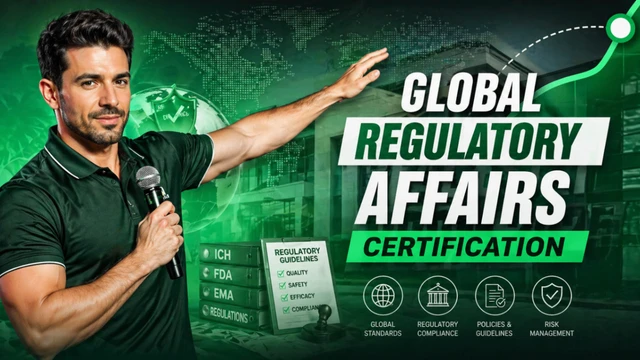
Next, the Global Regulatory Affairs Certification provides the strategic overlay—the 'Navigational Intelligence.' This program moves beyond the technical 'how' and into the strategic 'why' and 'where.' You’ll work through complex case studies that require you to adapt submission strategies for different global health authorities, turning you from a technician into a valuable regulatory strategist.
Together, they form a complete system designed to make you not just qualified, but interview-ready and job-ready from day one.
Your Next Move: Stop Applying, Start Building
The cycle of applying for a Regulatory Affairs Associate role and getting rejected for 'lack of experience' can be broken, but only by changing your strategy. The opportunity is real, and your background is more relevant than you think. It's time to stop hoping the next application will be different and start building the bridge that makes you the undeniable choice.
Explore the simulation blueprints within our program syllabi. See the specific tasks you will master. Take the first step toward architecting your future in one of healthcare's most critical and rewarding domains.
Build These Skills Now
Programs from ZANE ProEd Academy that directly address the skill gaps discussed above.
Follow Zane ProEd on Google
Preferred SourceAdd our publication as a preferred source to get the latest clinical research guides, industry updates, and career intel directly in your Google Top Stories & AI Overviews.