Medical Coding Jobs for Freshers in India: A Step-by-Step Guide

Medical Coder: To get medical coding jobs for freshers in India, you need a life science degree (BDS, BAMS, BPharm) and a certification like CPC. However, companies prioritize practical skills in ICD-10 and CPT coding on real-world case studies, not just theoretical knowledge from courses.
If you have a BDS, BHMS, BAMS, or Nursing degree and are struggling to find medical coding jobs for freshers in India, you are not alone. Many graduates take multiple courses, get certified, and still find themselves stuck. It feels frustrating when you do everything you're told, but the job offers don't come.
This is a common problem. The market is competitive, and most courses teach you the 'what', but not the 'how'. They give you a certificate but not the practical skills that hiring managers actually test for in interviews.
Build These Skills Now
Programs from ZANE ProEd Academy that directly address the skill gaps discussed above.
This guide will show you the mistakes most freshers make and provide a clear, step-by-step path to becoming a job-ready Medical Coder. We will break down what companies truly expect and how you can build the skills to meet their demands.
What is medical coding and how does it work?
Medical coding is like being a translator. A Medical Coder takes a patient's medical file—which includes the doctor's diagnosis, treatments, and procedures—and translates it into a universal set of codes. Think of it as converting complex medical language into a simple, standard shorthand.
This process uses specific codebooks, most commonly:
- ICD-10-CM: International Classification of Diseases, 10th Revision, Clinical Modification. This is used for coding diagnoses, symptoms, and causes of death. For example, a heart attack has a specific ICD-10 code.
- CPT: Current Procedural Terminology. This is used for coding medical procedures and services performed by doctors. For example, an appendix removal surgery has its own CPT code.
These codes are critical for healthcare billing. Insurance companies use them to understand what services were provided so they can process payments. They are also used for research and data analysis to track diseases and health trends, as monitored by organizations like the World Health Organization.
What is the salary of a medical coder in India?
Understanding the salary is important for planning your career. The medical coder salary in India for a fresher typically ranges from ₹2.5 Lakhs to ₹4.5 Lakhs per annum. This starting salary can vary based on your city, the size of the company, and your interview performance.
Your salary growth depends on a few key factors:
- Certifications: Holding a strong certification like the CPC can give you a better starting package.
- Experience: After 2-3 years, as you become more efficient and accurate, your salary can increase to ₹5 Lakhs - ₹7 Lakhs or more.
- Specialization: Coders specializing in complex areas like oncology or cardiology are often paid more.
The key is to focus on building strong practical skills from day one. Companies pay for accuracy and efficiency, not just a certificate.
How to start a career in medical coding as a fresher?
Starting a career in medical coding requires a clear plan. Many freshers get lost because they only focus on getting a certificate. Here is a more effective approach to land one of the many medical coding jobs for freshers in India.
First, you must have a strong foundation. Your degree in BDS, BAMS, or Nursing gives you a huge advantage because you already understand human anatomy, physiology, and medical terminology. Do not ignore these subjects; revise them thoroughly.
Next, you need to learn the coding systems. This means understanding the rules and guidelines for ICD-10, CPT, and HCPCS codes. This is where most certification courses focus. However, just memorizing rules is not enough.
The most critical step is to apply this knowledge. You need to practice coding on real-world medical reports. This is the skill gap where most freshers fail. Companies will test your ability to read a complex patient chart and accurately assign codes, which is very different from answering multiple-choice questions in a certification exam.
What certifications are needed for medical coding?
Certifications are important because they show employers you have a foundational level of knowledge. In India, the most recognized certification is the CPC (Certified Professional Coder) offered by the AAPC (American Academy of Professional Coders).
Here are the key certifications to consider:
- Certified Professional Coder (CPC): This is the gold standard for medical coding and is highly sought after by employers in India. It covers coding for services performed by physicians and other healthcare providers.
- Certified Coding Specialist (CCS): Offered by AHIMA, this is another well-respected certification, often focused more on inpatient hospital coding.
- Certified Inpatient Coder (CIC): Also from AAPC, this is for specializing in inpatient hospital settings.
However, here is the reality trigger: a CPC certification India pass certificate does not guarantee a job. It is simply the entry ticket. The interview will focus on your practical coding skills. Many certified freshers are rejected because they cannot apply their knowledge to complex scenarios given by the interviewer.
Is medical coding a good career for life science graduates?
Yes, absolutely. Medical coding is an excellent career choice for graduates with a background in life sciences, allied health, or medicine. Your existing knowledge of anatomy, pharmacology, and disease processes gives you a significant head start.
Unlike someone from a non-medical background, you can quickly understand the context behind a doctor's notes. This makes it easier for you to choose the most specific and accurate codes, which is the core skill of a great medical coder.
When you consider medical coding vs clinical research or pharmacovigilance, medical coding offers a faster entry into the corporate healthcare sector. While roles like in clinical data management require extensive data skills, medical coding is a direct application of your medical knowledge in a data-driven environment. An ICD-10 coding career is stable, detail-oriented, and offers a clear growth path without needing direct patient contact.
The Skill Gap: What Your Course Didn't Teach You
Why do so many certified freshers struggle? It's because of the gap between academic training and industry expectations. This is especially true for any medical coding course for BPharm or other allied health graduates.
- What Colleges & Courses Teach: They focus on theory. You learn the definitions of codes, the structure of the codebooks, and basic guidelines. The goal is to help you pass a multiple-choice exam.
- What Employers Expect: They need practical skills. They expect you to read a messy, real-world patient report, identify all relevant diagnoses and procedures, and assign accurate codes under pressure. They test your ability to handle complex scenarios, not just your memory of rules.
Your 5-Step Pathway to a Medical Coding Job
Feeling stuck is a sign that you need a new strategy. Here is a practical, step-by-step pathway to follow:
- Step 1: Revisit Your Foundation: Don't just rely on your degree. Actively revise anatomy, physiology, and medical terminology. This is the bedrock of accurate coding.
- Step 2: Choose the Right Certification (Wisely): Aim for the CPC, but understand its purpose. It's a key that opens the door, but it won't walk you through it.
- Step 3: Build Practical Coding Experience: This is the most important step. Find a system or platform that allows you to practice on hundreds of anonymized medical records. You need to build 'muscle memory' for coding.
- Step 4: Learn to Think Like an Employer: Understand the business side. Why is coding important for revenue? How does your work impact the company? This thinking elevates you from a student to a professional.
- Step 5: Prepare for a Skills-Based Interview: Don't just prepare 'tell me about yourself'. Be ready for a technical round where you will be given patient charts to code live. Your practice from Step 3 will be critical here.
The Bridge from Certified to Job-Ready
The missing piece for most freshers is a safe environment to practice and fail without real-world consequences. Reading about coding is not the same as doing it. You need a system that simulates the actual work environment of a Medical Coder.
This is where simulation-based learning changes everything. It allows you to work on realistic case studies, get immediate feedback on your coding accuracy, and understand the 'why' behind the rules. This is how you build the confidence and competence that interviewers are looking for.
Build These Skills Now
Programs from ZANE ProEd Academy that directly address the skill gaps discussed above.
Build a System, Not Just a Resume
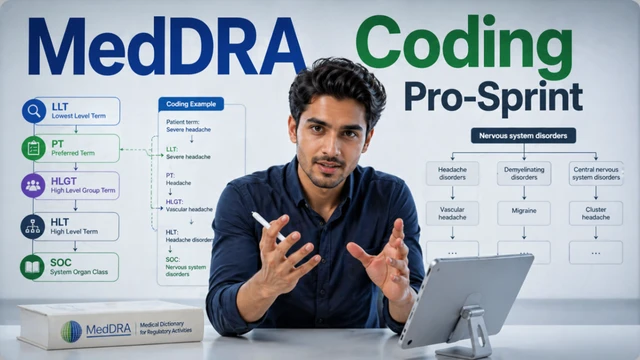
At ZANE ProEd, we focus on building job-ready professionals, not just certified students. Our approach is built on a system of practical application. For instance, our MedDRA Medical Coding Certification is not just about theory; it's designed to give you hands-on experience that mirrors the tasks you'll perform on day one of your job.
This same practical philosophy applies across related data-focused roles. Many of the analytical skills needed in medical coding are also valuable in pharmacovigilance, where understanding medical terms is key. You can explore this synergy in our guide to pharmacovigilance jobs for freshers.
The goal is to equip you with a system of thinking and doing, making you an asset to any healthcare organization from the moment you are hired.
Are Your Skills Ready for the Job Market?
Stop collecting certificates that don't lead to a career. It's time to focus on building the practical skills that companies are willing to pay for. The first step is to honestly assess where you stand.
Check your job readiness and see how your current skills compare to what top employers demand. A clear diagnosis of your skill gap is the first step toward a successful career in medical coding.
Build These Skills Now
Programs from ZANE ProEd Academy that directly address the skill gaps discussed above.
Follow Zane ProEd on Google
Preferred SourceAdd our publication as a preferred source to get the latest clinical research guides, industry updates, and career intel directly in your Google Top Stories & AI Overviews.