Medical Coding Jobs for Freshers in India: Complete Career Roadmap for Pharmacy Grads

Medical Coding Jobs for Freshers in India are entry-level roles in healthcare IT where pharmacy and life science graduates translate patient records into standardized codes like ICD-10 and CPT. These jobs offer a clear path to stable, well-paying careers, with demand driven by insurance, hospital billing, and global outsourcing. The right certification and practical skills can help you land your first job in 3–6 months.
If you hold a BPharm or MPharm degree and are feeling lost after graduation, you are not alone. The market is flooded with graduates, yet the jobs you were promised seem scarce. But here's a secret: medical coding jobs for freshers in India are growing rapidly, and they need people exactly like you—if you can prove you are job-ready.
Recruiters at top healthcare and IT companies are not looking for degree holders who need months of hand-holding. They want candidates who understand international coding standards, can pass compliance audits, and can contribute from day one. The WHO sets global health data standards, and India's CDSCO enforces local rules. Employers trust candidates who can navigate both.
Build These Skills Now
Programs from ZANE ProEd Academy that directly address the skill gaps discussed above.
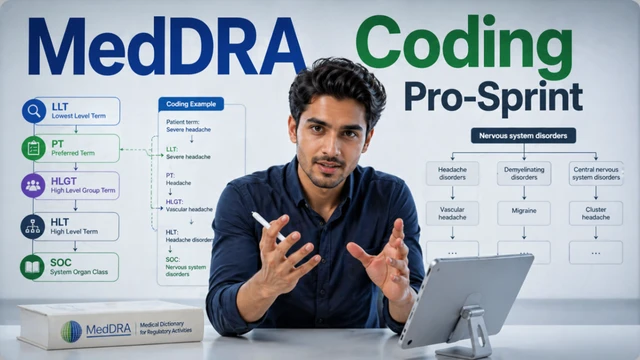
In this insider guide, you will discover exactly what medical coding is, how much you can earn, what certifications matter, and the step-by-step path to land your first job in this high-demand field.
What is Medical Coding and How Does It Lead to Medical Coding Jobs for Freshers in India?
Medical coding is the process of converting healthcare diagnoses, procedures, medical services, and equipment into universal alphanumeric codes. These codes are used for billing, insurance claims, medical research, and public health statistics. Without accurate coding, hospitals and insurance companies cannot process payments or track disease patterns.
In India, the most common code sets you will encounter are:
- ICD-10-CM – for diagnoses (World Health Organization standard)
- CPT – for medical procedures and services (American Medical Association)
- HCPCS – for supplies, drugs, and Medicare services
As a medical coder, your daily tasks include reviewing patient charts, abstracting key information, assigning correct codes, and ensuring documentation supports the codes for audit readiness. This ICD-10 coding career is detail-oriented but highly structured, making it perfect for pharmacy graduates with strong analytical skills.
What is the salary of a medical coder in India?
Salaries for medical coders in India vary by experience, certification, employer, and location. Here is a realistic breakdown for freshers and experienced professionals:
- Fresher (0–1 year): ₹2.5 LPA – ₹4.0 LPA
- 1–3 years: ₹3.5 LPA – ₹6.0 LPA
- 3–5 years: ₹5.0 LPA – ₹8.5 LPA
- Senior coder / team lead: ₹8.0 LPA – ₹12.0 LPA+
City-wise, Hyderabad, Bangalore, Pune, and Mumbai offer the highest number of medical coding jobs due to the concentration of healthcare BPOs, IT firms, and global in-house centers. Certified professionals with CPC certification India or equivalent often start at the higher end of these ranges.
Remember: the medical coder salary in India is not just about the number on your offer letter. Many companies also provide performance bonuses, night shift allowances, and rapid promotion paths for coders who demonstrate audit accuracy.
How to start a career in medical coding as a fresher?
Starting a career in medical coding requires a strategic approach, not just sending out resumes blindly. Here is a proven five-step action plan:
- Learn the fundamentals of medical terminology and anatomy – As a pharmacy graduate, you already have a strong foundation, but you must refresh your knowledge of clinical terms, disease processes, and pharmacology.
- Get a recognized certification – The CPC certification (Certified Professional Coder) from AAPC is the gold standard in India. Other options include CCS (Certified Coding Specialist) from AHIMA or specialized courses like MedDRA coding for pharmacovigilance. ZANE ProEd offers a medical coding course for BPharm graduates that includes simulation-based practice.
- Practice with real-world case scenarios – Use free online resources or enroll in a program that provides simulated patient charts and audit exercises. Employers value hands-on experience over theoretical knowledge.
- Build a portfolio of coded cases – Document your learning journey, create sample coding sheets, and showcase your accuracy rates. A verifiable portfolio sets you apart from other freshers.
- Target the right employers and apply strategically – Focus on healthcare BPOs, insurance companies, hospital billing departments, and IT firms like Optum, Cognizant, and Accenture. Tailor your resume to highlight your coding skills and certification.
This pathway is not about luck; it's about preparation. Many freshers land their first job within 3–6 months by following this exact framework.
What certifications are needed for medical coding?
Certification is non-negotiable for medical coding jobs in India. It proves to employers that you understand international code sets, compliance guidelines, and audit requirements. The three most recognized certifications are:
- CPC – Certified Professional Coder (AAPC): The most popular for outpatient coding. Requires passing a rigorous exam covering ICD-10, CPT, HCPCS, and medical terminology.
- CCS – Certified Coding Specialist (AHIMA): Ideal for inpatient hospital coding. Focuses on ICD-10-CM/PCS and DRG assignment.
- MedDRA Coding Certification: Specifically designed for pharmacovigilance and drug safety coding. This is particularly valuable for BPharm/MPharm graduates because it leverages your drug knowledge. ZANE ProEd's MedDRA Medical Coding Certification is aligned with ICH-GCP and international regulatory standards.
Many employers also require a basic understanding of medical coding vs clinical research – both are data-driven careers, but coding is more focused on reimbursement and healthcare analytics, while clinical research focuses on drug development. As a pharmacy graduate, you can choose either path, but medical coding often offers faster entry and more predictable work hours.
Is medical coding a good career for life science graduates?
Absolutely. Medical coding is one of the most accessible and stable careers for BPharm, MPharm, and BSc/MSc life science graduates in India. Here's why:
- High demand, low supply of skilled coders – The global healthcare outsourcing market is booming, and India is a preferred hub.
- Remote work opportunities – Many medical coding jobs offer work-from-home options, which is a huge advantage for freshers seeking flexibility.
- Clear career progression – From coder to auditor to team lead to coding manager, the path is well-defined.
- Pharmacy background is a superpower – Your knowledge of drug names, dosages, and disease processes gives you a head start over general graduates. You already understand the clinical context, which is the hardest part for non-life science coders.
Compared to medical coding vs clinical research, coding has lower entry barriers and less travel. Clinical research associate roles often require more experience and extensive travel to sites. Coding, on the other hand, can be done from a desk with a computer and an internet connection.
However, the window of opportunity is closing for those who rely solely on degrees. Automation is already handling basic code assignment, and employers are now looking for coders who can handle complex cases, perform audits, and ensure compliance. Before automation replaces basic roles, you must upskill now.
The Skill Gap: What Your Degree Didn't Teach You
Your pharmacy education gave you deep knowledge of drugs and diseases, but it did not prepare you for the day-to-day reality of medical coding. Let's compare what you learned in college versus what employers actually test during interviews:
| Conventional Education Teaches | Modern Employers Expect |
|---|---|
| Memorizing drug classifications and mechanisms | Applying ICD-10 and CPT codes to real patient scenarios |
| Writing theory exams | Passing timed coding simulations with high accuracy |
| Understanding Indian pharmaceutical regulations | Working with US-based compliance (HIPAA, OIG) and international standards (ICH-GCP) |
| No exposure to coding software | Navigating encoder tools, EHR systems, and audit tracking software |
This gap is why so many pharmacy graduates struggle to break into medical coding. The solution is not another generic online course; it's simulation-based training combined with a verifiable portfolio that proves you can do the job before you even get hired.
For a deeper look at how to build a healthcare career from scratch, read our guide on pharmacovigilance case processing jobs for freshers and discover how free certifications can boost your profile in this complete guide to free healthcare certifications.
Your 5-Step Roadmap to Medical Coding Jobs for Freshers in India
If you are serious about landing a job in medical coding within the next 6 months, follow this exact roadmap:
- Month 1: Build foundational knowledge – Enroll in a structured program that covers medical terminology, anatomy, pharmacology, and an introduction to ICD-10, CPT, and HCPCS. Use free resources to supplement.
- Month 2: Master coding guidelines – Deep dive into official coding guidelines, coding conventions, and compliance rules. Practice with real-world case studies.
- Month 3: Get certified – Prepare for and pass the CPC exam or complete a specialized MedDRA certification. This credential is your entry ticket.
- Month 4: Build your portfolio – Complete at least 20–30 simulated coding cases with accuracy above 95%. Document your process and create a digital portfolio.
- Month 5–6: Apply and interview – Target 50+ employers in Hyderabad, Bangalore, Pune, Mumbai, and remote roles. Highlight your certification, portfolio, and simulation experience. Prepare for coding tests and audit-based interviews.
This roadmap works because it mirrors what successful candidates actually do. It's not about spending years in another degree; it's about focused, practical upskilling.
From Theory to Job-Ready: The Power of Simulation-Based Learning
Traditional video courses teach you to watch and memorize. But medical coding is a performance skill—you must be able to code accurately under time pressure and justify your choices in an audit. That's why simulation-based learning is the missing link.
The best training programs, like ZANE ProEd's, immerse you in realistic, audit-ready workflows. You work on simulated patient charts, apply ICD-10 and CPT codes, receive instant feedback, and build a verifiable portfolio of coded cases. This portfolio becomes your proof of competence, replacing the 'fresher with no experience' label with 'job-ready candidate with demonstrable skills.'
Build These Skills Now
Programs from ZANE ProEd Academy that directly address the skill gaps discussed above.
How ZANE ProEd's MedDRA Medical Coding Certification Bridges the Gap
ZANE ProEd's MedDRA Medical Coding Certification is not just another online course. It's a career acceleration system designed specifically for pharmacy and life science graduates. The program focuses on:
- ICH-GCP international compliance – You learn to code within the framework of ICH guidelines, which is essential for roles in pharmacovigilance and drug safety.
- Audit readiness – Every assignment is structured like a real audit, teaching you to document, justify, and defend your coding decisions.
- Practical trial simulation – You work on simulated clinical trial data, not just textbook examples, preparing you for the exact tasks employers will test.
Many students ask about medical coding vs clinical research—this program bridges that gap by giving you MedDRA coding skills that are highly valued in both industries. It's about building a skill stack that makes you indispensable.
Explore how simulation workflows can transform your career by visiting our About page to understand our training philosophy.
Your next move: Audit your industry readiness. Take a critical look at your current resume and skills. Do you have a recognized certification? Can you code a complex medical record accurately? If the answer is no, it's time to take action. Explore simulation workflows and start building the portfolio that will get you hired. The first step is to understand the gap—then close it.
Build These Skills Now
Programs from ZANE ProEd Academy that directly address the skill gaps discussed above.
Follow Zane ProEd on Google
Preferred SourceAdd our publication as a preferred source to get the latest clinical research guides, industry updates, and career intel directly in your Google Top Stories & AI Overviews.