Medical Writing Career for Freshers India: Step-by-Step Getting Started Guide

Medical Writing Career for Freshers India: A medical writing career for freshers in India is a high-growth path where you create scientific documents like clinical study reports, patient information leaflets, and regulatory submissions. With BPharm, BSc, or life science degrees, you can enter this field through targeted upskilling, even without experience.
Are you a BSc, BCA, or BTech graduate who has faced multiple placement rejections? You're not alone. Many freshers in India struggle to land a job right after college. But there's a growing field that welcomes life science and even non-healthcare graduates: a medical writing career for freshers India. It doesn't just offer a job; it offers a long-term, stable, and well-paying career.
You may feel stuck, watching classmates get offers while you send out resumes with no response. The truth is, degrees alone are not enough anymore. Today's AI-driven healthcare industry demands practical skills that colleges simply don't teach. Medical writing is one of the few fields where you can build those skills quickly—even if you come from an IT or BPO background.
Build These Skills Now
Programs from ZANE ProEd Academy that directly address the skill gaps discussed above.
What does a medical writer do?
A medical writer turns complex scientific data into clear, accurate documents. They work with pharmaceutical companies, clinical research organizations (CROs), and medical communication agencies. Daily tasks include writing, editing, formatting, and referencing documents that support drug development and regulatory approval. This scientific writing job description often includes:
- Drafting clinical study reports and protocols
- Preparing patient information leaflets and consent forms
- Writing manuscripts for medical journals
- Creating regulatory submission documents for agencies like the FDA and EMA
- Ensuring all content meets ICH GCP and local guidelines (CDSCO in India)
Medical writers must have strong attention to detail, good research skills, and the ability to simplify complex data. You don't need to be a doctor—just a logical thinker who can follow strict guidelines.
What is the salary of a medical writer in India?
The medical writer salary in India varies by experience and specialization. Freshers can expect to earn between ₹3–5 lakhs per annum. With 2–4 years of experience, salaries rise to ₹6–10 LPA. Senior medical writers and those in niche areas like regulatory medical writing can earn ₹12–20+ LPA. Salaries are even higher if you work with global CROs or in cities like Bangalore, Mumbai, or Hyderabad.
How to become a medical writer without experience?
Breaking into medical writing without experience is possible if you follow a targeted plan. Here’s exactly what to do:
- Understand the industry: Read free resources from ICH and FDA to learn about clinical research documentation. Our detailed guide on medical writing career for freshers India can help.
- Take a skill-focused course: A medical writing course for BPharm graduates (or any life science background) gives you hands-on practice with real document types.
- Build a portfolio: Create sample documents like informed consent forms or plain language summaries. Use templates from EMA and ICH.
- Get certified: Certificates in niche areas like pharmacovigilance narrative writing make your profile stand out.
- Apply to internships: Many CROs and pharma companies offer 3–6 month paid internships for freshers.
What qualifications are needed for medical writing?
There is no single fixed path, but most employers look for:
- A bachelor’s degree in life sciences, pharmacy, biotechnology, or medicine (BPharm, BSc, BTech, MBBS, BDS).
- Strong written English skills—grammar and clarity are non-negotiable.
- Understanding of clinical research terminology and guidelines like ICH GCP.
- Proficiency in referencing tools like EndNote and document formatting in MS Word.
If you don’t have a life science degree, a bridge course in medical writing can still qualify you for entry-level roles. Many IT/BPO switchers succeed this way.
What types of documents does a medical writer create?
Medical writers produce a wide range of documents across the drug development lifecycle. The most common types include:
- Clinical study protocols: detailed plans for clinical trials.
- Investigator brochures: summaries of drug safety and properties.
- Clinical study reports: full results of trials submitted to regulators.
- Patient narratives: safety stories for pharmacovigilance.
- Regulatory submission documents: Common Technical Document (CTD) modules for FDA, EMA, and CDSCO.
- Plain language summaries: lay-friendly versions of trial results, now often required by WHO for transparency.
This is where regulatory medical writing becomes a high-paying specialization—you help companies get drugs approved.
What do employers expect that college doesn't teach?
Your degree teaches you theory. Employers demand practical, real-world skills. The gap is huge:
- College teaches: basic pharmacology, research methods (theory).
- Employers want: exact knowledge of ICH E3, E6, E9 guidelines; ability to draft a clinical study report using a sponsor’s template; experience with electronic Common Technical Document (eCTD) software; understanding of medical writing style guides (AMA, CSE).
- College teaches: academic writing with long paragraphs.
- Employers want: concise, actionable text that passes QC (quality checks) in under 2 hours.
This is why most freshers get rejected—they lack the documented proof of these skills.
Your 6-Step Medical Writing Career Roadmap
- Diagnose your starting point: Audt your English writing and life science fundamentals. Free online quizzes can help.
- Enroll in a simulation-based program: Choose one that mimics real document creation, not just video lectures.
- Master regulatory guidelines: Study ICH GCP, 21 CFR Part 11, and CDSCO’s New Drugs and Clinical Trials Rules.
- Build a portfolio of 3–5 sample documents: Include a protocol synopsis, a patient information sheet, and a narrative.
- Optimize your LinkedIn and job portal profiles: Use keywords like “regulatory medical writer” and “clinical research documentation.”
- Apply with confidence: Target CROs, pharma companies, and medical communication agencies. Follow up politely.
This roadmap is realistic and has helped many switchers land roles in under 6 months.
Simulation-Based Learning: The Fast Track to Hands-On Skills
Traditional courses give you information. Simulations give you experience. In a simulation, you draft a document exactly as you would on the job, using industry-standard templates, AI tools, and reference management. You receive line-by-line feedback from experts—just like a real QC process. This is the most effective way to build a portfolio that shows employers you can deliver from day one.
Build These Skills Now
Programs from ZANE ProEd Academy that directly address the skill gaps discussed above.
Master Real-World Document Creation with AI Simulations
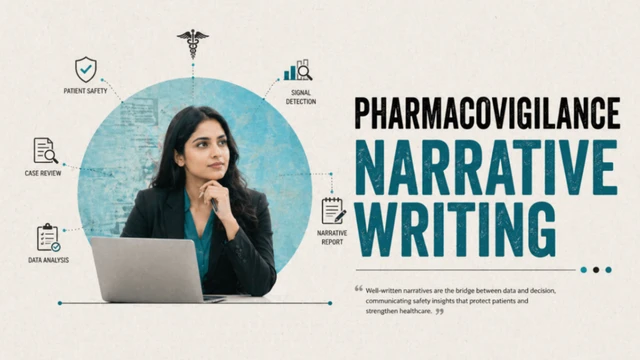
At ZANE ProEd, our system includes two hyper-focused simulations: Clinical Trial Protocol Writing with AI and Pharmacovigilance Narrative Writing. In the first, you learn to build a complete protocol synopsis using intelligent templates and AI-assisted drafting. In the second, you create patient safety narratives that follow ICH E2B guidelines. These simulations replicate the exact workflow of a junior medical writer in a top CRO. You don't just learn—you produce documents that serve as your first portfolio.
Ready to see how your skills stack up against real job requirements? Use our free skills benchmark to identify gaps and get a personalized study plan.
Build These Skills Now
Programs from ZANE ProEd Academy that directly address the skill gaps discussed above.
Follow Zane ProEd on Google
Preferred SourceAdd our publication as a preferred source to get the latest clinical research guides, industry updates, and career intel directly in your Google Top Stories & AI Overviews.