Pharma Validation Specialist Career in India: A Complete Step-by-Step Guide

Pharma Validation Specialist Career in India: A validation specialist ensures pharmaceutical equipment, processes, and systems meet safety and quality standards. They perform IQ, OQ, PQ tests and document results. For medical graduates, this is a high-demand role with salaries ranging from ₹3.5 LPA to ₹8 LPA for freshers.
If you hold a BDS, BHMS, BAMS, or Nursing degree, you might feel overqualified and under-skilled. The pharma validation specialist career India is a hidden gem that respects your medical background while building technical expertise. This guide shows you exactly how to enter this field step by step.
\n\nWhat does a Validation Specialist do in pharma?
\nA validation specialist is the guardian of quality in pharma manufacturing. They make sure every machine, software, and process consistently produces safe medicines. If you have a BDS, BHMS, BAMS, or Nursing degree, you already understand patient safety. This role lets you apply that mindset in an industrial setting.
Build These Skills Now
Programs from ZANE ProEd Academy that directly address the skill gaps discussed above.
Day-to-day, a validation specialist writes and executes validation protocols. They work with cross-functional teams to ensure compliance with regulatory bodies like CDSCO, FDA, and WHO. It's a role that blends technical detail with documentation skills.
\nKey responsibilities include:
\n- \n
- Writing IQ (Installation Qualification), OQ (Operational Qualification), and PQ (Performance Qualification) protocols \n
- Performing equipment and system validation tests \n
- Analyzing data and writing reports \n
- Investigating any deviations or failures \n
- Maintaining validation documentation as per ICH guidelines \n
- Supporting audits and regulatory inspections \n
What is the salary of a Validation Specialist in India?
\nThe validation specialist salary in India varies by experience and company. For freshers from medical backgrounds, you can expect:
\n- \n
- Entry-level: ₹3.5 – ₹5 Lakhs per annum \n
- With 2-4 years of experience: ₹5 – ₹8 LPA \n
- Senior specialists (5+ years): ₹8 – ₹15 LPA or more \n
Top pharmaceutical companies like Sun Pharma, Dr. Reddy’s, Cipla, and MNCs offer competitive packages. The salary also depends on your skill set—hands-on knowledge of IQ OQ PQ validation can push you into higher brackets quickly.
\nIn addition to base pay, many roles offer bonuses, health benefits, and opportunities for international assignments.
\n\nWhat is IQ, OQ, PQ in pharmaceutical validation?
\nIf you’re searching for a pharmaceutical validation career, you must know the 3 pillars: IQ, OQ, and PQ. They are the steps to prove that equipment and systems work correctly in a real manufacturing environment.
\n- \n
- IQ – Installation Qualification: Did we install it right? It checks that equipment is delivered correctly, installed as per manufacturer specs, and documented. For example, verifying a tablet compression machine is placed with proper clearances and utilities. \n
- OQ – Operational Qualification: Does it work as expected? It tests that the equipment operates within defined limits. You run tests at high and low parameters to ensure consistency. Think of it as a stress test for the machine. \n
- PQ – Performance Qualification: Does it perform under real conditions? It proves that the equipment consistently produces a quality product when operated by real users in the actual production setting. For example, running a batch of tablets and checking for uniformity. \n
These concepts are the backbone of a quality systems specialist pharma role. Companies rely on these documented proofs to pass audits from FDA or CDSCO.
\n\nHow to start a career in pharmaceutical validation?
\nStarting a pharma validation specialist career India may feel intimidating, but it’s achievable with a structured plan. Here’s a roadmap:
\nStep 1: Understand the gap. Your medical degree taught you anatomy and patient care, but not GMP or regulatory guidelines. Accept that you need practical industry skills.
\nStep 2: Learn the fundamentals. Start with the basics of Good Manufacturing Practices (GMP), ISO standards, and regulatory requirements. Free resources from WHO and EMA are a good start.
\nStep 3: Get hands-on with tools. Familiarize yourself with validation documents: User Requirement Specifications (URS), Design Qualification (DQ), and the validation lifecycle. Practice writing simple IQ/OQ/PQ protocols.
\nStep 4: Pursue structured training. A certification program that simulates real-world validation projects can bridge the gap between your degree and industry needs.
\nStep 5: Build a portfolio. Document your learning—whether it’s a sample validation protocol you created or a case study you analyzed. This shows employers your initiative.
\nStep 6: Apply smart. Target entry-level roles like Validation Trainee, QA Associate, or CSV (Computer System Validation) Analyst. Use your medical background as a strength: you already think about safety and compliance.
\n\nWhat qualifications are needed for a validation specialist role?
\nHere’s the truth: your BDS, BHMS, BAMS, or Nursing degree qualifies you—but it won’t prepare you. Employers don’t just look at degrees; they expect job-ready skills. For a validation specialist job description, companies typically ask for:
\n- \n
- Bachelor’s or Master’s in Pharmacy, Life Sciences, or Engineering. But medical graduates are increasingly welcomed for their analytical mindset. \n
- Knowledge of GMP, GLP, and regulatory guidelines (ICH, FDA, CDSCO). \n
- Proficiency in creating and executing validation protocols (IQ, OQ, PQ). \n
- Strong documentation and communication skills. \n
- Familiarity with quality systems like CAPA, Change Control, and Risk Management. \n
What colleges often miss: real-world document drafting, using electronic Quality Management Systems (eQMS), and understanding how audits actually work. That’s where focused, skill-based training fills the gap.
\n\nSkill Gap Exposure: College vs. Industry Reality
\nAs a medical graduate, you’ve spent years studying the human body. But the pharma industry runs on a different language: protocols, SOPs, and audit trails. Here’s a quick comparison:
\n| What college teaches | What employers expect |
| Theoretical concepts of pharmacology | Writing and executing IQ/OQ/PQ protocols |
| Clinical diagnosis and treatment | Identifying deviations and performing root cause analysis |
| Patient interaction skills | Cross-functional teamwork with engineering, production, and QA |
| Basic lab equipment handling | Managing computerized systems and eQMS tools |
The gap is real, but it’s bridgeable. Many companies now value your clinical reasoning because you can connect patient safety to manufacturing quality. You just need the missing technical layer.
\n\nA Structured Roadmap to Become Job-Ready
\nFollow this step-by-step process to transform from “overqualified but under-skilled” to an in-demand validation professional:
\n- \n
- Foundation (Month 1): Study pharma quality systems, GMP, and regulatory landscapes. Use free online sources like the ICH website. \n
- Core Validation Skills (Month 2): Dive into equipment validation, process validation, and CSV. Learn the documentation flow: URS → DQ → IQ → OQ → PQ. \n
- Simulated Practice (Month 3): Work through realistic case studies. Draft validation protocols for common equipment like autoclaves, HVAC systems, and tablet compression machines. \n
- System Exposure (Month 4): Get hands-on with a simulation-based eQMS platform. This teaches you how change control, deviation, and CAPA are managed digitally—exactly like in companies. \n
- Portfolio Building (Month 5): Compile your protocols, reports, and any mock audit findings. This becomes your proof of skill. \n
- Interview Prep (Month 6): Practice common validation interview questions. Be ready to explain IQ/OQ/PQ with examples. Highlight your medical background’s value: understanding patient impact of quality failures. \n
The System Bridge: Learning by Doing
\nReading about validation isn’t enough. You need to practice in a safe, controlled environment before stepping into a live manufacturing plant. That’s where simulation-based learning comes in. It replicates the exact workflows of a pharma quality department: writing protocols, managing deviations, closing CAPAs, and navigating audits.
\nImagine working on a virtual lab where you can validate a lyophilizer, generate reports, and get instant feedback—without the pressure of ruining a real batch. This method builds confidence and sharpens your documentation skills, which is 70% of a validation specialist’s job.
\nBuild These Skills Now
Programs from ZANE ProEd Academy that directly address the skill gaps discussed above.
Bridging Your Skills with Targeted Programs
\nTo accelerate your journey, consider structured pathways that compress years of learning into months. For validation, programs like the Validation & Qualification Certification simulate real projects: from protocol writing to audit closures. They are built by industry veterans who know exactly what recruiters scan for.
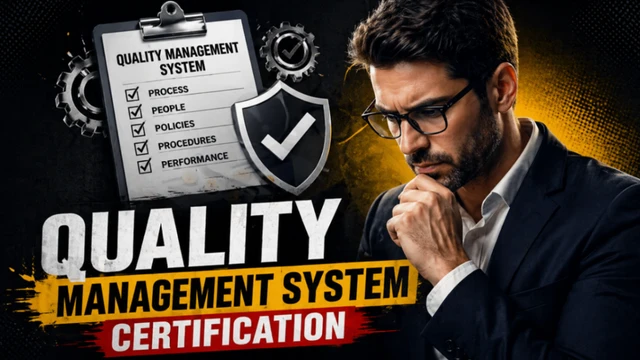
\nEqually important is mastering the broader quality framework. A Quality Management System Certification teaches you how pharma companies organize their quality policies, handle complaints, and manage risks. Together, these certifications create a complete skill profile that makes your medical degree a true asset.
\nZANE ProEd’s approach is not about adding another certificate to your wall. It’s about embedding a quality mindset through a system that mirrors daily industry operations. You learn to think and act like a validation specialist from day one.
\n\nYour Next Step: Check Your Readiness
\nAre you ready to transition into a high-growth pharma validation specialist career India? Ask yourself:
\n- \n
- Can you explain IQ, OQ, PQ with confidence? \n
- Have you ever drafted a validation protocol? \n
- Do you know how to handle a deviation during a batch run? \n
If you hesitated on any of these, it’s time to skill up. Explore how simulation-based training can transform your theory into applied expertise. See how you compare to job-ready standards and take the first concrete step toward your new career.
\nRemember, the industry is actively seeking professionals who understand quality from a patient-safety lens. Your background is valuable—when paired with the right technical skills.
\nFor further reading on parallel career paths, check out our guide on QA/QC Pharma Jobs for Freshers in 2025.
Build These Skills Now
Programs from ZANE ProEd Academy that directly address the skill gaps discussed above.
Follow Zane ProEd on Google
Preferred SourceAdd our publication as a preferred source to get the latest clinical research guides, industry updates, and career intel directly in your Google Top Stories & AI Overviews.