Pharmacovigilance Case Processing Jobs for Freshers: A Step-by-Step Guide

Pharmacovigilance Case Processor jobs for freshers involve collecting and documenting adverse event data from drugs and medical devices. Key tasks include data entry into safety databases, medical coding using MedDRA, and writing case narratives. Life Science graduates need practical skills in ICSR processing to get hired.
If you have a BSc or MSc in Biotechnology, Microbiology, or Biochemistry, you might feel stuck. You completed your degree and maybe even an internship, but the job offers aren't coming. You are not alone. This is a common problem for Life Science graduates looking for pharmacovigilance case processing jobs freshers.
Many freshers feel that their academic knowledge isn't enough. Internships often provide only a brief overview, not the deep, practical skills that companies look for. This guide provides a clear, step-by-step roadmap to bridge that gap.
Build These Skills Now
Programs from ZANE ProEd Academy that directly address the skill gaps discussed above.
We will break down what a Case Processor does, what you can earn, and exactly what skills you need to build to get hired in the pharmacovigilance industry in India.
What does a Pharmacovigilance Case Processor do?
A Pharmacovigilance (PV) Case Processor is like a detective for drug safety. Your main job is to handle reports of adverse drug reactions. The pharmacovigilance case processor job description focuses on creating a detailed and accurate record of every case.
Your daily tasks typically include:
- Triage: Receiving and sorting incoming adverse event reports.
- Data Entry: Entering all relevant information from the report into a safety database like Argus or ArisG. This includes patient details, drug information, and the description of the adverse event.
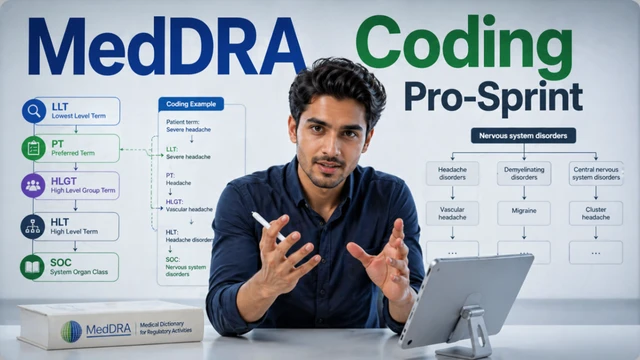
- MedDRA Coding: Translating the reported medical events, patient history, and test results into standardized codes using the MedDRA dictionary. This is a critical step for data analysis.
- Narrative Writing: Writing a clear and concise summary of the adverse event case in a specific format. This story must be medically accurate and easy to understand.
- Quality Check: Reviewing cases for completeness, accuracy, and consistency before they are submitted to regulatory authorities like the FDA or India's CDSCO.
Essentially, you are responsible for the entire lifecycle of an Individual Case Safety Report (ICSR), ensuring it meets global quality and regulatory standards.
What is the salary of a PV Case Processor in India?
For freshers entering the field, the PV case processor salary India is quite competitive. It's a great starting point for a long-term career in pharmacovigilance.
Typically, a fresher can expect a starting salary in the range of ₹2.8 Lakhs to ₹4.5 Lakhs per annum. This amount can vary based on a few key factors:
- Company Type: Multinational corporations (MNCs) and large contract research organizations (CROs) generally offer higher salaries than smaller Indian companies.
- Location: Jobs in major pharmaceutical hubs like Mumbai, Bangalore, Hyderabad, and Pune may offer better pay to account for a higher cost of living.
- Skills: Candidates with practical, certified skills in MedDRA coding or hands-on experience with safety databases often command a higher starting salary.
As you gain 1-3 years of experience, your salary can quickly grow to the ₹5 Lakhs to ₹8 Lakhs range, making it a financially rewarding career path in pharmacovigilance.
How to get a PV case processing job as a fresher?
Getting your first PV job requires a focused strategy. Your degree is the foundation, but employers are looking for job-ready skills. Here is a simple plan:
- Understand the Basics: Go beyond your college syllabus. Learn the core principles of pharmacovigilance, including GVP (Good Pharmacovigilance Practices) and the guidelines from authorities like the ICH.
- Master ICSR Processing: This is the core function of the job. You need to understand every step, from case intake and triage to data entry and narrative writing. This is one of the most in-demand adverse event reporting jobs.
- Learn MedDRA Coding: You must know how to code adverse events correctly. Having a certification in MedDRA gives you a huge advantage over other applicants. It shows employers you are serious and have practical knowledge.
- Get Familiar with Safety Databases: While getting access to real software like Argus is hard, understand its workflow. Know what fields are important and how data flows through the system.
- Build a Skill-Based Resume: Instead of just listing your degree and internships, highlight your practical PV skills. Use keywords like 'ICSR Processing', 'MedDRA Coding', 'Narrative Writing', and 'Triage'.
What is ICSR processing in pharmacovigilance?
ICSR stands for Individual Case Safety Report. It is the foundation of all drug safety monitoring. An ICSR is a detailed report of a single patient's adverse experience with a drug or medical product.
The goal of an ICSR processing career is to create a high-quality, standardized report that can be analyzed by scientists and regulators. This process involves several key stages:
- Case Intake: Receiving information from sources like doctors, patients, or clinical trials.
- Case Validation: Checking if the report has the four minimum criteria for validity: an identifiable patient, an identifiable reporter, a suspect drug, and an adverse event.
- Data Entry & Coding: Entering the data into a safety database and coding the medical terms using MedDRA.
- Quality Review: Ensuring the case is accurate, complete, and logical.
- Submission: Submitting the report to regulatory authorities like the European Medicines Agency (EMA) within strict timelines.
As a Case Processor, you are the person who builds this entire report from scratch. Your accuracy is critical for public health.
What is MedDRA coding and how is it used in PV?
MedDRA stands for Medical Dictionary for Regulatory Activities. Think of it as a universal language for drug safety. It is a massive, standardized dictionary of medical terms.
In pharmacovigilance, different people might describe the same side effect using different words. For example, a patient might say 'feeling dizzy,' a doctor might write 'vertigo,' and a nurse might note 'lightheadedness.' For a computer to analyze this data, all these terms need to be converted into a single, standard code. That's where MedDRA comes in.
As a Case Processor practicing MedDRA coding for freshers, you will:
- Read the case details provided by the reporter.
- Search the MedDRA browser to find the most accurate and specific term for the adverse event, medical history, and test results.
- Assign the correct codes to the case in the safety database.
This standardization is crucial for signal detection, allowing companies and regulators to identify potential safety issues from thousands of reports globally.
The Gap: What Your Degree Taught vs. What Companies Need
Your MSc in Biotechnology or a related Life Science field gave you a strong theoretical foundation. You understand cell biology, immunology, and research methods. But companies hiring for PV roles need something different.
What your college taught you:
- Theoretical knowledge of human anatomy and physiology.
- Basic laboratory techniques.
- How to write a research paper.
What PV employers actually expect:
- Practical knowledge of the end-to-end ICSR processing workflow.
- Hands-on ability to code adverse events using MedDRA.
- Skills to write a regulatory-compliant case narrative.
- Familiarity with the user interface of safety databases like Oracle Argus.
This gap is why many freshers with good grades struggle to get hired. They lack the specific, job-ready skills required from day one.
Your 5-Step Pathway to a Case Processing Job
Feeling overwhelmed? Don't be. Here is a clear, actionable path to follow:
- Build Your Foundation: Dedicate time to learning the specific regulations and guidelines of pharmacovigilance. Understand the 'why' behind every task.
- Master the ICSR Workflow: Learn the theory and practice of each step: triage, data entry, quality control, and submission.
- Become Proficient in MedDRA: This is a non-negotiable skill. Practice coding different medical scenarios until you are confident and accurate.
- Simulate Real-World Experience: Since you can't get access to real company software, use simulation-based training that mimics the real work environment. This is the closest you can get to on-the-job experience.
- Craft a Targeted Resume & Interview Story: Re-write your resume to showcase these new skills. During interviews, talk about your practical knowledge of case processing, not just your academic projects.
The Bridge to Your First Job: Simulation, Not Just Theory
How do you gain practical experience without having a job? The answer is simulation. Reading about case processing is not enough. You need to practice it.
Modern training systems now use job simulations that let you work on realistic case scenarios in a software environment that mimics what companies use. This allows you to build real muscle memory and confidence. As companies demand job-ready talent, this type of practical training has become essential for freshers.
Build These Skills Now
Programs from ZANE ProEd Academy that directly address the skill gaps discussed above.
Build Industry-Level Skills with a Proven System
At ZANE ProEd, we focus on building job-ready talent through a system of practical learning. Our programs are not just video lectures; they are hands-on simulations of the actual work you will do as a Pharmacovigilance Case Processor.
Our ICSR Case Processing & Triage module takes you through the entire lifecycle of a case, from receiving a report to preparing it for medical review. You'll learn the practical details of data entry, validation, and quality control.
In the MedDRA Medical Coding Certification module, you will learn the structure of the dictionary and practice coding hundreds of real-world medical terms. This gives you the accuracy and speed that employers are looking for.
This system is designed to turn your academic knowledge into the practical, hireable skills that will land you your first job in pharmacovigilance.
Are Your Skills Ready for the Industry?
Stop wondering if you are qualified. It's time to build the exact skills that hiring managers are looking for. The path to a successful career in pharmacovigilance is clear and achievable.
Take the first step by understanding what the industry truly demands. See how your current skills compare to a real job description and discover how our job simulations can prepare you for a successful career as a Pharmacovigilance Case Processor.
Build These Skills Now
Programs from ZANE ProEd Academy that directly address the skill gaps discussed above.
Follow Zane ProEd on Google
Preferred SourceAdd our publication as a preferred source to get the latest clinical research guides, industry updates, and career intel directly in your Google Top Stories & AI Overviews.