Signal Detection Pharmacovigilance Career: A Guide for Life Science Freshers

Signal Detection Specialist: A signal detection pharmacovigilance career involves identifying potential new side effects or safety issues of medicines. Specialists analyze large datasets of patient safety reports to find patterns, making it a critical, high-growth role for Life Science graduates moving into the corporate pharmaceutical sector.
Starting a signal detection pharmacovigilance career is one of the smartest moves a BSc or MSc Life Science graduate can make today. If you've studied Biotechnology, Microbiology, or Biochemistry, you might think your only options are in a lab. But there's a hidden, high-paying career path that uses your analytical skills in a completely different way.
This role is like being a detective for medicines. You don't need years of lab experience. What you need are specific, industry-focused skills that your college degree probably didn't cover. This guide will give you a clear, step-by-step roadmap to enter this exciting field, even with no prior job experience.
Build These Skills Now
Programs from ZANE ProEd Academy that directly address the skill gaps discussed above.
Let's break down how you can build a successful career in pharmacovigilance signal management and target roles that pay between ₹5–10 LPA in a competitive Indian market.
What is signal detection in pharmacovigilance?
Signal detection in pharmacovigilance is the process of looking for potential safety issues with medicines already on the market. Think of it as an early warning system. A 'signal' is a piece of information that suggests a new, potential link between a drug and an adverse event (a side effect).
The main goal is to find these signals as early as possible. Specialists analyze thousands of safety reports from patients, doctors, and hospitals. They use special tools and statistical methods to find patterns that might not be obvious. For example, if a small but unusual number of patients taking a new heart medicine report sudden hearing loss, that could be a signal.
This work is critical for patient safety. It helps regulatory bodies like the CDSCO in India and the FDA in the US make informed decisions about a drug's safety. The entire process of pharmacovigilance signal management involves detecting, validating, prioritizing, and assessing these signals to protect public health.
What is the salary of a Signal Detection Specialist in India?
The signal detection specialist salary is very competitive in India, especially for candidates with the right skills. Since this is a specialized field, companies are willing to pay well for qualified professionals. Your salary will depend on your skills, certification, and the company you work for.
Here is a typical salary range for signal detection roles in India:
- Fresher / Trainee (0-1 year experience): As a fresher with specialized training in signal detection and MedDRA, you can expect a starting salary of ₹4 LPA to ₹6 LPA. This is higher than many entry-level lab or QC roles.
- Signal Detection Analyst (2-4 years of experience): With a few years of experience, your salary can increase to ₹7 LPA to ₹10 LPA. At this stage, you'll be handling more complex signals and might be leading small projects.
- Senior Specialist / Manager (5+ years of experience): Senior roles can command salaries of ₹12 LPA and above. These positions involve strategy, team management, and direct interaction with regulatory authorities.
These figures show that a career in signal detection offers strong financial growth, making it an attractive option for ambitious Life Science graduates.
How to become a Signal Detection Specialist?
Becoming a signal detection specialist requires a specific skill set that goes beyond your college degree. Here is a clear path on how to become a signal detection specialist, especially for a fresher.
- Build a Strong Pharmacovigilance Foundation: Before you can detect signals, you must understand the basics. Learn about the pharmacovigilance lifecycle, Individual Case Safety Reports (ICSRs), and the importance of data quality. Understanding case processing is the first step.
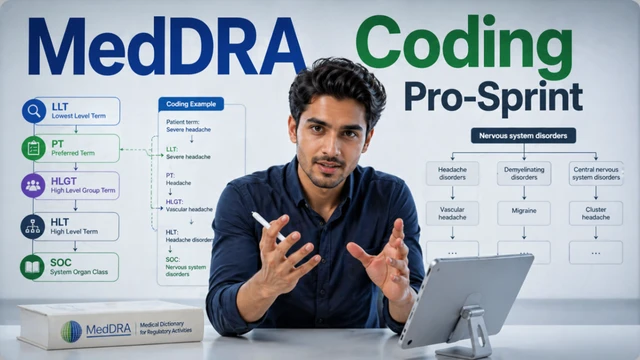
- Master MedDRA Coding: MedDRA (Medical Dictionary for Regulatory Activities) is the universal language of pharmacovigilance. You cannot work in signal detection without being an expert in it. Every adverse event is coded using MedDRA, and accurate coding is essential for finding correct signals.
- Learn Signal Detection Methodologies: This involves understanding both qualitative and quantitative methods. You need to learn about statistical techniques like Proportional Reporting Ratio (PRR) and Reporting Odds Ratio (ROR) that are used to identify signals from large safety databases.
- Get Hands-On Experience with Tools: Theoretical knowledge is not enough. You must gain practical experience with safety databases like Oracle Argus or ARISg, and understand how to navigate global databases like the WHO's VigiBase.
- Understand Global Regulations: You need to be familiar with guidelines from regulatory bodies like the ICH (International Council for Harmonisation). Guidelines like ICH E2E are fundamental to this job.
What tools are used for signal detection?
Signal detection specialists use a variety of sophisticated signal detection tools and methods to analyze vast amounts of safety data. These tools help them identify meaningful patterns that could indicate a safety risk.
Here are the main categories of tools you'll need to know:
- Safety Databases: These are the core systems where all adverse event data is stored. The most common ones used in the industry are Oracle Argus Safety and ARISg. Recruiters will specifically look for hands-on experience with these platforms.
- Global Adverse Event Databases: To look for signals globally, specialists access large public databases. Key examples include VigiBase (maintained by the WHO), FAERS (FDA Adverse Event Reporting System), and EudraVigilance (European Medicines Agency).
- Statistical Software and Algorithms: Companies use statistical software like SAS, R, or custom-built systems to run data mining algorithms. These algorithms calculate statistics that highlight drug-event combinations that are reported more frequently than expected.
- Data Visualization Tools: Tools like Tableau or Spotfire are often used to create visual representations of data. This helps specialists to easily spot trends, spikes, and patterns that might be a safety signal.
Being proficient in these tools is a key part of the signal detection job description and will make your profile stand out to recruiters.
What qualifications are needed for signal detection roles?
To start a signal detection pharmacovigilance career, you need a combination of the right education and specific industry skills. While your Life Science degree is the entry ticket, it's the specialized skills that will get you the job.
Educational Qualifications:
- A bachelor's or master's degree in a life science field is essential. This includes:
- BSc / MSc in Biotechnology
- BSc / MSc in Microbiology
- BSc / MSc in Biochemistry
- Bachelor of Pharmacy (B.Pharm) or Master of Pharmacy (M.Pharm)
Essential Skills & Knowledge:
- Strong Foundation in Human Anatomy & Physiology: You must understand how the body works to assess how a drug might be causing a side effect.
- Expertise in MedDRA Coding: This is a non-negotiable skill. You must know how to accurately code medical terms and patient reports.
- Analytical Mindset: The job is about finding patterns in data. You need to be curious, detail-oriented, and good at problem-solving.
- Knowledge of PV Regulations: Familiarity with guidelines from authorities like the ICH and EMA is crucial for compliance.
- Proficiency with Safety Databases: As mentioned, practical experience with tools like Argus Safety gives you a huge advantage. This is a skill rarely taught in college but demanded by employers.
The Skill Gap: What College Teaches vs. What Industry Needs
Your BSc or MSc gave you great theoretical knowledge about biology and chemistry. You learned about cellular processes and laboratory techniques. However, the pharmaceutical industry operates on a different set of tools and regulations.
Employers hiring for signal detection roles expect you to know MedDRA, understand signal management workflows, and be able to navigate a safety database from day one. This is the gap that most freshers face. Your degree proves you can learn, but industry-specific training proves you can do the job right away.
Your Step-by-Step Roadmap to a Signal Detection Career
- Acknowledge the Gap: Understand that your college degree is the foundation, not the complete structure. Accept that you need to learn specific industry skills.
- Master the Language (MedDRA): Start by getting certified in MedDRA. It is the single most important hard skill for this role.
- Learn the Process (Signal Management): Study the end-to-end signal management lifecycle, from data mining to signal assessment and reporting.
- Get Your Hands on the Tools (Simulations): You can't get access to a real company's Argus database. The only way to learn is through simulation-based training that mimics the real-world work environment.
- Build an Interview-Ready Profile: Structure your resume to highlight these new skills. Prepare to talk about signal detection methodologies and tools in your interviews.
Bridging the Gap with Practical, Simulation-Based Learning
The fastest way to gain these job-ready skills is not through more theory, but through practical application. Simulation-based training platforms allow you to work on realistic case studies using software that functions just like the real tools used by top pharma companies. This is how you build confidence and prove to employers you are ready for the job.
Build These Skills Now
Programs from ZANE ProEd Academy that directly address the skill gaps discussed above.
A System for Career Success
At ZANE ProEd, we don't just provide courses; we provide a system designed to get you hired. Our approach focuses on the exact skills the industry demands.
The Pharmacovigilance Signal Detection with AI program gives you hands-on experience with data analysis and modern tools. It is built to take you from a theoretical understanding to practical application. Paired with a foundational certification in MedDRA Medical Coding, you create a powerful skill set that is in high demand. This combination demonstrates to recruiters that you are not just another fresher, but a candidate trained for the specific challenges of a signal detection role.
This systematic approach helps you bypass the 'no experience' problem and positions you as a valuable asset from day one. You'll be prepared to not just answer interview questions, but to demonstrate your capabilities.
Are You Ready for a High-Growth Career?
A career in signal detection is waiting for bright Life Science graduates who are willing to learn the right skills. It's a chance to build a stable, high-paying career that makes a real impact on patient safety.
Instead of hoping your degree is enough, take control of your career path. See how your current skills compare to what top pharmaceutical companies are looking for. Check your job readiness and discover your potential in the world of pharmacovigilance.
Build These Skills Now
Programs from ZANE ProEd Academy that directly address the skill gaps discussed above.
Follow Zane ProEd on Google
Preferred SourceAdd our publication as a preferred source to get the latest clinical research guides, industry updates, and career intel directly in your Google Top Stories & AI Overviews.