Pharmacovigilance Case Processing Jobs Freshers: Complete Guide for Chemistry Graduates

Pharmacovigilance Case Processor A Pharmacovigilance Case Processor reviews, codes, and enters adverse event reports into safety databases. Freshers with BSc/MSc Chemistry can qualify by learning ICSR processing, MedDRA coding, and safety database tools. Entry-level salaries range ₹2.5–4 LPA in India.
If you are a BSc or MSc Chemistry graduate, you have probably seen pharmacovigilance case processing jobs freshers and wondered if you can apply. Many of you have taken certification courses but still feel stuck. Here is the shocking truth: 90% of freshers fail because they memorize theory but never practice real cases. This blog will show you the exact steps to become job-ready, not just certified.
What does a Pharmacovigilance Case Processor do? (pharmacovigilance case processing jobs freshers)
A Pharmacovigilance (PV) Case Processor handles individual case safety reports (ICSRs) from patients, doctors, and clinical trials. Your main job is to turn raw safety information into clean, standard data that regulators can use. The pharmacovigilance case processor job description includes:
Build These Skills Now
Programs from ZANE ProEd Academy that directly address the skill gaps discussed above.
- Receiving and triaging adverse event reports from emails, calls, or databases.
- Entering case data into safety databases like Argus, ArisG, or Veeva Vault.
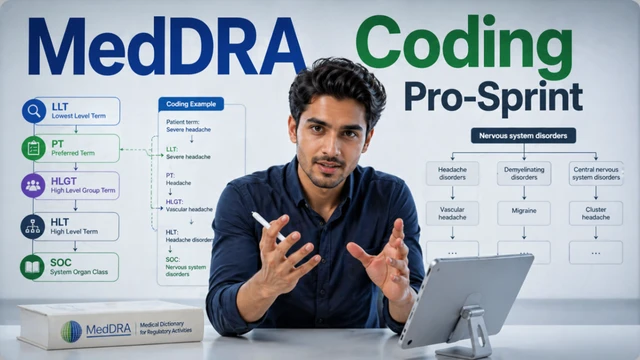
- Coding medical terms using MedDRA (Medical Dictionary for Regulatory Activities).
- Assessing seriousness, causality, and expectedness of adverse events.
- Writing clear case narratives.
- Performing quality checks and follow-up queries.
Freshers with a chemistry background are valued because they understand drug structures and can learn coding rules quickly. But you must show practical skill, not just a certificate.
What is the salary of a PV Case Processor in India?
The PV case processor salary India varies by city, company, and experience. For freshers:
- Small CROs: ₹2.0–3.0 LPA
- Mid-size CROs or pharma companies: ₹2.5–3.5 LPA
- Global CROs (like IQVIA, Parexel, Syneos): ₹3.0–4.5 LPA
After 1-2 years, salaries jump to ₹4–6 LPA. After 3-5 years with specialization in aggregate reporting or signal detection, you can earn ₹8–12 LPA.
Note: Pure coding jobs may pay less initially, but learning MedDRA coding and narrative writing boosts your value. Also, many companies offer night shifts for global clients, which adds shift allowance.
How to get a PV case processing job as a fresher?
Getting pharmacovigilance case processing jobs freshers is possible if you follow a targeted plan:
- Learn the basics: Take a structured course in pharmacovigilance and ICSR processing. Look for courses that include simulation and real case practice.
- Master MedDRA coding: Practice coding at least 100 sample cases yourself. Use free resources like MedDRA browser (after subscription) or practice with WHO-ART.
- Get hands-on with safety databases: Many employers ask for Argus or ArisG experience. You cannot get access to these systems as a fresher, so choose a program that offers simulated database training.
- Build a mini portfolio: Create 5-10 mock ICSRs with narratives, coding decisions, and quality check notes. Show this in interviews.
- Network on LinkedIn: Connect with PV professionals, join pharmacovigilance groups, and ask for referrals.
- Apply to CROs and BPOs: Companies like Accenture, Wipro, TCS, and Cognizant hire freshers for PV case processing. Also look at smaller CROs.
For a complete fresher guide to PV case processing jobs, check this detailed article.
What is ICSR processing in pharmacovigilance?
ICSR stands for Individual Case Safety Report. ICSR processing is the core workflow of pharmacovigilance. Every time a patient has a bad reaction to a drug, someone reports it. Your job as a case processor is to take that raw report and turn it into a standardized electronic record. Steps in ICSR processing:
- Case receipt and triage: Determine if the report is valid (has patient, reporter, drug, and event). Assign priority based on seriousness.
- Data entry: Enter all information into the safety database. Follow company SOPs and regulatory guidelines like ICH E2B.
- Coding: Code the adverse event terms using MedDRA and drug names using WHO Drug Dictionary.
- Narrative writing: Write a concise clinical summary of the case.
- Quality review: Check for accuracy, completeness, and consistency.
- Submission: Send the ICSR to regulatory authorities within timelines (e.g., 7 days for serious unexpected cases).
A career in ICSR processing gives you a stable entry point into the pharma industry. And it is one of the most common adverse event reporting jobs for freshers.
What is MedDRA coding and how is it used in PV?
MedDRA (Medical Dictionary for Regulatory Activities) is the global standard for coding medical terms in pharmacovigilance. It was developed by the International Council for Harmonisation (ICH). When a doctor writes 'heart attack', you must code it as 'Myocardial infarction' using MedDRA. MedDRA has five levels: System Organ Class, High Level Group Term, High Level Term, Preferred Term, and Lowest Level Term. For freshers, MedDRA coding is a must-have skill. You will:
- Read the source document and identify the adverse event.
- Search for the closest term in MedDRA browser.
- Select the appropriate Preferred Term and verify the hierarchy.
- Ensure consistency with company coding conventions.
Practice MedDRA coding for freshers by using free webinars or courses that provide case examples. The more you code, the faster and more accurate you become. Many employers test your coding speed and accuracy in interviews.
What colleges teach vs what employers expect for BSc/MSc Chemistry graduates
Chemistry programs teach you organic reactions, spectroscopy, and thermodynamics. But PV employers rarely ask about these. They expect you to know:
- Pharmacovigilance regulations (ICH, GVP, FDA, CDSCO)
- Case processing workflow and timelines
- MedDRA coding rules
- Safety database navigation (even if basic)
- Medical terminology and drug names
The biggest gap is practical exposure. You cannot learn case processing by reading slides. You need to work on mock cases, make mistakes, and correct them. That is why many chemistry graduates fail interviews after completing only theoretical courses.
Your 6-step path to become a job-ready PV Case Processor
- Build a foundation: Learn pharmacovigilance basics, regulations, and the drug development lifecycle. Free resources from WHO and ICH help.
- Learn ICSR processing: Take a course that includes step-by-step case processing from triage to submission. Look for real-life examples.
- Master MedDRA coding: Spend 30 minutes daily coding sample cases. Use the MedDRA browser if you can get access, or join practice groups.
- Practice safety database navigation: Many courses now offer simulated Argus or ArisG environments. Use them to build confidence.
- Create a portfolio: Document your practice cases with your coding decisions and narratives. Show this in your resume and LinkedIn.
- Apply with a targeted resume: Highlight skills like 'ICSR processing, MedDRA coding, narrative writing, safety database basics'. Use LinkedIn and job portals to apply to CROs and pharma companies.
For related medical coding roles, see this guide on medical coding jobs for freshers.
Why practice beats certification (The System Bridge)
You have probably completed one or two certificate courses but still feel stuck. That is because certification proves you watched videos, not that you can do the job. Employers want proof of skill. The solution is simulation-based learning. You need to practice on real case scenarios, get feedback, and repeat until you are confident. That is what ZANE ProEd offers: a system that trains you like a new employee, not a student.
Build These Skills Now
Programs from ZANE ProEd Academy that directly address the skill gaps discussed above.
How ZANE ProEd helps you practice like a real PV team
ZANE ProEd's courses are built around simulation. The ICSR Case Processing Triage course walks you through each step of case processing, from case receipt to regulatory submission. You will work on mock cases with increasing complexity, just like in a real job. The MedDRA Medical Coding Certification course gives you hundreds of coding exercises with instant feedback. You will learn to code accurately and quickly. These are not just video lectures. They are practice labs. You will make mistakes in a safe environment, so you don't make them in an interview. This system prepares you to walk into any PV case processing job with confidence. Also check our about page to see how we design career-focused training.
Check your job readiness before you apply
Before you send another application, ask yourself: Can I process a mock ICSR from start to finish? Can I code 10 adverse events without errors? If not, you need more practice. Use ZANE ProEd's free resources and simulation-based courses to close the gap. Your chemistry degree is a strong base. Now build the practical skills that employers actually test. Start today.
Build These Skills Now
Programs from ZANE ProEd Academy that directly address the skill gaps discussed above.
Follow Zane ProEd on Google
Preferred SourceAdd our publication as a preferred source to get the latest clinical research guides, industry updates, and career intel directly in your Google Top Stories & AI Overviews.