Pharmacovigilance Case Processing Jobs for Freshers: Complete Guide

Pharmacovigilance Case Processor jobs for freshers are entry-level roles where you review, code, and process adverse event reports. You need basic knowledge of ICSR processing, MedDRA coding, and regulatory guidelines. Salary starts at ₹2.5–4 LPA and grows fast with experience.
If you are a BDS, BHMS, BAMS, or nursing graduate and have failed placements multiple times, you are not alone. Many allied health graduates struggle to find jobs that match their medical knowledge. Pharmacovigilance case processing jobs freshers offers a clear path into the pharmaceutical industry.
Recruiters are not looking for perfect grades. They want candidates who can do the work from day one. In this blog, I will show you exactly what employers expect, common mistakes, and a simple 6-step plan to get hired in 3–6 months.
Build These Skills Now
Programs from ZANE ProEd Academy that directly address the skill gaps discussed above.
What Does a Pharmacovigilance Case Processor Do? – Pharmacovigilance Case Processing Jobs for Freshers
A pharmacovigilance case processor handles individual case safety reports (ICSRs). You review reports of adverse events from patients, doctors, or clinical trials. Then you enter the data into safety databases, code medical terms, and check for accuracy.
Here is a typical day:
- Receive and triage adverse event reports from emails, phone calls, or literature.
- Enter data into pharmacovigilance software like Argus or ArisG.
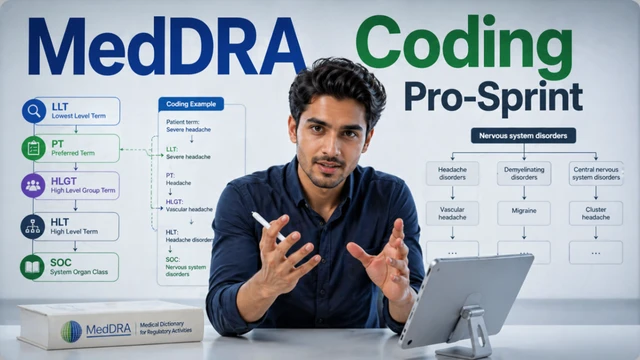
- Code medical terms using MedDRA (Medical Dictionary for Regulatory Activities).
- Assess seriousness, causality, and expectedness of the event.
- Perform quality check before submitting to regulatory authorities like FDA or CDSCO.
The exact job description includes attention to detail, basic medical knowledge, and ability to follow standard operating procedures (SOPs).
Read this detailed guide on case processing careers: Pharmacovigilance Case Processing Jobs for Freshers – Complete Guide.
What is the salary of a PV Case Processor in India?
The PV case processor salary India starts at ₹2.5–4 LPA for freshers. In metro cities like Mumbai, Bangalore, or Hyderabad, you may get ₹3–4.5 LPA. With 2–3 years of experience, salaries rise to ₹5–7 LPA.
Factors that increase salary:
- Certification in ICSR processing or MedDRA coding
- Knowledge of safety databases like Argus or ArisG
- Experience with aggregate reports or signal detection
- Working for multinational companies or CROs
Many freshers start at contract roles in CROs like IQVIA, Parexel, or Accenture. These contracts often convert to permanent jobs after 12–18 months.
How to get a PV case processing job as a fresher?
Getting a pharmacovigilance case processing job as a fresher is not complicated if you build the right skills. Here is a step-by-step plan:
- Learn the basics of pharmacovigilance: Understand the drug safety lifecycle, ICH guidelines, and regulatory requirements. Start with free resources from ICH and WHO.
- Get certified in ICSR processing: Employers want proof you can handle case reports. A certification in ICSR Case Processing and Triage teaches you real workflows.
- Master MedDRA coding: MedDRA is the standard medical dictionary for PV. A certification in MedDRA Medical Coding adds immediate value to your resume.
- Practice with real case scenarios: Use mock ICSRs and coding exercises. Many candidates fail because they only learn theory, not application.
- Build a strong LinkedIn profile: Highlight your certifications, medical background, and attention to detail. Connect with PV recruiters and join pharmacovigilance groups.
- Apply to CROs and pharma companies: Look for job titles like 'Drug Safety Associate', 'PV Case Processor', or 'ICSR Processor'. Entry-level roles are posted on Naukri, LinkedIn, and company career pages.
Check this guide on pharmacovigilance jobs for freshers in India: Pharmacovigilance Jobs for Freshers in India.
What is ICSR processing in pharmacovigilance?
ICSR processing stands for Individual Case Safety Report processing. It is the core daily task in pharmacovigilance. An ICSR is a report of a single patient who experienced an adverse event after taking a medicine.
The ICSR processing career involves these steps:
- Triage: Determine if the report is valid (has patient, reporter, drug, and event).
- Data entry: Enter all information into a safety database.
- Coding: Convert medical terms into standardized codes using MedDRA.
- Assessment: Check seriousness, causality, and expectedness.
- Quality review: Ensure all fields are complete and accurate.
- Submission: Send the report to regulatory authorities within strict timelines.
ICSR processing is the foundation of drug safety. Without accurate case processing, companies cannot detect safety signals.
What is MedDRA coding and how is it used in PV?
MedDRA coding for freshers is a must-have skill. MedDRA stands for Medical Dictionary for Regulatory Activities. It is a standardized medical terminology used worldwide for adverse event reporting.
When a doctor reports 'heart attack', the case processor must code it as 'myocardial infarction' in MedDRA. This ensures consistency across all reports globally.
Key points about MedDRA coding:
- It has five levels: System Organ Class (SOC), High Level Group Term (HLGT), High Level Term (HLT), Preferred Term (PT), and Lowest Level Term (LLT).
- You usually code at the PT level for case processing.
- MedDRA is updated twice a year (March and September).
- Freshers must understand MedDRA structure and how to select the correct term.
Employers test MedDRA coding skills during interviews. A certification shows you have practical knowledge.
What do colleges not teach about pharmacovigilance case processing?
Your BDS, BHMS, BAMS, or nursing degree gives you strong medical knowledge. But employers expect specific PV skills that colleges rarely cover.
| What colleges teach | What employers expect |
|---|---|
| Anatomy, physiology, pharmacology | ICSR workflow and triage |
| Disease diagnosis and treatment | MedDRA coding and database entry |
| Patient care and clinical skills | Regulatory guidelines (ICH, GVP) |
| No exposure to safety databases | Hands-on experience with Argus, ArisG, or similar |
This skill gap is why many graduates fail interviews. Recruiters reject candidates who cannot answer basic questions like 'What is a valid ICSR?' or 'How do you code a term in MedDRA?'
To bridge this gap, you need focused training that simulates real case processing tasks.
Your 6-step roadmap to a PV case processing job in 3–6 months
Follow this exact plan to become job-ready:
- Week 1–2: Learn PV fundamentals - Read ICH E2E guidelines, understand adverse event reporting, and study the drug safety lifecycle.
- Week 3–4: Get certified in ICSR processing - Complete a simulation-based course that teaches triage, data entry, and quality review.
- Week 5–6: Master MedDRA coding - Practice coding real medical terms, learn the hierarchy, and attempt mock assessments.
- Week 7–8: Build a portfolio - Create sample ICSR reports, show coding accuracy, and document your learning on LinkedIn.
- Week 9–12: Apply strategically - Target CROs, pharma companies, and IT firms with PV divisions. Use referrals and attend job fairs.
- Ongoing: Interview preparation - Practice common questions like 'What is a serious adverse event?' and 'Explain the steps in ICSR processing.'
Why simulation-based learning works for PV case processing
The biggest mistake freshers make is learning only theory. You read about ICSR processing but have never seen a real case report. Employers know this and reject you for lack of practical skills.
Simulation-based learning solves this. You work on realistic case scenarios that mimic actual PV databases and workflows. You learn triage, coding, and quality checks exactly like you would on the job.
This hands-on approach builds confidence and lets you speak about your experience in interviews.
Build These Skills Now
Programs from ZANE ProEd Academy that directly address the skill gaps discussed above.
How ZANE ProEd builds job-ready PV case processors
ZANE ProEd offers a complete system, not just videos. The ICSR Case Processing and Triage course takes you through real case scenarios from start to finish. You learn how to handle adverse event reports, enter data, and perform quality checks.
The MedDRA Medical Coding Certification course teaches you how to code medical terms accurately. You practice with hundreds of examples and get feedback on your coding decisions.
Together, these courses cover the exact skills employers test during interviews. You get a certificate and a project portfolio to show recruiters.
Are you job-ready for a PV case processor role?
Check your job readiness today. Compare your current skills against the employer checklist in this blog. If you find gaps, start fixing them this week.
See how your skills compare to what recruiters expect. Take the first step toward your pharmacovigilance career by exploring ZANE ProEd's approach.
Build These Skills Now
Programs from ZANE ProEd Academy that directly address the skill gaps discussed above.
Follow Zane ProEd on Google
Preferred SourceAdd our publication as a preferred source to get the latest clinical research guides, industry updates, and career intel directly in your Google Top Stories & AI Overviews.