Pharmacovigilance Jobs for BPharm Freshers in India: Complete Career Guide

Pharmacovigilance / Drug Safety Associate Pharmacovigilance jobs for freshers in India are entry-level roles in drug safety monitoring. BPharm and MPharm graduates can apply for Drug Safety Associate (DSA) positions. They collect, assess, and report adverse drug reactions. Starting salary is ₹2.5–4 LPA. Skills in ICSR case processing and MedDRA coding improve hiring chances.
Getting pharmacovigilance jobs for freshers in India feels impossible when you study in a Tier-2 or Tier-3 college. You see your city peers get shortlisted. You don't. That gap is real. But it is not your fault. It is a system gap.
Colleges teach you drug chemistry. They do not teach you how a pharma company actually works. They do not teach you ICSR case processing, MedDRA coding, or safety database tools. Recruiters know this. They still expect you to know it. That is the brutal reality.
Build These Skills Now
Programs from ZANE ProEd Academy that directly address the skill gaps discussed above.
But here is the good news: you can close this gap in 3–6 months. Not by reading more textbooks. By practicing the exact tasks drug safety associates do every day.
What is pharmacovigilance and why is it important?
Pharmacovigilance jobs for freshers in India exist because drug companies must monitor medicines after they reach the market. Pharmacovigilance (PV) is the science of detecting, assessing, understanding, and preventing adverse effects of drugs. It protects patients from hidden risks. Regulatory bodies like the WHO and CDSCO require companies to report every suspected side effect. The ICH sets global guidelines for safety reporting. This creates thousands of entry-level roles like Drug Safety Associate (DSA) in India every year.
What is the salary of a Drug Safety Associate in India?
The pharmacovigilance salary in India depends on your location, employer type, and skills. For freshers, here is a realistic breakdown:
- Tier-1 cities (Mumbai, Bangalore, Hyderabad): ₹2.5–4 LPA
- Tier-2 cities (Pune, Ahmedabad, Chennai): ₹2–3.2 LPA
- CROs (like IQVIA, Parexel, Syneos): Usually pay ₹3–4 LPA
- Small pharma companies: ₹1.8–3 LPA
After 2–3 years, salaries jump to ₹5–7 LPA. Senior DSAs and PV scientists earn ₹8–12 LPA. Certification in ICSR case processing and MedDRA coding can push your starting offer higher by 15–20%.
How to start a career in pharmacovigilance?
Follow this exact path to move from college to a Drug Safety Associate role in 3–6 months:
- Learn PV fundamentals: Study ICH E2E guidelines and GVP modules. Free resources exist on FDA and EMA websites.
- Get hands-on with ICSR case processing: Practice triaging adverse event reports. This is the core daily task. Check our detailed guide on pharmacovigilance case processing jobs.
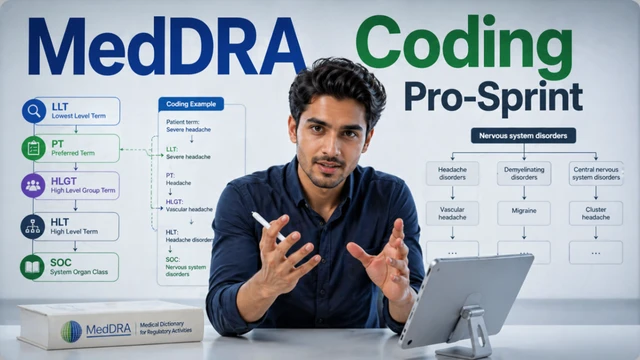
- Learn MedDRA coding: You must code medical terms accurately. See medical coding jobs for freshers to understand its role.
- Practice on safety databases: Companies use tools like Argus, ArisG, or Veeva Vault. Simulation-based practice beats theory.
- Build a project portfolio: Show 5–10 processed ICSR cases with narratives, coding, and seriousness assessment.
- Apply to CROs and pharma companies: Target entry-level DSA, PV Associate, or Drug Safety Trainee roles. Use Naukri, LinkedIn, and company career pages.
A dedicated pharmacovigilance course for BPharm graduates can compress this timeline. Look for programs that include real case simulations, not just video lectures.
What are the job responsibilities of a PV Associate?
The drug safety associate job description is detail-heavy. Your daily tasks include:
- Triage: Receive adverse event reports from patients, doctors, or clinical trials. Decide if it is valid for processing.
- Data entry: Enter case details into the safety database without errors.
- Case narrative writing: Write a clear medical summary of what happened.
- Seriousness assessment: Check if the event is life-threatening, caused hospitalization, or led to death.
- Causality assessment: Decide if the drug likely caused the event.
- MedDRA coding: Assign standard medical codes to symptoms and diagnoses.
- Regulatory submission: Submit cases to authorities within strict deadlines.
These drug safety associate roles and responsibilities are the same across most pharma companies and CROs. You will repeat them hundreds of times per month.
Is pharmacovigilance a good career for BPharm freshers?
Yes, if you like structured, detail-oriented work. The PV career path is clear:
- Drug Safety Associate (0–2 years)
- Senior DSA (2–4 years)
- PV Scientist or Safety Specialist (4–7 years)
- Team Lead or Manager (7+ years)
India is a global hub for pharmacovigilance outsourcing. Major CROs and IT companies hire thousands of DSAs every year. The job is desk-based, offers stable growth, and has better work-life balance than sales or production roles. But competition is rising. To stand out, you need practical skills, not just a BPharm degree.
Skill Gap Exposure: College vs. Employer Expectations
What colleges teach:
- Pharmaceutical chemistry
- Pharmacology theory
- Drug formulation basics
- General regulatory overview
What employers expect you to know on day one:
- ICSR case processing workflow (intake, triage, data entry, narrative, coding)
- MedDRA hierarchy and coding rules
- Safety database navigation (Argus, ArisG)
- ICH E2B(R3) electronic reporting standards
- Good Pharmacovigilance Practice (GVP) modules
This gap is why many Tier-2/Tier-3 BPharm graduates fail interviews. They can explain drug action but cannot triage a case in under five minutes.
Structured Pathway to Your First PV Job
- Build PV fundamentals (Weeks 1–2): Read ICH E2E and GVP modules. Take notes on case processing steps.
- Master ICSR case processing (Weeks 3–6): Practice 20+ simulated cases. Learn triage, narrative writing, and seriousness assessment.
- Learn MedDRA coding (Weeks 7–9): Code at least 100 medical terms. Understand primary SOCs and HLGTs.
- Simulate real work (Weeks 10–12): Work on a mock safety database. Process cases end-to-end under time pressure.
- Build a portfolio (Week 13): Compile your best 5 cases with clear documentation. Show it in interviews.
- Apply with targeting (Weeks 14–16): Apply to 50+ DSA roles. Use keywords like "ICSR", "MedDRA", "Argus" on your resume.
System Bridge: Simulation-Based Learning
Textbooks and YouTube videos will not get you hired. You need to practice on real-world cases under time constraints. Simulation-based learning puts you in a virtual PV department. You receive adverse event reports, triage them, code them, and submit them just like on the job. This builds speed, accuracy, and confidence. Recruiters notice candidates who have already done the work, not just studied it.
Build These Skills Now
Programs from ZANE ProEd Academy that directly address the skill gaps discussed above.
ZANE ProEd's PV System
ZANE ProEd's approach is built around practical case simulations, not passive videos. The ICSR Case Processing & Triage module walks you through every step of the case workflow. You practice sorting cases by seriousness, expectedness, and reportability. The MedDRA Medical Coding Certification module teaches you to code adverse events accurately using the official MedDRA browser. You complete timed coding exercises that mimic real work. These are not theory courses. They are built like a virtual internship. See how the program works at ZANE ProEd.
Check Your Job Readiness
Ask yourself: Can I triage an ICSR in under 5 minutes? Can I write a clear case narrative? Can I code a case using MedDRA without help? If the answer is no, start building these skills today. Thousands of BPharm freshers are competing for the same pharmacovigilance jobs for freshers in India. The ones who practice win. See how your skills compare to recruiter expectations and start closing the gap now.
Build These Skills Now
Programs from ZANE ProEd Academy that directly address the skill gaps discussed above.
Follow Zane ProEd on Google
Preferred SourceAdd our publication as a preferred source to get the latest clinical research guides, industry updates, and career intel directly in your Google Top Stories & AI Overviews.