Pharmacovigilance Jobs for Freshers in India: A Guide for Chemistry Graduates

Pharmacovigilance Jobs for Freshers in India offer a great career path for BSc and MSc Chemistry graduates. Entry-level roles like Drug Safety Associate involve monitoring drug safety, processing adverse event reports, and ensuring regulatory compliance, with starting salaries between ₹2.5 to ₹4.5 LPA.
If you've finished your BSc or MSc in Chemistry, you might be wondering, 'What's next?'. The path isn't always clear. You have the lab skills, but maybe a traditional lab job doesn't excite you. This is where you can find great pharmacovigilance jobs for freshers in India, a hidden career path where your analytical skills are highly valued.
Many Chemistry graduates don't even know this field exists. They think it's only for pharmacy students. But that's not true. Companies are looking for sharp minds who can analyze data and spot patterns. Your chemistry background gives you a unique advantage.
Build These Skills Now
Programs from ZANE ProEd Academy that directly address the skill gaps discussed above.
This guide is your simple, step-by-step roadmap. We will show you how to move from confusion to a clear career in the growing field of drug safety, right here in India.
What is pharmacovigilance and why is it important?
Pharmacovigilance (PV) is the science and activity related to detecting, assessing, understanding, and preventing adverse effects of drugs. In simple words, it's about making sure medicines are safe for people to use, even after they are launched in the market.
Think of it as a safety check for all medicines. Every time someone experiences a side effect, that information is collected and analyzed. This process is critical. It helps protect public health by identifying rare or long-term side effects that were not found during clinical trials.
Regulatory bodies like the Central Drugs Standard Control Organisation (CDSCO) in India and the World Health Organization (WHO) have strict rules for this. Every pharmaceutical company must have a PV department to monitor their drugs. This is why the demand for PV professionals is always high.
What is the salary of a Drug Safety Associate in India?
For freshers, money is an important factor. The good news is that the pharmacovigilance salary in India is competitive, even at the entry-level. A fresher starting as a Drug Safety Associate or PV Associate can expect a starting salary in the range of ₹2.5 Lakhs to ₹4.5 Lakhs per annum.
This salary depends on the company (MNCs often pay more), your location (cities like Mumbai, Bangalore, and Hyderabad have higher pay scales), and any extra certifications you have.
The best part is the growth. Your salary can increase significantly with experience. Here is a typical PV career path and salary progression:
- Drug Safety Associate (0-2 years): ₹2.5 - ₹4.5 LPA
- Senior Drug Safety Associate (2-4 years): ₹4.5 - ₹7 LPA
- Team Lead / Manager (5-8 years): ₹8 - ₹15 LPA
- Director / Head of PV (10+ years): ₹20 LPA and above
This clear growth path makes pharmacovigilance a stable and rewarding long-term career.
How to start a career in pharmacovigilance?
Starting a career in PV as a Chemistry graduate requires a focused approach. Your degree is a great foundation, but you need to add specific industry skills. Here’s how you can begin:
- Understand the Basics: Learn what pharmacovigilance is, its terminology, and its importance. Understand key concepts like Adverse Drug Reaction (ADR), Individual Case Safety Report (ICSR), and regulatory guidelines from bodies like the ICH.
- Build Relevant Skills: You need more than just chemistry knowledge. Focus on learning medical terminology, basics of human anatomy and physiology, and familiarity with drug safety databases like Argus or ARISg.
- Get Certified: A certification from a reputable institute shows employers you are serious and have practical knowledge. A good pharmacovigilance course covers everything from ICSR case processing to aggregate reporting.
- Tailor Your Resume: Highlight your analytical skills, attention to detail, and data interpretation abilities from your Chemistry projects. Add any new PV skills or certifications you have acquired.
What are the job responsibilities of a PV Associate?
The role of a Drug Safety Associate is at the core of pharmacovigilance operations. The drug safety associate job description is focused on handling safety data accurately and efficiently. Here are the main drug safety associate roles and responsibilities:
- Case Intake & Triage: Receiving reports of adverse events from sources like patients, doctors, and hospitals. You decide if the case is serious and needs urgent processing.
- Data Entry: Entering all the details from the safety report into a specialized safety database. Accuracy is extremely important here.
- Medical Coding: Using standard medical dictionaries like MedDRA (for events) and WHO-DD (for drugs) to code the information. This makes the data uniform and easy to analyze.
- Narrative Writing: Writing a clear and concise summary of the adverse event case. This summary tells the complete story of what happened.
- Follow-up: Contacting the person who reported the event to get any missing information.
Essentially, you are a medical data detective, piecing together information to ensure patient safety.
Is pharmacovigilance a good career for Chemistry freshers?
Yes, absolutely. Pharmacovigilance is an excellent career for BSc and MSc Chemistry graduates. While you might not have the medical background of a pharmacy student, you have other skills that are just as valuable.
As a Chemistry graduate, you are trained to be analytical, detail-oriented, and systematic. These are the exact qualities needed to succeed as a Drug Safety Associate. You understand compounds and their properties, which can be a unique advantage. For a deeper look, see our complete guide for freshers.
The main challenge is bridging the gap in medical and regulatory knowledge. But this gap is easy to fill with the right training and certification. Companies are more interested in your ability to learn and apply skills than in your specific degree. We also discuss this in our post on the challenges faced by freshers.
The Gap: What College Teaches vs. What Employers Need
There's a big difference between university education and industry requirements, especially for a specialized field like PV.
- What Your Chemistry Degree Taught You: Chemical reactions, organic chemistry, analytical techniques, lab safety protocols, and data recording.
- What PV Employers Actually Expect: Knowledge of GVP/ICH guidelines, hands-on experience with safety databases (e.g., Oracle Argus), proficiency in MedDRA coding, medical narrative writing skills, and understanding of the drug development lifecycle.
Your degree proves you are smart. But employers hire for specific skills they can use from day one. This is the gap you need to close.
Your 5-Step Roadmap to a Drug Safety Job
Feeling overwhelmed? Don't be. Here is a clear, actionable path to follow:
- Build Your Foundation: Spend two weeks learning the core concepts of pharmacovigilance. Watch videos, read articles, and understand the terminology.
- Master ICSR Case Processing: This is the most critical entry-level skill. Learn the end-to-end process from receiving a case to submitting it to regulators.
- Get Practical Database Experience: Theoretical knowledge is not enough. You need hands-on practice on a simulated safety database. This is what makes your resume stand out.
- Create a Skill-Based Resume: Re-write your resume to focus on the PV skills you've learned. Use keywords from job descriptions like 'case processing', 'MedDRA', 'narrative writing', and 'data entry'.
- Practice for Interviews: Prepare answers for common PV interview questions. Be ready to explain how your chemistry background makes you a good fit for the role.
The Fastest Way to Bridge the Skill Gap
You can spend months trying to learn everything on your own. Or you can use a system designed to make you job-ready in weeks. The best way to learn is by doing, not just by watching videos. This is where simulation-based learning comes in.
Imagine working on real-world case scenarios in a software environment that mimics what top pharma companies use. This practical experience is what gives you the confidence to ace interviews and perform well from your first day on the job.
Build These Skills Now
Programs from ZANE ProEd Academy that directly address the skill gaps discussed above.
How ZANE ProEd Builds Your Career System
At ZANE ProEd, we don't just sell courses. We provide a complete system that turns science graduates into job-ready professionals. Our training is built on a 'Perform-to-Learn' model. You learn by performing the exact tasks you will do in a real job.
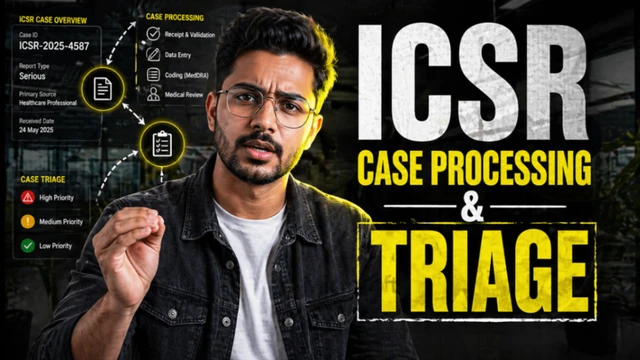
Our End-to-End Pharmacovigilance Certification program is designed to cover every skill you need. A core part of this is the ICSR Case Processing & Triage module, where you work on simulated cases in a real-time environment. This system ensures you don't just know the theory; you know how to apply it.
Are You Ready for a Career in Pharmacovigilance?
You have a strong foundation with your Chemistry degree. Now it's time to add the specific skills that will open the door to a stable, high-growth career in pharmacovigilance. Stop the confusion and start building a clear path forward.
See how your current skills compare to what top pharmaceutical companies are looking for. Take the first step towards a new and exciting career today.
Build These Skills Now
Programs from ZANE ProEd Academy that directly address the skill gaps discussed above.
Follow Zane ProEd on Google
Preferred SourceAdd our publication as a preferred source to get the latest clinical research guides, industry updates, and career intel directly in your Google Top Stories & AI Overviews.