Pharmacovigilance Jobs for Freshers in India: A Step-by-Step Guide

Pharmacovigilance Jobs for Freshers in India: To get a pharmacovigilance job as a fresher, you need to supplement your BPharm or Life Science degree with practical skills. Focus on ICSR case processing, MedDRA coding, and understanding regulatory guidelines like ICH. A certification can help bridge the gap between theory and what companies require.
Finding high-quality pharmacovigilance jobs for freshers in India can feel impossible, especially if you have a BSc or MSc in a Life Science field like Biotechnology or Microbiology. You have the degree and the theoretical knowledge, but recruiters keep asking for 'practical experience'. What does that even mean?
We spoke to recruiters from top pharma companies. They revealed a common problem: freshers know the definitions from their textbooks, but they don't know how to perform the actual job. They can't process a case, they don't know the software, and they are not familiar with global safety standards.
Build These Skills Now
Programs from ZANE ProEd Academy that directly address the skill gaps discussed above.
This guide is your step-by-step roadmap. We will break down exactly what you need to do to go from a fresher with only theoretical knowledge to a job-ready candidate that stands out in a competitive market.
What is pharmacovigilance and why is it important?
Pharmacovigilance (PV) is the science and activity related to detecting, assessing, understanding, and preventing adverse effects of drugs. In simple terms, it's about making sure medicines are safe for patients to use, even after they are launched in the market.
Think of it as a watchdog for medicines. Every time someone experiences a side effect (also called an adverse event), that information needs to be collected and analyzed. This data helps pharmaceutical companies and regulatory bodies like India's CDSCO make important decisions about a drug's safety.
Why is it so important? Because no drug is 100% safe. Clinical trials only test a few thousand people. The real test happens when millions of people start using the medicine. PV helps protect public health by identifying rare or long-term side effects that were not seen in trials. It's a critical function guided by global standards from organizations like the ICH (International Council for Harmonisation).
What is the salary of a Drug Safety Associate in India?
For freshers entering the field, the pharmacovigilance salary in India is quite competitive. As a Drug Safety Associate or PV Associate at an entry-level position, you can expect a starting salary between ₹3.0 Lakhs to ₹4.5 Lakhs per annum.
This figure can vary based on several factors:
- Company Type: Large multinational corporations (MNCs) and top Contract Research Organizations (CROs) often pay more than smaller companies.
- Location: Jobs in major pharma hubs like Mumbai, Bengaluru, Hyderabad, and Pune may offer higher salaries to account for the cost of living.
- Skills: Candidates with practical training or certification in areas like ICSR case processing or safety database knowledge might get a better starting package.
Your salary will grow as you gain experience. The PV career path is very rewarding, and with 3-5 years of experience, your salary can increase significantly.
How to start a career in pharmacovigilance?
Starting a career in pharmacovigilance requires a mix of the right education and specific, targeted skills. Your Life Science degree is a great foundation, but you need to build upon it to become what recruiters are looking for.
Here’s a simple breakdown of how to get started:
- Ensure You Have the Right Degree: A degree in BPharm, MPharm, PharmD, MBBS, BDS, or a BSc/MSc in Life Sciences (Biotechnology, Microbiology, Biochemistry) is the basic eligibility.
- Understand the Core Concepts: Go beyond your college syllabus. Deeply understand key PV terms like Adverse Event (AE), Serious Adverse Event (SAE), ICSR (Individual Case Safety Report), and causality assessment.
- Learn the Tools of the Trade: Companies use safety databases like Argus and ArisG. You are not expected to be an expert, but knowing what they are and how they work is a huge advantage.
- Gain Practical Skills: This is the most important step. You need to learn how to do the actual job. This includes case triage, data entry, medical coding with MedDRA, and narrative writing. A good pharmacovigilance course for BPharm or Life Science graduates should focus on these practical tasks.
- Build a Professional Resume: Tailor your resume for PV roles. Highlight any projects, internships, or certifications related to drug safety, even if they were part of your college curriculum.
What are the job responsibilities of a PV Associate?
The drug safety associate job description focuses on processing and managing safety data. You are the first line of defense in the drug safety process. Your daily tasks, or drug safety associate roles and responsibilities, will likely include:
- Case Triage: Receiving incoming adverse event reports from various sources (doctors, patients, etc.) and checking if they are valid.
- Data Entry: Entering all the relevant information from the report into a company's safety database accurately.
- Medical Coding: Using standard medical dictionaries like MedDRA (for adverse events) and WHODrug (for medications) to code the information correctly. This ensures data is consistent globally.
- Narrative Writing: Writing a clear and concise summary of the adverse event case. This summary tells the entire story of what happened to the patient.
- Quality Check: Reviewing cases processed by other team members to ensure accuracy and completeness.
- Follow-up: Contacting the person who reported the event to get more information if something is missing.
Essentially, you are responsible for creating a high-quality ICSR that can be submitted to regulatory authorities like the FDA or EMA.
Is pharmacovigilance a good career for BPharm freshers?
Absolutely. Pharmacovigilance is one of the best career paths for BPharm and Life Science freshers in India today. Here’s why:
- High Demand: Drug safety is a mandatory function for all pharma companies. Strict regulations mean there is a constant and growing demand for skilled PV professionals.
- Job Stability: Unlike sales or marketing jobs, PV is a core scientific function that is less affected by market fluctuations. It offers excellent job security.
- Global Opportunities: The skills you learn in pharmacovigilance are standardized worldwide. This means you can work for companies in India, the US, Europe, or anywhere else. Your career can be truly global.
- Clear Growth Path: You can start as a Drug Safety Associate and grow into roles like Senior Associate, Team Lead, Manager, and even Director. Check out this unspoken roadmap for a PV case processor to see the full potential.
For PharmD graduates, who often face a different set of challenges, understanding how to leverage their clinical knowledge is key. You can explore a specific playbook for them here.
The Skill Gap: What Your College Didn't Teach You
Here is the hard truth for BSc and MSc graduates. Recruiters see a big gap between what your college syllabus covers and what the job requires.
- Your College Teaches: The definition of Pharmacovigilance.
- Companies Expect: You to know how to process an ICSR from start to finish.
- Your College Teaches: Basic human anatomy and physiology.
- Companies Expect: You to code complex medical terms using the MedDRA dictionary.
- Your College Teaches: Theoretical knowledge of different drug classes.
- Companies Expect: You to understand causality assessment and write a regulatory-grade safety narrative.
This gap is why so many freshers with good grades get rejected. Your degree gets you the interview, but practical skills get you the job.
Your 5-Step Roadmap to Get Hired
Feeling overwhelmed? Don't be. Here is a simple, actionable plan to bridge that skill gap and land your first PV job.
- Master the Fundamentals: Go beyond textbooks. Deeply understand PV regulations, guidelines (especially ICH E2A, E2B, E2D), and the complete lifecycle of an ICSR.
- Learn the 'How': Focus on the practical tasks. How to perform case triage, how to do data entry in a safety database structure, how to code with MedDRA, and how to write a clear case narrative.
- Gain Simulated Experience: Since you can't get real-world experience, the next best thing is simulation. Work on real, anonymized case studies. This is the single most effective way to become job-ready.
- Update Your Resume: Replace vague objectives with a list of practical skills. Use keywords from job descriptions like 'ICSR Case Processing', 'MedDRA Coding', 'Narrative Writing', and 'Safety Database'.
- Prepare for a Skill-Based Interview: Be ready for technical questions and case studies. An interviewer might give you a sample case and ask you to identify the key elements. Your practical training will help you answer with confidence.
The Bridge from Theory to a Job Offer
The fastest way to gain practical skills is through simulation-based learning. This approach puts you in a virtual work environment where you handle the same tasks a Drug Safety Associate does every day. You work on real case scenarios, use the same thought process, and build the muscle memory needed for the job.
This isn't just about watching videos. It's about 'doing' the work. This is how you build the confidence and competence that recruiters are desperate to find in freshers.
Build These Skills Now
Programs from ZANE ProEd Academy that directly address the skill gaps discussed above.
How ZANE ProEd Builds Your Career System
At ZANE ProEd, we don't just sell courses; we build a system for your career success. Our programs are designed to fill the exact skill gaps that prevent Life Science graduates from getting hired in pharmacovigilance.
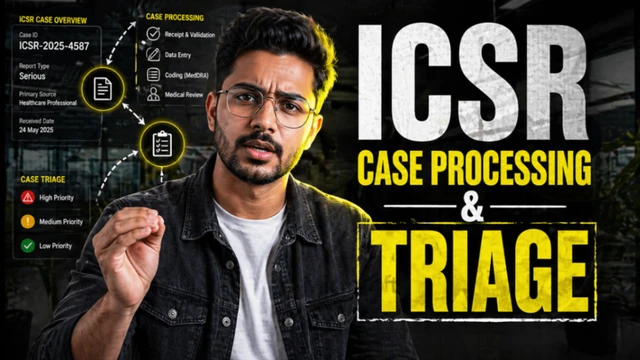
For example, our ICSR Case Processing & Triage program is a deep dive into the most fundamental task in PV. You learn to think like a case processor. Our flagship End-to-End Pharmacovigilance Certification program is a complete system that takes you from a complete beginner to a job-ready professional, covering everything from regulations to hands-on case processing.
We focus on a simulation-first methodology. This means you spend less time on theory you already know and more time building the practical skills that will get you hired.
Are You Ready for a Real PV Interview?
Stop applying for hundreds of jobs without getting a response. It's time to fix the root problem: the gap between your resume and the job description.
Instead of just collecting another certificate, focus on building real, verifiable skills. This is your chance to compete with any other candidate, regardless of their degree. See how your current skills compare to what top pharma companies are looking for.
Build These Skills Now
Programs from ZANE ProEd Academy that directly address the skill gaps discussed above.
Follow Zane ProEd on Google
Preferred SourceAdd our publication as a preferred source to get the latest clinical research guides, industry updates, and career intel directly in your Google Top Stories & AI Overviews.