Pharmacovigilance Jobs for Freshers in India: A Guide for Medical Graduates

Pharmacovigilance jobs for freshers in India are entry-level roles like Drug Safety Associate, focused on monitoring and reporting adverse effects of medicines. Companies hire BPharm, BDS, BHMS, BAMS, and Nursing graduates with strong theoretical knowledge and practical skills in case processing and safety databases.
Are you a BDS, BHMS, BAMS, or Nursing graduate in India? You have a strong medical degree, but the job market feels tough. You might be wondering if there's a hidden career path where your knowledge is highly valued. This is where you can find great pharmacovigilance jobs for freshers in India.
Pharmacovigilance (PV) is a fast-growing field in the pharmaceutical industry. It's not just for BPharm students. Your clinical background gives you a unique advantage in understanding patient safety.
Build These Skills Now
Programs from ZANE ProEd Academy that directly address the skill gaps discussed above.
This guide will show you a clear, step-by-step roadmap to start your career as a Drug Safety Associate, even with no prior experience. Let's break down how you can transition into this high-growth domain.
What is pharmacovigilance and why is it important?
Pharmacovigilance, also known as drug safety, is the science and activity related to detecting, assessing, understanding, and preventing adverse effects of drugs. Think of it as the 'watchdog' for medicines after they are released to the public.
Its main goal is to ensure patient safety. Every time someone takes a medicine, there is a potential for side effects. PV professionals collect and analyze data on these side effects to make sure the benefits of a drug outweigh its risks.
This work is critical. It helps regulatory authorities like the CDSCO in India and international bodies like the ICH make informed decisions. Without pharmacovigilance, harmful drugs could remain on the market, putting patients at risk.
What is the salary of a Drug Safety Associate in India?
For freshers, the pharmacovigilance salary in India is quite competitive. It's a great starting point for a rewarding career.
A Drug Safety Associate fresher can typically expect a starting salary between ₹3.5 Lakhs to ₹5.5 Lakhs per annum. This can vary based on the company (MNC vs. Indian pharma), location (cities like Mumbai, Bangalore, and Hyderabad often pay more), and your skills.
As you gain experience, your salary grows quickly. With 2-3 years of experience, you can expect to earn ₹6 Lakhs to ₹9 Lakhs. The PV career path is very promising, with roles like Senior Drug Safety Associate, Team Lead, and Manager offering significant salary increases.
How to start a career in pharmacovigilance?
Starting a career in pharmacovigilance with no experience requires a strategic approach. Your degree is the foundation, but you need to add specific industry skills.
Here’s how you can begin:
- Understand the Basics: Learn the fundamentals of drug safety, including regulations, guidelines (like ICH-GCP), and the lifecycle of an adverse event report.
- Get Certified: A credible certification shows employers you are serious. Look for a pharmacovigilance course for BPharm or other life science graduates that focuses on practical skills.
- Learn the Tools: Become familiar with safety databases like Oracle Argus or ArisG. Most entry-level jobs require proficiency in these tools.
- Tailor Your Resume: Highlight your clinical knowledge from your BDS, BAMS, or Nursing degree. Emphasize skills like medical terminology, attention to detail, and analytical thinking.
What are the job responsibilities of a PV Associate?
The drug safety associate job description for a fresher revolves around managing adverse event reports. It is a detail-oriented role that forms the backbone of the entire pharmacovigilance system.
Here are the common drug safety associate roles and responsibilities:
- Case Triage: Receiving and sorting incoming adverse event reports from various sources like patients, doctors, and clinical trials.
- Data Entry: Accurately entering all case information into a safety database. This includes patient details, the drug taken, and the adverse event.
- Medical Coding: Using standard medical dictionaries like MedDRA to code the adverse events and patient history.
- Narrative Writing: Writing a clear and concise summary of the adverse event case, which is a critical skill for regulatory reporting.
- Quality Check: Reviewing cases for accuracy and completeness before they are submitted to regulatory authorities.
These tasks are essential for building a strong foundation for your career in ICSR case processing.
Is pharmacovigilance a good career for BPharm freshers?
Yes, pharmacovigilance is an excellent career for BPharm freshers. But it's also a fantastic opportunity for BDS, BHMS, BAMS, and Nursing graduates. In fact, your clinical background can be a major advantage.
You understand human anatomy, physiology, and disease processes. This knowledge helps you understand the context of an adverse event much better. You can connect the dots between a patient's medical history and the side effects they are experiencing.
The PV career path allows you to move into specialized areas like signal detection, risk management, and medical writing. It's a stable, growing field where you can use your medical knowledge without direct patient contact.
The Gap: What Your Degree Taught You vs. What Employers Need
Your college degree gave you a strong foundation in medical science. You learned about pharmacology, anatomy, and pathology. This is very important.
However, companies hiring for pharmacovigilance jobs look for specific, practical skills that are not taught in college. This is the reality for graduates in a competitive Indian market.
- Colleges Teach: General principles of pharmacology.
- Employers Need: Practical knowledge of MedDRA and WHO-DD coding.
- Colleges Teach: Theoretical knowledge of diseases.
- Employers Need: The ability to write a structured medical case narrative for regulatory submission.
- Colleges Teach: Basic computer skills.
- Employers Need: Hands-on experience with safety databases like Oracle Argus.
Your degree alone is not enough to get the job. You must bridge this gap to become a valuable candidate.
Your Step-by-Step Roadmap to a PV Career
Here is a clear, actionable plan to go from a fresher to a job-ready PV professional.
- Step 1: Build a Strong Foundation. Don't just read about PV. Deeply understand the entire drug safety process from start to finish. Learn the global regulations that govern the industry.
- Step 2: Master ICSR Case Processing. This is the core skill for any entry-level role. You need to know how to handle a case, from triage and data entry to narrative writing and submission.
- Step 3: Get Hands-On with Industry Software. You cannot learn a safety database from a textbook. You need to practice on a simulated system that feels like the real software used in top pharma companies.
- Step 4: Develop Your Professional Profile. Create a CV that highlights your new PV skills, not just your college subjects. Practice answering interview questions related to real-world pharmacovigilance scenarios.
- Step 5: Apply to the Right Companies. Target pharmaceutical companies, Contract Research Organizations (CROs), and BPOs that have pharmacovigilance departments.
The Bridge to Your First Job: Simulation-Based Learning
How do you get practical experience when you have no job? This is the classic problem every fresher faces. Reading books or watching videos is not enough.
The solution is simulation-based learning. This is a new way of training where you work on real-world case studies using software that mimics the exact tools used by companies. It's like an internship, but you can do it from anywhere.
This method builds real skills and confidence, making you ready for the job from day one. It proves to employers that you can do the work, not just talk about it.
Build These Skills Now
Programs from ZANE ProEd Academy that directly address the skill gaps discussed above.
How ZANE ProEd Builds Your Job Readiness
At ZANE ProEd, we don't just sell courses. We provide a complete system designed to make you job-ready. Our training is built on the principle of 'learning by doing'.
Our End-to-End Pharmacovigilance Certification program takes you through the entire PV lifecycle. You don't just learn theory; you actively process cases and make decisions as a Drug Safety Associate would.
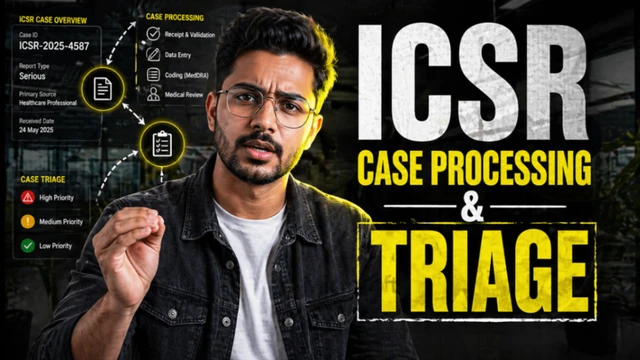
For those who want to focus on the most critical entry-level skill, our ICSR Case Processing & Triage module provides deep, hands-on practice. You will work on simulated software, mastering the skills employers are looking for right now.
We are focused on helping you transition into this high-growth domain by building real, verifiable skills.
Are Your Skills Aligned with Industry Needs?
Now that you know the path, it's time to take the first step. Don't just hope for a job; prepare for a career.
Take a moment to compare your current skills with the job descriptions you see online. See how your skills compare to what leading pharmaceutical companies are demanding from freshers.
Build These Skills Now
Programs from ZANE ProEd Academy that directly address the skill gaps discussed above.
Follow Zane ProEd on Google
Preferred SourceAdd our publication as a preferred source to get the latest clinical research guides, industry updates, and career intel directly in your Google Top Stories & AI Overviews.