Pharmacovigilance Jobs for Freshers in India: Step-by-Step Roadmap to Your First Drug Safety Role
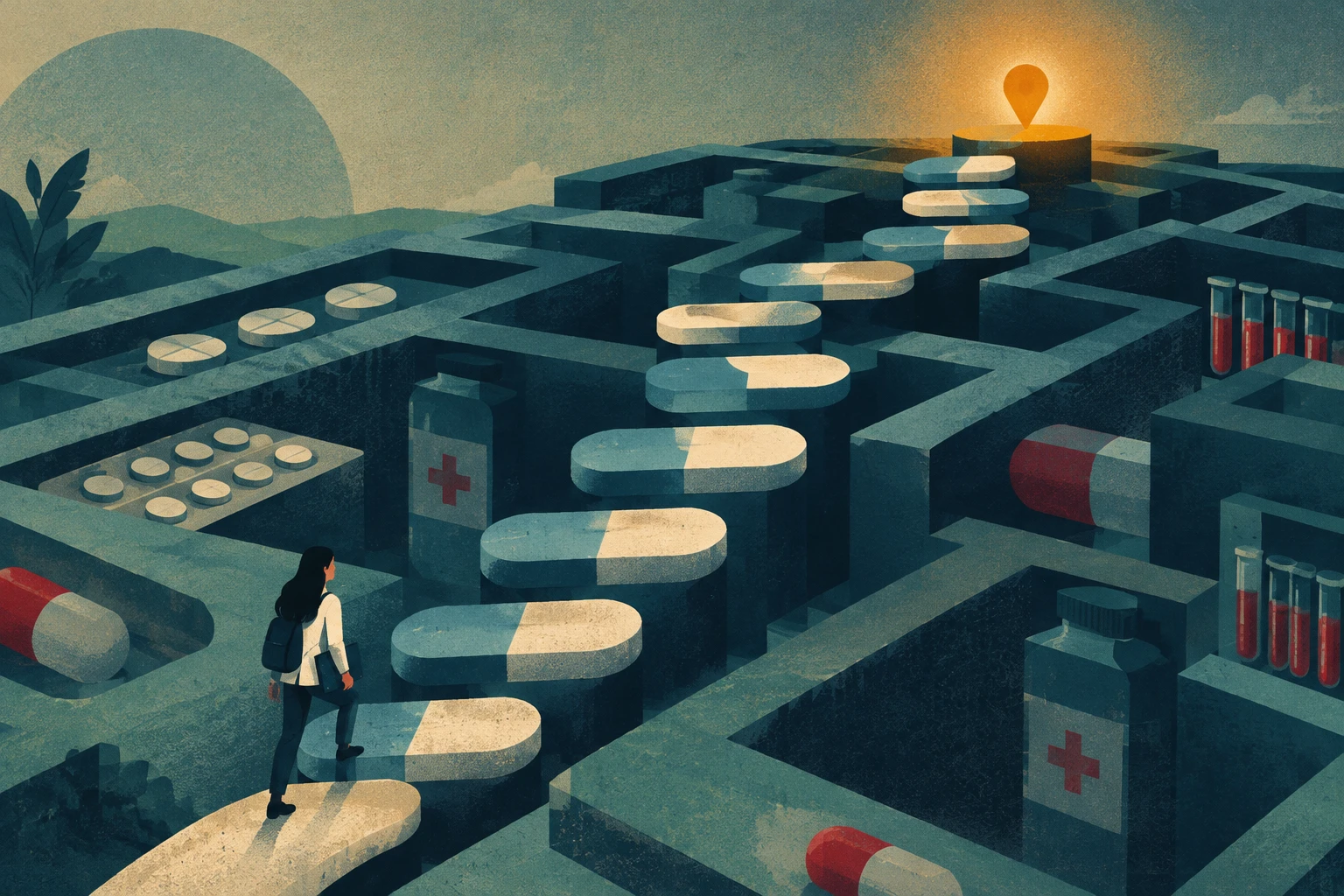
Pharmacovigilance / Drug Safety Associate — Pharmacovigilance jobs for freshers in India are entry-level Drug Safety Associate roles that involve collecting, processing, and reporting adverse event cases for pharmaceutical companies. Freshers with BSc/MSc life sciences can start at ₹3–4.5 LPA after industry-focused ICSR case-processing training and a verifiable portfolio.
If you are a BSc or MSc Biotechnology, Microbiology, or Biochemistry graduate staring at 'experience required' on every job portal, there is a structured way out. Pharmacovigilance jobs for freshers in India are open to life-science graduates who can prove they understand adverse event workflows—not just textbook definitions.
Recruiters reject candidates for skill gaps. But those gaps can be closed in 3–6 months with the right roadmap. This guide gives you the exact timeline, skills, salary benchmarks, and portfolio proof that hiring managers in Hyderabad, Bangalore, Pune, and Mumbai look for.
Build These Skills Now
Programs from ZANE ProEd Academy that directly address the skill gaps discussed above.

What is pharmacovigilance and why is it important for pharmacovigilance jobs for freshers in India?
Pharmacovigilance (PV) is the science of detecting, assessing, understanding, and preventing adverse effects or any other drug-related problems. In simple terms, it is the safety net of the pharmaceutical industry.
Every medicine has risks. PV teams collect adverse event reports from doctors, patients, clinical trials, and literature, then report them to regulators. This protects public health and keeps drugs on the market safely.
- Regulatory backbone: In India, PV activities align with CDSCO requirements and global ICH guidelines such as E2A and E2B.
- Global relevance: WHO coordinates international drug safety reporting through its Programme for International Drug Monitoring.
- Fresher demand: Pharmaceutical companies, CROs, and PV service providers in India need trained associates who can process cases accurately from day one.
For a deeper industry view, read our industry blueprint for pharmacovigilance jobs.
What is the salary of a Drug Safety Associate in India?
Pharmacovigilance salary in India depends on your city, company type, and proven case-processing skill. Freshers with a portfolio can negotiate better than candidates who only have a degree.
- Entry-level (0–1 year): ₹3.0 LPA to ₹4.5 LPA in Hyderabad, Bangalore, Pune, and Mumbai.
- 2–4 years: ₹4.5 LPA to ₹7.5 LPA for associates who handle ICSR case processing independently.
- Senior/Lead roles: ₹8 LPA to ₹15 LPA with quality review, training, and submission ownership.
- Overseas clients/CROs: Can pay 10–20% above domestic pharma averages for night-shift or global-process roles.
The drug safety associate job description often determines pay. Roles that require Argus Safety, MedDRA coding, and narrative writing pay more than basic data-entry positions.
How to start a career in pharmacovigilance?
Starting without experience feels hard, but the PV career path is predictable. You need three things: regulatory knowledge, hands-on workflow skill, and proof of that skill.
- Learn the core: Understand adverse events, serious adverse events, ICSR timelines, and ICH E2B reporting.
- Master case triage: Learn how to identify valid cases, assess seriousness, and prioritise 24-hour and 7-day reports.
- Practice on tools: Get exposure to Argus Safety or similar PV databases, plus MedDRA and WHO Drug Dictionary coding.
- Build a portfolio: Process simulated cases and document your narratives, QC checks, and submission logs.
- Apply strategically: Target entry-level Drug Safety Associate roles in India's main pharma hubs.
A focused pharmacovigilance course for BPharm graduates—and for BSc/MSc life-science graduates—should include simulation, not just lectures. That is how you close the experience gap before your first interview.
What are the job responsibilities of a PV Associate?
The drug safety associate roles and responsibilities are workflow-heavy. You are part of a safety team that processes adverse event reports within strict regulatory timelines.
- Case intake: Collect adverse event information from spontaneous reports, clinical trials, literature, and call centres.
- Triage: Decide if the case is valid, serious, and reportable within 24 hours or 7 days.
- Data entry: Enter patient, drug, event, and reporter details into PV databases such as Argus Safety.
- MedDRA coding: Code adverse events using MedDRA terms and code concomitant medications using WHO Drug Dictionary.
- Narrative writing: Write clear, accurate case narratives that summarise the event and follow-up information.
- Quality check: Review cases for completeness, consistency, and regulatory compliance.
- Submission: Prepare and submit ICSRs to regulators and partners within agreed timelines.
If you want a role-specific breakdown, read our guide to pharmacovigilance case processing jobs for freshers.
Is pharmacovigilance a good career for BPharm freshers?
Yes. Pharmacovigilance is one of the most stable entry points for BPharm, BSc, and MSc life-science graduates in India. It is not limited to pharmacy—biotechnology, microbiology, and biochemistry graduates are hired for their scientific understanding and attention to detail.
- Global demand: Every marketed drug needs safety monitoring, so PV roles are less cyclical than many other pharma jobs.
- Clear growth: Drug Safety Associate → Senior PV Associate → Case Processing Lead → PV Manager → QPPV support.
- Skill-based hiring: Recruiters value demonstrated case processing accuracy over a high percentage in a theory exam.
- Work options: Domestic pharma, global CROs, captive centres, and consulting firms all hire PV associates.
The catch? Generic degrees do not teach Argus Safety, MedDRA coding, or ICSR timelines. That is the skill gap you must close deliberately.
What skill gap do BSc/MSc life-science graduates face in PV hiring?
Your degree teaches molecular biology, microbiology, biochemistry, and lab techniques. Modern PV employers expect workflow-level execution. That is where most freshers get rejected.
- Conventional education teaches: Drug mechanisms, lab methods, research principles, and basic pharmacology.
- Employers actually expect: ICSR case processing, seriousness assessment, MedDRA coding, Argus data entry, narrative writing, and regulatory submission awareness.
- Your degree may not cover: ICH E2B formats, 24-hour reporting deadlines, quality checklists, and audit-ready documentation.
- Recruiters notice: Whether you can process a simulated case end-to-end without hand-holding.
This gap is fixable. You do not need another degree. You need structured, tool-based practice and a verifiable portfolio that proves you can do the job.
What is the step-by-step roadmap to get a PV job in 3–6 months?
Here is a practical timeline for life-science graduates targeting pharmacovigilance jobs for freshers in India.
- Month 1 — Learn the regulatory workflow: Study ICH E2A/E2B, CDSCO reporting expectations, serious vs non-serious cases, and ICSR timelines. Create one-page summaries you can revise before interviews.
- Month 2 — Master MedDRA and triage: Practise coding adverse events with MedDRA. Learn how to identify a valid case and classify it for 24-hour or 7-day reporting.
- Month 3 — Process simulated cases in Argus Safety: Complete 10–15 end-to-end cases. Include patient demographics, suspect drugs, event coding, seriousness criteria, and reporter details.
- Month 4 — Build your portfolio: Compile case narratives, QC checklists, follow-up logs, and a submission tracker. This becomes your interview proof.
- Month 5 — Prepare interview stories: Practise explaining how you triaged a serious case, handled missing information, or corrected a QC error. Use the STAR method.
- Month 6 — Apply to hubs and follow up: Target Hyderabad, Bangalore, Pune, and Mumbai. Apply to CROs, pharma companies, and PV service providers with your portfolio link or PDF sample.
This is not a theory roadmap. It is a workflow roadmap. The students who get hired are the ones who can show a case from intake to submission.
Why does simulation-based learning close the experience gap?
Employers cannot verify what you memorised. They can verify what you have processed. Simulation-based learning replicates the actual PV workflow: case intake, triage, data entry, coding, narrative writing, QC, and submission.
A verifiable portfolio changes the interview conversation. Instead of saying 'I am a quick learner', you show a completed ICSR case with your coding, narrative, and QC checklist. That is audit-ready proof.
ZANE ProEd Academy provides industry-grade simulation toolkits, including Argus Safety ICSR case processing, Medidata Rave EDC, Veeva Vault eTMF, and FDA 21 CFR submission workflows. The goal is professional preparation, not passive watching.
Build These Skills Now
Programs from ZANE ProEd Academy that directly address the skill gaps discussed above.
Which professional programs build industry-ready PV skills?
ZANE ProEd Academy is a premier professional career-certification platform. Its programs are built for graduates who need workflow-level proof before applying to pharmacovigilance jobs for freshers in India.
- Industry Essentials of Pharmacovigilance: Builds the regulatory context—ICH E2A/E2B, CDSCO expectations, seriousness assessment, and ICSR timelines. This is the foundation for a credible PV career path.
- ICSR Case Processing & Triage: Trains you on the exact workflow employers test: case intake, triage, Argus Safety data entry, MedDRA coding, narrative writing, and quality check.
Professional certification is an investment in closing qualification gaps. It creates an audit-ready portfolio and prepares you for high-paying industry roles. The return on investment is measured in interview conversions, not just certificates.
If you are a BSc/MSc Biotechnology, Microbiology, or Biochemistry graduate with no experience, this structured route gives you relief from the 'experience required' loop. You stop guessing and start proving.
What should you do next?
Audit your industry readiness. List the skills you can demonstrate today: MedDRA coding, Argus data entry, case triage, narrative writing, and QC. If any are missing, build them before you apply.
Explore Professional Certification Blueprints. Review the simulation curriculum. Compare your current profile with the ZANE ProEd Academy approach. Then choose the shortest structured path to your first Drug Safety Associate role.
There is a structured way out. The next 6 months can either be another round of rejections—or a portfolio-backed entry into pharmacovigilance.
Build These Skills Now
Programs from ZANE ProEd Academy that directly address the skill gaps discussed above.
Follow Zane ProEd on Google
Preferred SourceAdd our publication as a preferred source to get the latest clinical research guides, industry updates, and career intel directly in your Google Top Stories & AI Overviews.