Pharmacovigilance Jobs for Freshers in India: A Step-by-Step Career Guide

Pharmacovigilance jobs for freshers in India are entry-level roles where you monitor, assess, and report adverse drug reactions to ensure patient safety. With the right certification and hands-on skills in case processing and medical coding, chemistry graduates can start a high-growth career with starting salaries around ₹3-5 LPA.
If you are a BSc or MSc Chemistry graduate and feel stuck after completing course after course with no job offer, you are not alone. The market is flooded with certifications that promise a pharmacovigilance career but deliver only theory. Employers want practical skills—and freshers who can demonstrate real-world expertise get hired quickly.
This guide cuts through the noise. In 2026, pharmacovigilance jobs for freshers in India are growing fast, but only for those who follow a clear, step-by-step roadmap built on industry expectations—not just textbook learning.
Build These Skills Now
Programs from ZANE ProEd Academy that directly address the skill gaps discussed above.
What is pharmacovigilance and why is it important?
Pharmacovigilance (PV) is the science of detecting, assessing, and preventing adverse effects of medicines. It ensures that the drugs reaching patients are safe. Every pharmaceutical company, by law, must have a PV system. This creates thousands of jobs—especially in India, which is a global hub for drug safety operations.
Regulatory bodies like ICH, WHO, and CDSCO mandate strict safety reporting. Companies rely on trained professionals to manage case processing, signal detection, and risk management. For a chemistry graduate, this is a chance to enter the pharma industry without a pharmacy degree.
What is the salary of a Drug Safety Associate in India?
A Drug Safety Associate (DSA)—the most common entry-level PV role—earns between ₹3 LPA to ₹5 LPA for freshers. With 2-3 years of experience, salaries jump to ₹6-8 LPA. Lead roles like Pharmacovigilance Scientist or Team Lead can reach ₹12-15 LPA. These figures are based on Indian metro cities and top CROs.
The pharmacovigilance salary in India is competitive, especially for non-pharmacy graduates. BSc Chemistry freshers who master medical coding and case processing often negotiate higher starting pay.
How to start a career in pharmacovigilance?
Your PV career path begins with three pillars: foundational knowledge, practical software training, and a job-ready project. Most job ads list requirements like:
- Understanding of ICH-GCP guidelines
- Hands-on experience with safety databases (Argus, ArisG)
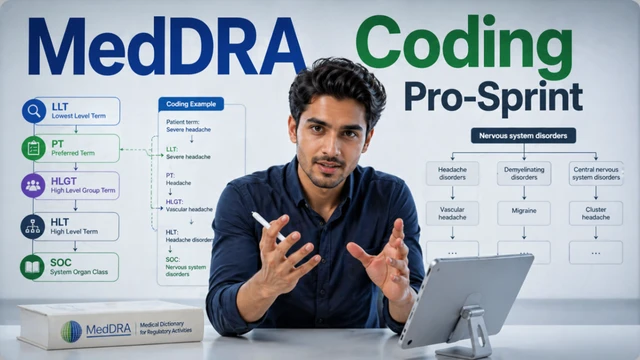
- Knowledge of MedDRA coding
- Case processing, triage, and narrative writing skills
Simply completing a pharmacovigilance course for BPharm (or for chemistry grads) is not enough. You need a course that provides simulation-based practice, live case handling, and a certificate that proves your skills. That’s why platforms focusing on real-world projects are becoming the preferred route.
What are the job responsibilities of a PV Associate?
The drug safety associate job description includes:
- Case intake and triage: Receiving adverse event reports from various sources and prioritising them based on seriousness.
- Data entry and coding: Entering safety data into the database and coding medical terms using MedDRA.
- Narrative writing: Crafting clear clinical summaries of the adverse event.
- Quality review: Checking case reports for completeness and accuracy.
- Regulatory submission: Sending reports to authorities within strict timelines.
Mastering these drug safety associate roles and responsibilities through practice makes you a day-one productive hire.
Is pharmacovigilance a good career for BPharm freshers?
Yes, it is an excellent career for BPharm freshers—but chemistry graduates ask the same question. The truth: PV is one of the most accessible pharma careers for BSc/MSc Chemistry graduates. You do not need a pharmacy license. You do need to bridge the skill gap with targeted training. Many chemistry freshers have successfully transitioned into high-growth PV roles by focusing on case processing and medical coding—skills that are easy to learn with the right guidance.
What colleges teach vs What employers actually want
College curricula often cover basic pharmacology and toxicology but skip entirely the practical tools used daily in PV. Employers expect you to know:
- Safety database navigation (Argus, ArisG)
- MedDRA coding with hands-on case examples
- Case processing workflow (receipt to submission)
- Regulatory timelines and reporting rules
No textbook teaches you the speed and accuracy needed for real cases. That’s why most fresher resumes get rejected—they show knowledge but no proven skill.
Your Step-by-Step Roadmap to a Pharmacovigilance Job in 2026
Follow these actions to break into PV within 3–6 months:
- Build Foundational Knowledge: Learn ICH guidelines and PV basics from ICH official resources. This takes 2-3 weeks.
- Get Simulation-Based Training: Enrol in a program that offers live case exercises and software practice—not just recorded videos. Focus on case processing and medical coding.
- Complete a Real-World Project: Work on a portfolio project with 10+ mock cases to demonstrate your ability in triage, coding, and narrative writing.
- Prepare a PV-Specific Resume: Highlight tools (Argus, MedDRA) and practical skills. Use action verbs and include your project.
- Apply Strategically: Target CROs and pharma companies like Accenture, IQVIA, Parexel, and Cognizant. Use job portals and LinkedIn, and highlight your hands-on certification.
- Ace the Interview: Practice common interview questions on adverse event reporting, causality assessment, and case processing steps.
Why Certifications Are Not Enough – The Simulation Gap
Most PV courses give you a certificate and a dose of theory. But when you sit for an interview, you freeze when asked, 'How do you triage a serious case?' or 'Walk me through a narrative you wrote.' Recruiters see through paper knowledge instantly. The missing link is simulation—practising on real-world-like cases with feedback. That’s where ZANE ProEd’s system bridges the gap, with immersive labs that replicate industry workflows.
Build These Skills Now
Programs from ZANE ProEd Academy that directly address the skill gaps discussed above.
How ZANE ProEd Builds Job-Ready PV Professionals
ZANE ProEd is not a typical course provider. It is a career-building system that focuses on ICSr case processing and triage and MedDRA medical coding—the two most critical skills for a PV fresher. Their programs are built with industry veterans and include simulation exercises that mirror actual CRO environments. More importantly, they provide a validated skill report that shows employers you can handle real cases from day one.
The ICSR Case Processing & Triage Certification trains you on end-to-end case handling, while the MedDRA Medical Coding Certification ensures you can code adverse events accurately—a skill that often doubles your interview callbacks. Together, they make your profile stand out in the crowded fresher market.
Ready to Test Your PV Skills?
Before you apply for any job, ask yourself: Can I confidently process a real adverse event report? If you hesitate, it’s time to bridge the gap with practice. Check your current job readiness by exploring simulation-based skill assessments. See how your skills compare to industry expectations. Your first PV job is not about luck—it’s about being prepared when the right opportunity comes.
Build These Skills Now
Programs from ZANE ProEd Academy that directly address the skill gaps discussed above.
Follow Zane ProEd on Google
Preferred SourceAdd our publication as a preferred source to get the latest clinical research guides, industry updates, and career intel directly in your Google Top Stories & AI Overviews.