Pharmacovigilance Jobs for Freshers in India: A Step-by-Step Career Guide

Pharmacovigilance jobs for freshers in India are entry-level roles where pharmacy/life science graduates monitor drug safety, process adverse event reports, and ensure regulatory compliance. Starting salary ranges ₹2.5–4.5 LPA, growing rapidly with experience. Freshers can enter through specialized training and ICSR case processing skills.
You graduated with a BPharm or MPharm degree. You’ve applied to dozens of jobs. But every listing asks for “1–2 years of experience” or “industry connections” you simply don’t have. The truth is, degrees alone won’t open doors anymore. Employers need proof you can handle real-world pharmacovigilance jobs for freshers in India from day one.
But here’s the good news: you don’t need connections. You need the right skills. This guide breaks down exactly what the industry expects, how to build those skills, and the step-by-step path to land your first drug safety role—often in just a few months.
Build These Skills Now
Programs from ZANE ProEd Academy that directly address the skill gaps discussed above.
What is pharmacovigilance and why is it important?
Pharmacovigilance (PV) is the science of detecting, assessing, and preventing side effects from medicines. Every drug on the market, from a simple painkiller to a cancer therapy, must be monitored for safety. Regulatory bodies like the FDA, EMA, and India’s CDSCO mandate strict reporting of adverse drug reactions (ADRs).
Without PV, unsafe drugs could stay on the market, harming patients. That’s why the global demand for drug safety associates is soaring. As a fresher, you become part of this critical safety net—reviewing reports, coding medical terms, and ensuring no warning sign goes unnoticed.
What is the salary of a Drug Safety Associate in India?
The pharmacovigilance salary in India for freshers typically ranges from ₹2.5 to ₹4.5 lakhs per annum. In metro cities like Bengaluru, Hyderabad, or Pune, you might start at ₹3.0 LPA or more if you have certified skills. After 2–4 years, salaries jump to ₹5–8 LPA. Senior roles can reach ₹12 LPA and beyond.
Here’s a quick breakdown:
- Fresher (0–1 year): ₹2.5–4.5 LPA
- Experienced (2–4 years): ₹5–8 LPA
- Senior/Lead (5+ years): ₹10–15 LPA
Companies like Accenture, TCS, IQVIA, and Parexel regularly hire freshers, but they look for hands-on knowledge, not just textbook theory.
How to start a career in pharmacovigilance?
Many BPharm freshers get stuck because they don’t know where to begin. Here’s a straightforward PV career path:
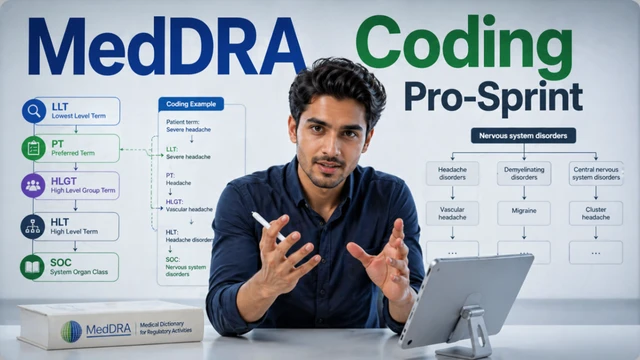
- Understand the basics: Learn about ICSRs (Individual Case Safety Reports), MedDRA coding, and regulatory timelines.
- Get practical training: Theoretical knowledge isn’t enough. You need to practice on real-world case processing tools and simulations.
- Earn a certification: A recognized pharmacovigilance course for BPharm can set you apart. Look for courses covering ICSR triage, narrative writing, and medical coding.
- Build a project portfolio: Show employers sample case reports or a mock safety database you’ve worked on.
- Apply strategically: Target entry-level roles with keywords like “Drug Safety Associate,” “PV Assistant,” or “Clinical Data Coordinator.”
What are the job responsibilities of a PV Associate?
The official drug safety associate job description includes a mix of technical and compliance tasks. On a typical day, you might:
- Receive and triage adverse event reports from healthcare professionals, patients, or clinical trials.
- Perform MedDRA coding to standardize medical terms for global databases.
- Write case narratives summarizing the event in a clear, clinical style.
- Check for completeness and consistency against regulatory requirements like ICH E2B guidelines.
- Submit reports to regulatory authorities within strict deadlines (e.g., 7-day or 15-day reports).
- Perform follow-ups to gather missing information.
These drug safety associate roles and responsibilities demand attention to detail, strong medical knowledge, and the ability to work with databases like Argus or ArisGlobal. Employers test these skills during interviews—often with practical case scenarios.
Is pharmacovigilance a good career for BPharm freshers?
Yes, and here’s why. Pharmacovigilance offers a clear, non-sales career path for pharmacy graduates. Unlike medical representative roles, PV work is desk-based, intellectually challenging, and globally recognized. The industry is growing at 12–15% annually in India, creating thousands of new jobs every year.
It’s also a stepping stone to roles in regulatory affairs, clinical research, and risk management. Additionally, the work-life balance is generally better than in hospital pharmacy or field sales. As a fresher, your pharmacy background gives you a head start in understanding drug mechanisms and medical terminology.
The skill gap: College vs. employer expectations
Your BPharm curriculum taught you pharmacology, pharmaceutics, and medicinal chemistry. But here’s what employers actually ask for in PV job interviews:
- Can you write a complete ICSR narrative in 20 minutes?
- Do you know the difference between seriousness criteria and causality assessment?
- Have you ever coded an adverse event using MedDRA?
Most colleges never touch these practical skills. That’s why so many freshers get rejected despite good grades. The bridge is hands-on, simulation-based training that mimics actual PV work.
Your step-by-step pathway to get hired
Follow this roadmap to become job-ready:
- Master ICSR processing: Learn the complete lifecycle of a case—from receipt to submission. Practice with dummy data.
- Get certified in MedDRA coding: Medical coding is the heart of PV. A dedicated certification proves you can handle it.
- Understand regulatory guidelines: Read the ICH E2B and WHO pharmacovigilance guidelines. Know the reporting timelines.
- Build a sample portfolio: Create a few mock case reports and narratives. Keep them ready in a PDF or online profile.
- Network smarter: Join PV groups on LinkedIn, follow industry leaders, and attend free webinars.
- Apply with a focused resume: Highlight any PV tools you’ve practiced with, even if it was during training.
This approach has helped hundreds of freshers land jobs without prior experience. Check out our detailed guide on pharmacovigilance jobs for freshers step-by-step.
The simulation advantage
Imagine walking into an interview and being handed a real adverse event report. You’re asked to triage, code, and write the narrative—on the spot. If you’ve only studied theory, you’ll freeze. But if you’ve practiced in a simulated environment that mirrors the tools used at companies like Accenture or IQVIA, you’ll excel.
That’s where ZANE ProEd comes in. We’ve built a system that replicates the exact software and workflows used in the industry, so your practice is indistinguishable from the real job.
Build These Skills Now
Programs from ZANE ProEd Academy that directly address the skill gaps discussed above.
For example, our ICSR Case Processing & Triage module immerses you in 50+ real-world cases, teaching you to handle everything from duplicate checks to expedited reporting. Our MedDRA Medical Coding Certification program gives you hands-on coding exercises and expert feedback. These aren’t just courses—they’re your virtual internship.
You’ll build a job-ready portfolio and gain the confidence to tackle any entry-level PV role.
Learn more about case processing jobs for freshers and how you can prepare specifically for them.
Are you ready to start?
The pharmacovigilance industry in India is waiting for passionate freshers like you. Stop applying blindly and start building measurable skills. Check your readiness with a simple self-assessment:
- Can you name the four minimum criteria for an ICSR?
- Do you know which MedDRA SOC a cardiac arrest falls under?
- How would you handle a report with conflicting dates?
If these questions feel unfamiliar, it’s time to bridge the gap. Explore our step-by-step guides and simulation-based training to become the candidate employers actually want to hire.
Build These Skills Now
Programs from ZANE ProEd Academy that directly address the skill gaps discussed above.
Follow Zane ProEd on Google
Preferred SourceAdd our publication as a preferred source to get the latest clinical research guides, industry updates, and career intel directly in your Google Top Stories & AI Overviews.