QA QC Pharma Jobs for Freshers: Complete Step-by-Step Roadmap

QA/QC Executive (Pharma) QA QC pharma jobs for freshers are entry-level roles in pharmaceutical quality assurance and quality control. BSc/MSc Chemistry graduates can get these jobs by learning GMP, documentation, and analytical skills. Salary starts around 2.5-4 LPA. Focus on practical training to land your first role.
If you have a BSc or MSc in Chemistry and you're looking for QA QC pharma jobs for freshers after a career gap, you're not alone. The pharma industry hires thousands of freshers every year. But degrees alone are not enough anymore. You need real, practical skills that employers actually check for.
This guide gives you a clear, step-by-step roadmap. No fluff. You'll learn the difference between QA and QC, the exact salary you can expect, what qualifications you need, and what a QA/QC Executive does daily. By the end, you'll know exactly how to get hired in the next hiring cycle.
Build These Skills Now
Programs from ZANE ProEd Academy that directly address the skill gaps discussed above.
What is the difference between QA and QC in pharma?
Many freshers get confused between QA and QC. The difference between QA and QC in pharma is simple. QA (Quality Assurance) is about preventing mistakes. QC (Quality Control) is about finding mistakes after they happen.
QA focuses on systems and processes. QC focuses on testing products. Both are critical, but they require different mindsets and skills.
- QA: Reviews documents, audits processes, ensures compliance with GMP. You prevent defects before they occur.
- QC: Tests raw materials, in-process samples, and finished products. You catch defects that already happened.
In a pharma quality control career, you'll work in a lab with instruments like HPLC, GC, and UV spectrophotometers. In QA, you'll work more with paperwork, SOPs, and CAPA. Both roles are equally important and pay well.
What is the salary of a QA/QC Executive in India?
The quality assurance pharma salary for freshers ranges from ₹2.5 lakh to ₹4.5 lakh per annum (LPA). For QC roles, the starting salary is similar, usually around ₹2.5-4 LPA. Top companies like Sun Pharma, Cipla, and Dr. Reddy's may pay slightly more.
Here is a quick breakdown:
- Fresher QA/QC Executive: ₹2.5-4 LPA
- After 2-3 years: ₹4-6 LPA
- Senior Executive / Assistant Manager: ₹6-10 LPA
Salary also depends on location, company type, and your skills. Having hands-on training and certification can push you to the higher end of this range.
How to get a QA/QC job in pharma as a fresher?
Getting QA QC pharma jobs for freshers is not about luck. It is about following a clear process. Here is a practical 5-step roadmap:
- Understand the basics: Learn GMP, GDP, and documentation. These are non-negotiable.
- Get hands-on training: Practice on analytical instruments if possible. Or use simulation-based learning to understand real workflows.
- Create a targeted resume: Highlight any lab experience, internships, or relevant certifications.
- Apply smart: Use job portals, LinkedIn, and company career pages. Target both QA and QC openings.
- Prepare for interviews: Know common QA QC interview questions like 'What is CAPA?' or 'What is the difference between QA and QC?'
Many freshers fail because they skip step 2. Employers get hundreds of resumes. You need to stand out with practical knowledge.
What qualifications are needed for QA/QC in pharma?
For QA QC pharma jobs for freshers, a BSc or MSc in Chemistry is the most common qualification. Some companies also accept BPharm or MPharm. But if you are a Chemical Sciences graduate, you are already eligible.
Beyond the degree, employers look for:
- Knowledge of GMP and GLP: Good Manufacturing Practices and Good Laboratory Practices.
- Understanding of analytical techniques: HPLC, GC, UV, dissolution testing.
- Documentation skills: Filling batch records, logbooks, and SOPs.
- Computer skills: Basic MS Office, LIMS (Laboratory Information Management System) is a plus.
No one expects you to know everything. But showing that you have trained on these areas gives you a huge advantage.
What does a QA/QC Executive do daily?
The QA QC executive job description varies by company, but here is a typical day:
For QC Executive:
- Receive and log samples for testing.
- Perform analysis using HPLC, GC, or UV.
- Record results in lab notebooks and LIMS.
- Report any deviations or out-of-specification (OOS) results.
For QA Executive:
- Review batch manufacturing records.
- Perform line clearance and in-process checks.
- Handle change controls and CAPA.
- Conduct internal audits and vendor qualifications.
Both roles require attention to detail, discipline, and a commitment to quality. If you enjoy solving problems and following rules, this career is for you.
Why is my degree not enough for QA QC pharma jobs?
You have a BSc or MSc in Chemistry. You learned theory, reactions, and maybe some lab experiments. But pharma companies need much more. They need people who understand Good Manufacturing Practices (GMP), documentation, and regulatory compliance.
Colleges rarely teach you how to fill a batch record, how to handle a deviation, or how to use a LIMS. Employers don't want to spend 6 months training you from zero. They want freshers who already know the basics. Guidelines from FDA and CDSCO are often followed.
That is why many graduates struggle. The good news? You can close this gap quickly with focused training.
What is the step-by-step roadmap to get a QA/QC job in 3-6 months?
Here is a simple plan you can follow:
- Month 1: Learn the fundamentals. Study GMP, GDP, and core quality concepts. Read articles from ICH and WHO.
- Month 2: Get hands-on training. Use simulation-based tools or join a structured program that teaches real workflows.
- Month 3: Build your resume and LinkedIn profile. Highlight your new skills and certifications.
- Month 4-5: Apply to 20-30 jobs every week. Target both QA and QC roles. Prepare for interviews using common QA QC interview questions.
- Month 6: Land your first job. Negotiate salary confidently because you have practical knowledge.
How can simulation-based learning bridge the skill gap?
You cannot walk into a pharma company and practice on their HPLC machine. But you can use simulation-based learning. This is like a flight simulator for pharma quality. You see real scenarios, make decisions, and learn from mistakes without any risk.
ZANE ProEd builds these simulations for quality and regulatory roles. Instead of just reading theory, you practice filling batch records, reviewing documents, and handling deviations. This is exactly what employers test in interviews.
Build These Skills Now
Programs from ZANE ProEd Academy that directly address the skill gaps discussed above.
What is the ZANE ProEd system for QA/QC job readiness?
ZANE ProEd is not just a course provider. It is a system designed to make you job-ready. Two key programs help you build the exact skills employers want:
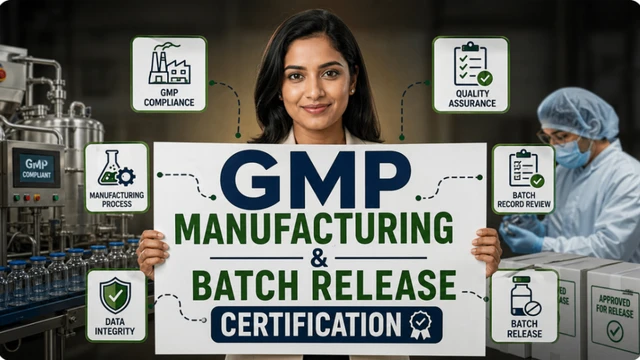
- GMP Manufacturing & Batch Release Certification: Learn how batch records are reviewed and released. Understand line clearance, sampling, and documentation. This is critical for QA roles.
- Quality Management System Certification: Learn how to handle CAPA, change control, deviations, and audits. This is the backbone of QA.
These programs use real case studies and simulations. You will not just memorize definitions. You will apply them. That is what makes you stand out.
Check your job readiness. See how your skills compare to what employers actually need. And if you want to dive deeper, read our detailed guide on QA QC pharma jobs for freshers and pharma validation specialist career.
Build These Skills Now
Programs from ZANE ProEd Academy that directly address the skill gaps discussed above.
Follow Zane ProEd on Google
Preferred SourceAdd our publication as a preferred source to get the latest clinical research guides, industry updates, and career intel directly in your Google Top Stories & AI Overviews.