QA QC Pharma Jobs for Freshers: A Brutal Reality Guide

QA/QC Executive (Pharma) jobs for freshers are entry-level roles in the pharmaceutical industry focused on ensuring drug quality and safety. To get hired, BSc, BPharm, or Life Science graduates need practical skills in GMP, QMS, documentation, and specific lab techniques beyond their college curriculum.
Are you struggling to find QA QC pharma jobs for freshers? You send out dozens of resumes but hear nothing back. It's frustrating, and you're not alone. The brutal truth is that over 90% of freshers are rejected because their college degree is not what companies are hiring for.
Companies don't need you to recite textbook definitions. They need you to understand and apply real-world quality systems from day one. Your BSc or BPharm got you to the door, but it didn't give you the key to get inside.
Build These Skills Now
Programs from ZANE ProEd Academy that directly address the skill gaps discussed above.
This guide breaks down the reality of the Indian pharma market. We will cover the skills you actually need, the salary you can expect, and a clear path to get hired, even if you have zero industry experience.
What is the difference between QA and QC in pharma?
This is one of the most common QA QC interview questions, and many freshers get it wrong. While both Quality Assurance (QA) and Quality Control (QC) focus on product quality, they work differently. Think of it like building a car.
Quality Control (QC) is about the product. QC is responsible for testing. They are the inspectors on the assembly line who check if the car's engine runs, if the paint is correct, and if the tires are properly fitted. In pharma, QC professionals test raw materials and finished products in a lab to ensure they meet specifications.
- Reactive: Finds defects in the product.
- Hands-on: Involves laboratory testing and analysis.
- Focus: Is the final tablet safe and effective?
Quality Assurance (QA) is about the process. QA designs the entire system to prevent mistakes from happening in the first place. They write the rules (SOPs) for the assembly line, train the workers, and audit the process to make sure everyone follows the rules. QA ensures the system itself is capable of producing a perfect car every time.
- Proactive: Prevents defects from happening.
- System-oriented: Involves documentation, audits, and process improvement.
- Focus: Is our manufacturing process reliable and compliant with regulations?
In short, QC finds the problems, while QA makes sure problems don't happen. Both are critical for compliance with guidelines from bodies like the CDSCO in India and international standards like ICH.
What is the salary of a QA/QC Executive in India?
Let's talk about the money. As a fresher, the quality assurance pharma salary can feel low at the start, but it grows quickly with experience. Your starting salary depends on the company size (MNC vs. local), location, and your practical skills.
For a fresher QA or QC Executive in India, the typical salary range is:
- Starting Salary: ₹2.5 Lakhs to ₹4.5 Lakhs per annum.
Smaller domestic companies might offer closer to ₹2.5 LPA, while large multinational corporations (MNCs) might offer up to ₹4.5 LPA or slightly more. Your negotiation power comes from the practical skills you bring, not just your degree certificate.
The career path is strong. After 3-5 years of experience, a Senior QA/QC Officer can earn between ₹6 to ₹9 LPA. Managers and department heads can earn well over ₹15 LPA. The initial struggle is real, but the long-term pharma quality control career is very rewarding.
How to get a QA/QC job in pharma as a fresher?
Getting your first of the many QA QC pharma jobs for freshers is the hardest part. Recruiters are looking for candidates who can be productive quickly. They don't have time to teach you the absolute basics. Here’s the secret: you need to bridge the gap between your academic knowledge and industry needs.
Here are the three biggest mistakes freshers make:
- Having a 'Theory-Only' CV: Your resume lists your degree and college projects. A company's resume lists skills like 'QMS Implementation,' 'CAPA Management,' 'GMP Compliance,' and 'Audit Preparation.' See the mismatch?
- Failing the Technical Interview: You might be asked to explain a deviation, a change control process, or an OOS (Out of Specification) investigation. If you can only give a textbook answer, you will be rejected.
- Showing No Practical Knowledge: Companies want to see that you've thought about the industry. Mentioning your knowledge of Good Documentation Practices (GDP) or quality management systems shows you are serious about the role.
The solution is to gain job-specific skills before you even apply. You need to learn the language and systems of the pharmaceutical industry.
What qualifications are needed for QA/QC in pharma?
On paper, the qualifications are straightforward. Most companies look for candidates with a science background. However, the degree is just the entry ticket.
Educational Qualifications:
- B.Pharm (Bachelor of Pharmacy): This is the most preferred degree.
- M.Pharm (Master of Pharmacy): Gives you an edge, especially in specialized roles.
- B.Sc / M.Sc in Chemistry: Very common for QC lab roles.
- B.Sc / M.Sc in Microbiology / Biotechnology: Also highly relevant for both QA and QC.
- B.Tech in Biotechnology: Increasingly considered for roles in validation and process engineering.
But here's the reality check. A recruiter looking at 100 CVs with the same B.Pharm degree will pick the one that also lists 'Certified in Quality Management Systems (QMS)' or 'Trained in CAPA procedures'. These practical skills are the tie-breakers.
The Skill Gap: College vs. Company
- What College Teaches: Basic chemistry, pharmaceutical theory, simple lab experiments.
- What Companies Need: GMP, GLP, GDP, Document Control, SOP writing, QMS, Change Control, Deviation Handling, CAPA, Internal Audits, HPLC/GC handling (for QC).
Your degree proves you are smart. Your practical skills prove you are useful.
What does a QA/QC Executive do daily?
The QA QC executive job description varies, but here’s a look at a typical day. It's not just about wearing a lab coat; it's about being a guardian of quality.
A Day in Quality Control (QC):
- Morning: Collect samples of raw materials or finished products from the production line.
- Mid-day: Perform tests using equipment like HPLC, GC, or UV-spectrophotometers. This involves careful measurement and following Standard Operating Procedures (SOPs).
- Afternoon: Document all test results accurately. This is called Good Documentation Practice (GDP). If a result is out of specification (OOS), you must report it immediately.
- End of Day: Calibrate lab instruments and prepare for the next day's testing.
A Day in Quality Assurance (QA):
- Morning: Review batch manufacturing records (BMRs) from the production department to ensure everything was done according to the SOPs.
- Mid-day: Handle documentation. This could be issuing new SOPs, managing change control forms, or reviewing deviation reports.
- Afternoon: Walk through the production floor to ensure GMP (Good Manufacturing Practices) are being followed. This is called an in-process quality check (IPQA).
- End of Day: Prepare for upcoming audits or work on Corrective and Preventive Action (CAPA) plans to resolve quality issues.
While QC is lab-based, QA is more documentation and process-focused. Both roles require extreme attention to detail. Similar skills are needed in related fields like pharma validation.
Your Step-by-Step Pathway to a QA/QC Job
Feeling overwhelmed? Don't be. Here is a simple, actionable plan to get you hired.
- Master the Foundations: Go beyond your textbook. Deeply understand GMP, GLP, and GDP. These are the pillars of the pharma industry.
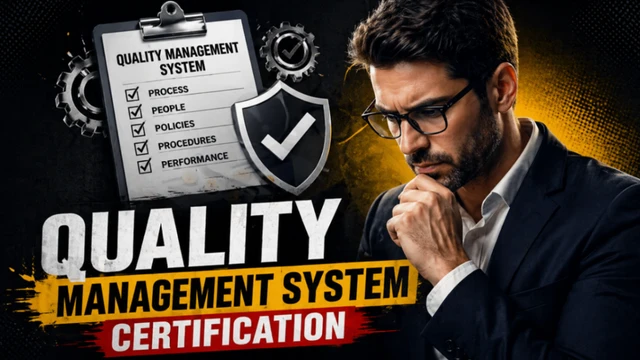
- Learn the Core Systems: Focus on learning about the Quality Management System (QMS). It's the 'operating system' for all quality activities in a pharma company.
- Understand Problem Solving: Learn how companies handle errors. Study Corrective and Preventive Actions (CAPA). This shows recruiters you think about solutions, not just problems.
- Build a Skills-Based CV: Re-write your resume. Instead of listing subjects, list skills. Use keywords like 'QMS,' 'GMP,' 'Documentation Review,' and 'CAPA.'
- Practice for the Interview: Prepare answers for common questions. Explain the difference between QA and QC clearly. Talk about how a deviation is handled. This shows confidence.
This structured approach makes you a low-risk hire. You speak the language of the industry, which puts you ahead of 90% of other freshers. This is also a great foundation for future roles in Regulatory Affairs.
The Fastest Way to Bridge the Skill Gap
How can you learn all these industry systems when you're not in the industry? Reading books isn't enough. You need to experience how these systems work in practice.
This is where simulation-based learning comes in. Instead of just reading about a Quality Management System, you get to work inside a simulated one. You handle mock deviations, process change controls, and review documents just like you would on the job. It's the closest you can get to real-world experience without being employed.
Build These Skills Now
Programs from ZANE ProEd Academy that directly address the skill gaps discussed above.
At ZANE ProEd, we don't just sell courses; we provide a system that mirrors the real work environment. Our programs are designed to fill the exact skill gaps that cause recruiters to reject freshers. When you learn how to manage a Quality Management System or a CAPA Management process, you are learning the two most critical skills for any QA role.
This approach changes your interview conversation from "I have a BSc degree" to "I have practical training in managing deviations and implementing corrective actions within a QMS framework." That's the difference between getting rejected and getting an offer letter.
Stop sending resumes that look like everyone else's. Start building the skills that companies are desperate to find. It's the most direct path to starting your career in the competitive pharma industry.
Ready to see how your skills compare to what hiring managers are looking for? Take a look at the real-world projects covered in our programs. It's time to stop being just a graduate and start becoming a professional.
Build These Skills Now
Programs from ZANE ProEd Academy that directly address the skill gaps discussed above.
Follow Zane ProEd on Google
Preferred SourceAdd our publication as a preferred source to get the latest clinical research guides, industry updates, and career intel directly in your Google Top Stories & AI Overviews.