QA QC Pharma Jobs for Freshers: Complete Career Guide

QA/QC Executive (Pharma) QA QC pharma jobs for freshers are entry-level roles in pharmaceutical companies. You check raw materials, in-process samples, and finished drugs to ensure they meet safety and quality standards. Recruiters look for life science grads with practical knowledge of GMP, documentation, and analytical instruments.
If you are a BSc or MSc graduate in Biotechnology, Microbiology, or Biochemistry, you have probably seen hundreds of QA QC pharma jobs for freshers online. But the reality is, most companies ask for experience. So how do you break in?
Here is the truth from a recruiter's desk: Pharma companies are desperate for quality professionals. They just cannot find freshers who know the basics. Your degree teaches you theory, not how a real pharma factory works. This guide will fix that.
Build These Skills Now
Programs from ZANE ProEd Academy that directly address the skill gaps discussed above.
What is the difference between QA and QC in pharma?
Many freshers use QA and QC as the same thing. But they are completely different departments. Understanding this difference between QA and QC in pharma is your first step to sounding like a professional.
- QC (Quality Control) is about testing. You work in a lab and check if a product meets specifications. You handle instruments like HPLC, GC, and dissolution testers.
- QA (Quality Assurance) is about systems. You ensure the entire manufacturing process follows rules. You review documents, handle audits, and manage SOPs (Standard Operating Procedures).
In short: QC finds problems, QA prevents them. Both are equally important. And both offer a strong pharma quality control career path.
What is the salary of a QA/QC Executive in India?
Let's talk numbers. The quality assurance pharma salary for a fresh QA/QC Executive ranges from ₹15,000 to ₹28,000 per month in small to mid-sized companies. In top MNCs, you can start at ₹30,000 to ₹40,000 per month.
With 2-3 years of experience, salaries jump to ₹35,000–₹50,000. Plus, you get benefits like health insurance and bonuses. Here is a quick breakdown:
- Fresher (0–1 year): ₹1.8 LPA to ₹3.5 LPA
- Experienced (2–5 years): ₹3.5 LPA to ₹6 LPA
- Senior Executive/Manager: ₹6 LPA to ₹12 LPA+
Note: Salaries vary by city and company type. API manufacturing units pay less than formulation plants, and regulatory-approved sites pay more.
How to get a QA/QC job in pharma as a fresher?
This is the golden question. Here is a step-by-step plan that recruiters recommend:
- Learn GMP inside out: Good Manufacturing Practices are the backbone of all QA/QC work. Read the official guidelines from WHO and ICH.
- Get hands-on with documents: Start practicing with BMRs (Batch Manufacturing Records), BPRs, and validation protocols. You can find templates online or through simulation programs.
- Master one analytical instrument: Even basic knowledge of HPLC or UV-Vis spectrophotometer impresses interviewers.
- Build a project portfolio: Create a mock investigation report or a CAPA (Corrective and Preventive Action) document. Show it in interviews.
- Target the right companies: Apply to QC departments of solid dosage, injectable, or API units. They hire freshers often.
For a detailed roadmap, read our complete guide on How to Land Your First QA QC Pharma Job as a Fresher.
What qualifications are needed for QA/QC in pharma?
You absolutely need a science degree. Companies accept:
- BSc / MSc in Chemistry, Microbiology, Biotechnology, Biochemistry, or Pharmaceutical Sciences.
- B.Pharm or M.Pharm graduates are preferred for QA roles.
- Some companies hire D.Pharm holders for junior QC positions.
But the real differentiator is industry-specific certification. For example, a certificate in GMP and Batch Release shows you understand how a factory works. A Quality Management System certification proves you know ISO and QMS basics. These are often more valuable than your degree subject.
What does a QA/QC Executive do daily?
Let's look at a typical QA QC executive job description. Your daily tasks depend on the department:
QC Executive Daily Tasks
- Collect samples from production (raw materials, in-process, finished product).
- Perform analysis using HPLC, GC, dissolution apparatus, pH meter.
- Document results in logbooks and LIMS (Laboratory Information Management System).
- Report any out-of-specification (OOS) results and initiate investigations.
QA Executive Daily Tasks
- Review batch manufacturing records for completeness and errors.
- Conduct line clearance before production runs.
- Handle change controls and deviation reports.
- Prepare for regulatory audits (US FDA, EU GMP, CDSCO).
Both roles use a lot of documentation. If you are comfortable with paper trails and checklists, you will thrive.
The Skill Gap: College vs. Real-World Expectations
Here is a hard truth: Your college lab is nothing like a pharma QC lab. In college, you get a printed manual, pre-weighed samples, and plenty of time. In industry, you must:
- Handle sudden shift changes and tight deadlines.
- Work under cGMP norms where every action must be documented immediately.
- Know how to read and interpret pharmacopoeias (IP, USP, BP).
- Understand regulations from FDA and EMA.
Most freshers fail interviews because they cannot answer basic questions like 'What is an SOP?' or 'Explain OOS investigation steps.' This is where targeted preparation makes all the difference.
Your 4-Step Roadmap to a QA/QC Job
Follow this exact path, and you can land a job in 3–6 months:
- Month 1: Build Foundation — Study GMP guidelines from ICH Q7. Understand documentation types.
- Month 2: Simulate QC Work — Use simulation-based learning to practice troubleshooting HPLC and writing investigation reports.
- Month 3: Create a Showcase — Build a portfolio with mock audit checklists, BMRs, and a CAPA report.
- Month 4: Apply Strategically — Use job portals, but also directly email QC managers. Attend campus drives if possible.
Bridging the Gap with Simulation
Reading theory is not enough. You need to experience what it feels like to release a batch or handle a deviation. Simulation-based learning recreates real pharma scenarios — from reviewing a smoke study report to deciding whether to reject a batch. It builds the decision-making muscle that recruiters look for.
Build These Skills Now
Programs from ZANE ProEd Academy that directly address the skill gaps discussed above.
The Power of a System, Not Just a Course
ZANE ProEd is not just a list of videos. It is a step-by-step system that mimics real QA/QC workflows. Two programs directly apply to this career:
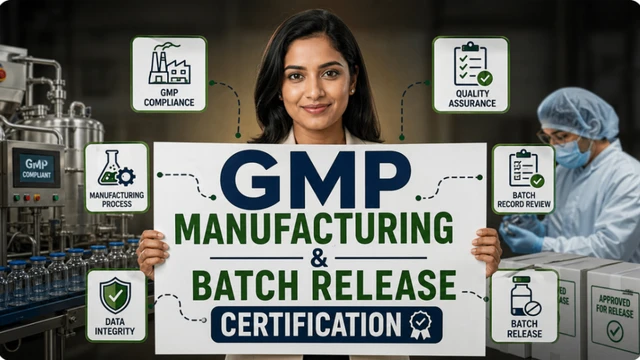
GMP Manufacturing & Batch Release Certification walks you through the complete lifecycle of a drug product — from raw material receipt to final release. You practice reviewing actual batch records and performing in-process checks.
Quality Management System Certification teaches you how to set up SOPs, handle CAPA, and manage change controls — exactly what a QA executive does daily. You learn the 'why' behind every signature and stamp.
Thousands of life science graduates have used this system to get QA QC pharma jobs for freshers. They come with confidence, not just a degree.
Ready to see where you stand? Check your job readiness and compare your skills against real industry requirements.
Build These Skills Now
Programs from ZANE ProEd Academy that directly address the skill gaps discussed above.
Follow Zane ProEd on Google
Preferred SourceAdd our publication as a preferred source to get the latest clinical research guides, industry updates, and career intel directly in your Google Top Stories & AI Overviews.