Signal Detection Pharmacovigilance Career: Complete Guide for Health Graduates
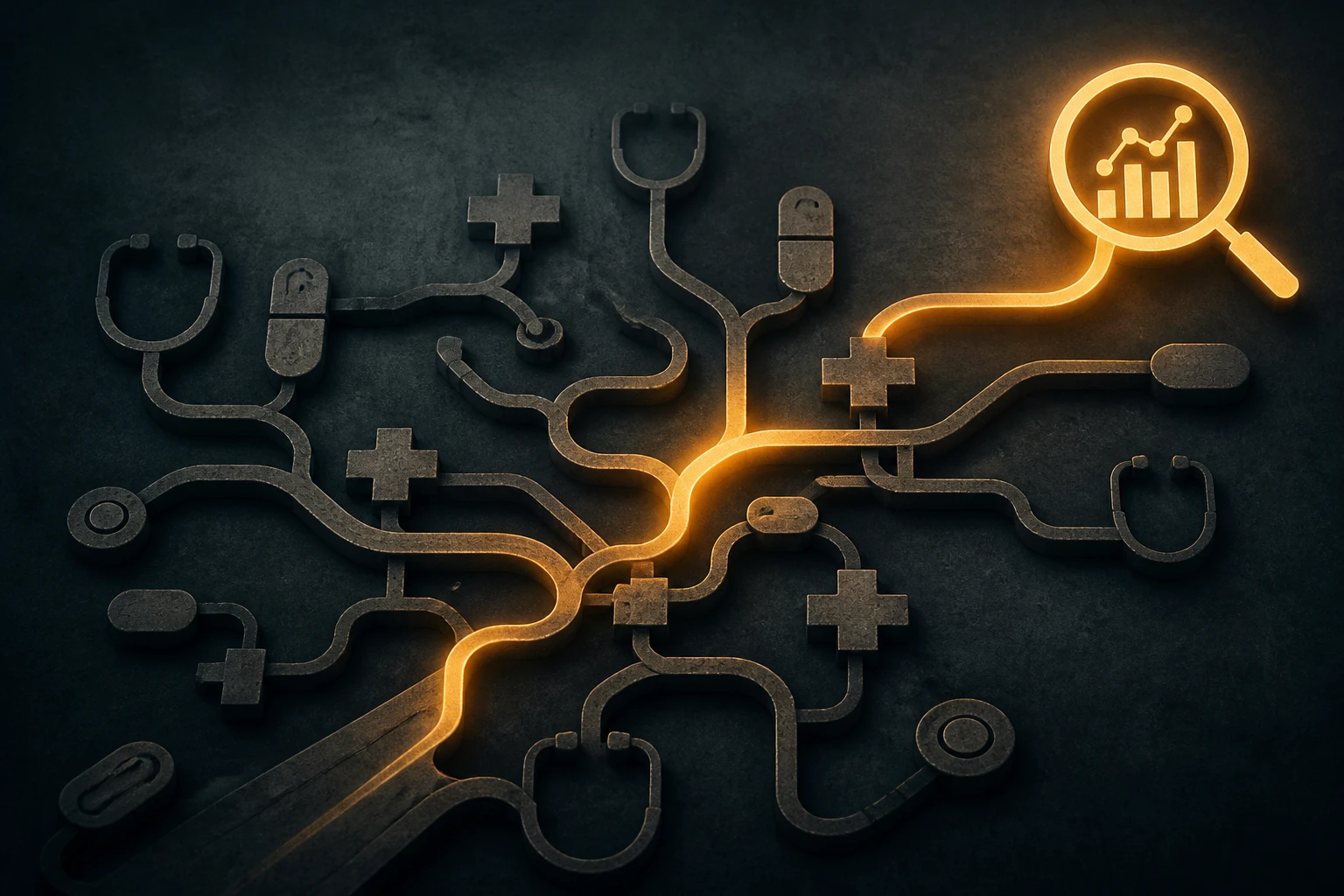
Signal Detection Specialist finds hidden safety signals from drug data using tools and methods. This career offers BDS, BHMS, BAMS, and Nursing graduates a clear path to a stable, high-demand job. It combines clinical knowledge with data analysis to protect patient safety.
If you are a BDS, BHMS, BAMS, or Nursing graduate feeling confused about your next step, a signal detection pharmacovigilance career could be your clear answer. Many allied health graduates feel stuck after their degree. But this field offers a stable, well-paid role that uses your clinical skills in a new way.
\nYou already understand medicines and patient care. Signal detection adds a new layer: finding problems in drug safety data before they harm patients. It is less about patient contact and more about analysis. That is why it fits health graduates who want a desk-based, intellectually challenging job.
Build These Skills Now
Programs from ZANE ProEd Academy that directly address the skill gaps discussed above.
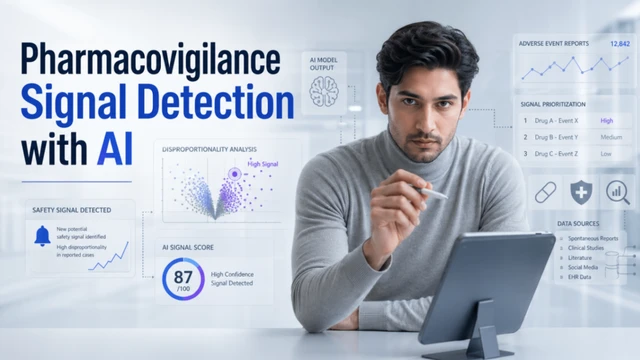
In this guide, we will answer your biggest questions. You will learn what signal detection is, what salary you can expect, how to become a specialist, which tools are used, and what qualifications you need. By the end, you will have a clear decision framework to move forward.
\nWhat is signal detection in pharmacovigilance?
\nSignal detection is the process of finding new, previously unknown safety information about a drug. In pharmacovigilance, a "signal" is a possible causal relationship between a drug and an adverse event. For example, a cluster of liver injury reports linked to a common painkiller could be a signal.
\nThis work is part of pharmacovigilance signal management. It includes collecting data from clinical trials, spontaneous reports, and medical literature. Then specialists use statistical methods and tools to spot patterns. Organizations like WHO and FDA rely on signal detection to take safety actions.
\nWithout signal detection, dangerous side effects could go unnoticed. Specialists act like detectives. They look at large datasets and ask: is this just background noise, or is it a real safety issue? This role is critical in protecting public health.
\nWhat is the salary of a Signal Detection Specialist in India?
\nThe signal detection specialist salary in India varies by experience, company, and location. Here is a realistic range:
\n- \n
- Entry-level (0-2 years): ₹3.5 – ₹5 lakh per annum \n
- Mid-level (3-5 years): ₹5 – ₹8 lakh per annum \n
- Senior level (5+ years): ₹8 – ₹12+ lakh per annum \n
Global companies and CROs often pay higher. Cities like Bengaluru, Hyderabad, and Pune have more opportunities. Your salary also depends on your tool proficiency and ability to handle complex signals.
\nHow to become a Signal Detection Specialist?
\nHere is a step-by-step path to how to become a signal detection specialist:
\n- \n
- Get the right degree: BDS, BHMS, BAMS, BSc Nursing, or BPharm are accepted. A life science or health background is essential. \n
- Learn pharmacovigilance basics: Understand ICSR, case processing, and regulatory guidelines. Start with free resources from ICH and CDSCO. \n
- Build data skills: Signal detection uses statistics and databases. Learn Excel, SQL, and basic statistical concepts like disproportionality analysis. \n
- Master signal detection tools: Practice on tools like Oracle Argus, ArisGlobal, or VigiBase. Many employers expect hands-on experience. \n
- Get practical training: Simulation-based learning can mimic real signal detection workflows. This is faster than learning on the job. \n
- Apply for entry roles: Start as a Drug Safety Associate, then move to signal detection after 1-2 years. Or apply directly if you have strong tool skills. \n
For more context on pharmacovigilance entry roles, read our guide on pharmacovigilance jobs for freshers in India.
\nWhat tools are used for signal detection?
\nSignal detection specialists use specialized software and statistical methods. Here are the most common signal detection tools and methods:
\n- \n
- Safety databases: Oracle Argus, ArisGlobal LifeSphere, and IQVIA Vigilance Platform are widely used in industry. \n
- Global databases: WHO's VigiBase and EMA's EudraVigilance are used for international signal analysis. \n
- Statistical methods: Proportional Reporting Ratio (PRR), Reporting Odds Ratio (ROR), and Bayesian methods are standard. \n
- AI and automation: New tools use machine learning to scan large datasets faster. This is a growing area, as mentioned in our case processing guide. \n
Employers want candidates who can not only use the tools but also understand the output. You need to interpret whether a signal is clinically meaningful. That is where your health background gives you an edge.
\nWhat qualifications are needed for signal detection roles?
\nThe signal detection job description usually lists these qualifications:
\n- \n
- Education: Bachelor's degree in life sciences, pharmacy, nursing, or medicine (BDS, BHMS, BAMS accepted). \n
- Knowledge: Basic pharmacology, adverse event terminology (MedDRA), and regulatory guidelines (ICH E2E). \n
- Technical skills: Experience with safety databases, Excel, and statistical concepts. \n
- Soft skills: Attention to detail, analytical thinking, and communication. \n
A certification or diploma in pharmacovigilance signal detection can help you stand out. But the most important qualification is practical ability. Employers want proof you can handle real signal data, not just theory.
\nSkill Gap: What Colleges Teach vs What Employers Expect
\nAs a BDS, BHMS, BAMS, or Nursing graduate, your degree gave you strong clinical knowledge. But signal detection needs different skills. Here is the gap:
\n- \n
- Colleges teach: Disease diagnosis, treatment protocols, patient care. \n
- Employers expect: Ability to use safety databases, run statistical queries, and write signal assessment reports. \n
Most health graduates have never opened Oracle Argus or run a disproportionality analysis. This gap is the main reason for rejections. But it can be closed with targeted, practical training.
\nA Clear 5-Step Pathway to Signal Detection Career
\nIf you are ready to move from confusion to clarity, follow this roadmap:
\n- \n
- Confirm your interest: Do you enjoy data analysis more than direct patient care? Signal detection is a desk job with high analytical demand. \n
- Learn the fundamentals: Study pharmacovigilance regulations and basic statistics. Use free resources from EMA and FDA. \n
- Get hands-on with tools: Enroll in a simulation-based program that lets you practice on real industry software. This is the fastest way to build confidence. \n
- Build a portfolio: Document case studies or projects where you identified a mock signal. Show your method and conclusion. \n
- Apply strategically: Target CROs, global pharma companies, and IT vendors. Start with drug safety associate roles if needed. \n
How Simulation-Based Learning Bridges the Gap
\nReading about signal detection is not enough. Employers want proof you can do the work. Simulation-based learning replicates real workflows. You work on realistic drug safety data, use actual tools, and get feedback from experts.
\nThis method is faster and more effective than traditional courses. It builds the exact skills listed in job descriptions. And it gives you confidence to speak about your abilities in interviews.
\nBuild These Skills Now
Programs from ZANE ProEd Academy that directly address the skill gaps discussed above.
What ZANE ProEd Offers for Signal Detection
\nZANE ProEd has designed a focused program on pharmacovigilance signal detection with AI. This program is not just theory. It uses simulation to teach you how to use industry tools like Oracle Argus and statistical methods. You will work on real-world case studies, identify signals, and write assessment reports.
\nBecause the program is built around a system of learning, not just videos, you practice until you can perform. It is designed for health graduates who want to transition into pharmacovigilance without wasting time on irrelevant topics.
\nIf you are still unsure about your career direction, check your job readiness. See how your current skills compare to what employers demand. That simple step can bring clarity.
\nFor more insights on starting in pharmacovigilance, read our guide on pharmacovigilance jobs for freshers and case processing roles.
Build These Skills Now
Programs from ZANE ProEd Academy that directly address the skill gaps discussed above.
Follow Zane ProEd on Google
Preferred SourceAdd our publication as a preferred source to get the latest clinical research guides, industry updates, and career intel directly in your Google Top Stories & AI Overviews.