Signal Detection Pharmacovigilance Career: Complete Guide for Allied Health Graduates

Signal Detection Specialist A signal detection pharmacovigilance career involves analyzing drug safety data to identify new or changing risks. Specialists use statistical tools and medical knowledge to protect patients. In India, allied health graduates can enter this growing field with the right training and practical skills.
Are you a BDS, BHMS, BAMS, or Nursing graduate feeling lost after your degree? You are not alone. Many allied health graduates struggle to find a clear job path. But a signal detection pharmacovigilance career could be your breakthrough in today's AI-driven healthcare industry.
Degrees alone are not enough anymore. Employers want practical skills, not just theory. This guide explains what signal detection is, how much you can earn, and exactly how to get hired in 3–6 months.
Build These Skills Now
Programs from ZANE ProEd Academy that directly address the skill gaps discussed above.
What is signal detection in pharmacovigilance? Your Signal Detection Pharmacovigilance Career Guide
Signal detection is a core part of pharmacovigilance signal management. It means reviewing large volumes of drug safety data to find new or changing safety signals. A safety signal is information that suggests a possible new adverse effect of a medicine. The goal is to protect patients by spotting risks early.
Regulators like the World Health Organization and ICH set global standards for signal detection. In India, the CDSCO also requires companies to monitor drug safety continuously.
As a Signal Detection Specialist, you will review data from clinical trials, spontaneous reports, and medical literature. You use statistical methods and medical judgment to decide if a signal is real. If it is, you escalate it for further review. This role is perfect for allied health graduates because you already understand human anatomy, disease, and drug effects.
What is the salary of a Signal Detection Specialist in India?
The signal detection specialist salary in India varies by experience, company, and location. Here are typical ranges:
- Freshers: ₹3.5 lakh to ₹5.5 lakh per year
- 2–5 years experience: ₹6 lakh to ₹10 lakh per year
- Senior specialists or team leads: ₹12 lakh to ₹20 lakh+ per year
Top pharmaceutical companies and CROs like IQVIA, Parexel, and Accenture pay higher. Your exact salary depends on your skills in signal detection tools and your ability to handle complex safety data. Read more about signal detection careers for allied health graduates.
How to become a Signal Detection Specialist?
If you want to know how to become a signal detection specialist, follow this practical path:
- Learn the basics of pharmacovigilance: Understand safety reporting, adverse events, and regulatory guidelines.
- Get trained in signal detection methods: Learn statistical methods like disproportionality analysis, Bayesian methods, and data mining.
- Master key tools: Gain hands-on experience with VigiBase, Oracle Argus, or ArisGlobal.
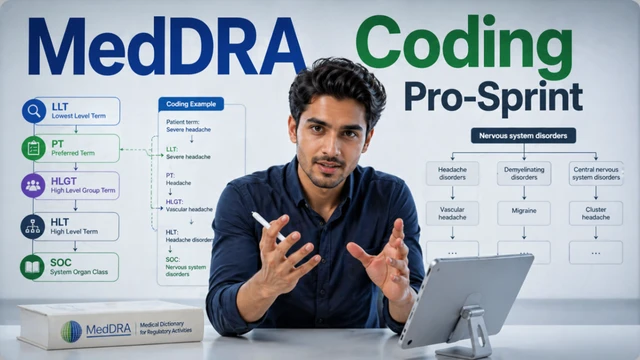
- Earn a certification: A specialized certification in signal detection and MedDRA coding makes you job-ready.
- Build practical experience: Use simulation platforms to work on real-world safety data cases.
Many allied health graduates start with case processing jobs and then move into signal detection. Learn about entry-level pharmacovigilance case processing jobs.
What tools are used for signal detection?
Signal detection tools and methods are essential for this role. You must know how to use these platforms:
- Oracle Argus: Common safety database for case processing and signal detection.
- ArisGlobal LifeSphere: Cloud-based safety and signal management.
- VigiBase: WHO's global database of individual case safety reports.
- Statistical software: Tools like R, SAS, or Python for data analysis.
- AI-based tools: New machine learning models that scan large datasets for patterns.
Employers expect you to be comfortable with at least one safety database. Simulation training can give you that confidence before your first job.
What qualifications are needed for signal detection roles?
The signal detection job description typically asks for:
- A degree in life sciences, pharmacy, medicine, or allied health (BDS, BHMS, BAMS, Nursing).
- Knowledge of pharmacovigilance regulations (ICH, GVP, FDA).
- Familiarity with MedDRA coding.
- Basic understanding of statistics.
- Strong attention to detail and analytical thinking.
Your allied health degree already covers human biology and pharmacology. What you lack is the specific pharmacovigilance training and tool experience. That gap can be filled with a focused certification program.
What colleges teach vs. what employers expect
Many BDS, BHMS, BAMS, and Nursing graduates leave college with strong clinical knowledge. But they lack practical pharmacovigilance skills. Employers do not want to spend months teaching you basic safety databases or signal detection methods.
Colleges rarely teach signal detection, MedDRA coding, or statistical analysis for drug safety. Employers expect you to know these on day one. That is why so many allied health graduates feel stuck. The good news? You can bridge this gap quickly with the right training.
Your 5-step roadmap to a signal detection job in 3–6 months
- Month 1: Learn pharmacovigilance fundamentals and regulatory guidelines.
- Month 2: Complete a certification in signal detection and MedDRA coding.
- Month 3: Practice on simulation platforms with real safety datasets.
- Month 4: Apply for entry-level roles like Drug Safety Associate or Signal Detection Trainee.
- Month 5–6: Interview, network, and land your first job.
This roadmap works because it focuses on practical skills, not just theory.
Why simulation-based learning changes everything
Reading about signal detection is not enough. You need to work with actual safety data. Simulation platforms give you that experience without the risk of a real job. You can practice using Oracle Argus, run disproportionality analysis, and write signal detection reports.
This is the fastest way to build job-ready skills. Employers notice candidates who have already used the tools.
Build These Skills Now
Programs from ZANE ProEd Academy that directly address the skill gaps discussed above.
How ZANE ProEd fits into your career plan
ZANE ProEd offers a systematic approach to upskill allied health graduates. Two courses are directly relevant:
- Pharmacovigilance Signal Detection with AI: Covers signal detection methods, statistical tools, and hands-on simulation.
- MedDRA Medical Coding Certification: Teaches the global standard for coding adverse events.
These courses are not just theory. They include real-world projects and simulations. You learn by doing, not just watching videos. ZANE ProEd is a system designed to make you job-ready, not just knowledgeable.
Learn more about how ZANE ProEd trains healthcare graduates.
Check your job readiness today. See how your current skills compare to what employers demand. Take the first step toward a signal detection pharmacovigilance career.
Build These Skills Now
Programs from ZANE ProEd Academy that directly address the skill gaps discussed above.
Follow Zane ProEd on Google
Preferred SourceAdd our publication as a preferred source to get the latest clinical research guides, industry updates, and career intel directly in your Google Top Stories & AI Overviews.