Pharmacovigilance Case Processing Jobs Freshers: Complete Career Guide

Pharmacovigilance Case Processor Pharmacovigilance case processing jobs for freshers involve reviewing and entering adverse event reports from drugs into safety databases. You check data, code medical terms, and ensure reports meet regulatory timelines. Companies hire chemistry graduates for this entry-level role if they have ICSR and MedDRA training.
Recruiters reveal a simple truth: pharmacovigilance case processing jobs freshers are open to BSc and MSc Chemistry graduates, not just pharmacy students. If you are confused between multiple career options after your chemistry degree, this is a clear path into the pharmaceutical industry. You do not need a medical background to start.
But here is the myth vs reality. Colleges teach you chemical reactions and lab techniques. Employers expect you to know adverse event reporting workflows and MedDRA coding. This gap confuses many freshers. We will break it down step by step.
Build These Skills Now
Programs from ZANE ProEd Academy that directly address the skill gaps discussed above.
Many chemistry graduates think pharmacovigilance is only for doctors or pharmacists. That is false. Case processing is a data and documentation role. If you can follow rules and work with software, you can do this job.
Pharmacovigilance Case Processing Jobs Freshers: What Does a Case Processor Do?
A pharmacovigilance case processor manages reports of side effects (adverse events) from patients, doctors, or clinical trials. This is an entry-level job in drug safety. The work is detail-oriented and process-driven, not medical diagnosis.
Here is the pharmacovigilance case processor job description broken into daily tasks:
- Receive and log Individual Case Safety Reports (ICSRs) from emails, calls, or databases.
- Check each report for completeness: patient details, drug name, adverse event, reporter info.
- Enter data into a safety database like Oracle Argus, ArisG, or Veeva Vault.
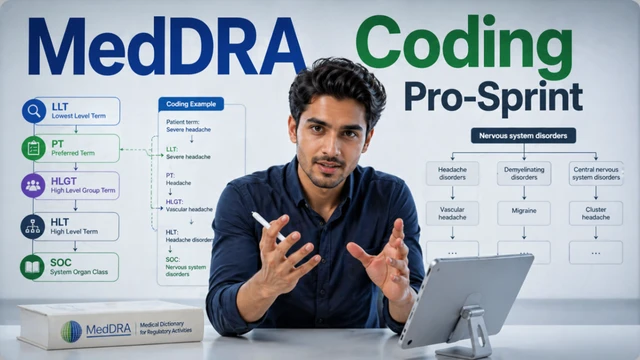
- Code medical terms using MedDRA (Medical Dictionary for Regulatory Activities).
- Write a clear case narrative summarizing what happened.
- Send follow-up queries to reporters if information is missing.
- Meet strict regulatory deadlines (7 days for serious cases, 15 days for non-serious). These timelines come from ICH guidelines.
Many adverse event reporting jobs do not require a pharmacy degree. Chemistry graduates with good attention to detail and software skills are hired regularly.
What is the salary of a PV Case Processor in India?
The PV case processor salary India varies by company, city, and your training. For freshers, the range is competitive for a non-coding role.
- Fresher (0-1 year): ₹2.5 lakh to ₹4.0 lakh per annum (LPA).
- 1-3 years experience: ₹4.0 LPA to ₹6.5 LPA.
- Senior case processor (3-5 years): ₹6.5 LPA to ₹10 LPA.
Cities like Bengaluru, Hyderabad, Pune, and Mumbai pay 10-15% higher. Global CROs like IQVIA, Parexel, and Syneos often pay more than Indian pharma companies.
The ICSR processing career has steady growth. After 2-3 years, you can move to quality review, aggregate reporting, or signal detection. A chemistry graduate with MedDRA certification can negotiate the same starting salary as a pharmacy fresher. Read Signal Detection Pharmacovigilance Career Guide for advanced roles.
How to get a PV case processing job as a fresher?
You do not need prior experience. But you must show you understand the workflow. Here is a 5-step path for BSc/MSc Chemistry graduates:
- Learn ICSR basics: Understand what a case is, data fields, and regulatory timelines. Read free ICH E2B guidelines.
- Get MedDRA coding training: Enroll in a short certification that teaches you to assign codes to adverse events. This is the #1 skill recruiters test.
- Practice on a mock safety database: Use simulation tools to enter dummy cases, code terms, and write narratives. This replaces work experience.
- Build a case processing portfolio: Show 3-5 sample cases you processed. Mention tools you used (even simulated).
- Apply to CROs and pharma companies: Target entry-level PV roles at Cognizant, Accenture, TCS, Wipro, and smaller CROs. Use LinkedIn and Naukri.
For a detailed roadmap, read Pharmacovigilance Jobs for Freshers: India Roadmap. It covers resumes, interviews, and company lists.
What is ICSR processing in pharmacovigilance?
ICSR stands for Individual Case Safety Report. It is the core document in pharmacovigilance. Every time a patient or doctor reports a side effect, it becomes an ICSR.
ICSR processing is the step-by-step workflow to handle that report from receipt to submission to regulators. Here is the typical flow:
- Receipt: Report arrives via email, phone, literature, or clinical trial.
- Triage: Check if it is valid (has patient, drug, event, reporter).
- Data entry: Enter all details into the safety database.
- Coding: Assign MedDRA codes for the adverse event and medical history.
- Medical review: A physician or trained reviewer checks seriousness and causality.
- Submission: Send the case to regulatory authorities (like CDSCO in India or FDA in US) within timelines.
These steps follow ICH and CDSCO guidelines. A strong ICSR processing career starts with mastering this flow. Chemistry graduates can learn it faster than you think because it is rules-based, not clinical.
What is MedDRA coding and how is it used in PV?
MedDRA stands for Medical Dictionary for Regulatory Activities. It is the international standard for coding medical terms in pharmacovigilance. You cannot process a case without it.
MedDRA has five levels of hierarchy:
- System Organ Class (SOC): Broad body system, e.g., 'Cardiac disorders'.
- High Level Group Term (HLGT): Sub-group, e.g., 'Coronary artery disorders'.
- High Level Term (HLT): More specific, e.g., 'Ischaemic coronary artery disorders'.
- Preferred Term (PT): Standard term, e.g., 'Myocardial infarction'.
- Lowest Level Term (LLT): Exact reported word, e.g., 'Heart attack'.
As a case processor, you read the reporter's words and assign the correct PT. This is called MedDRA coding for freshers. It is a skill you can learn in 2-4 weeks with practice. The ICH maintains MedDRA, and companies pay for access. But you can learn the structure without subscribing.
What chemistry colleges teach vs what employers expect
Your degree teaches organic reactions, spectroscopy, and lab safety. Employers in pharmacovigilance do not test those. They test your ability to:
- Spot missing data in a case report.
- Code an adverse event correctly in MedDRA.
- Write a clear case narrative.
- Meet a 24-hour turnaround deadline.
This gap is why 90% of chemistry freshers get rejected in PV interviews. They say 'I have good chemistry knowledge' but cannot answer 'What is a valid ICSR?' or 'What is MedDRA PT for fever?'.
A 5-Step Roadmap for Chemistry Freshers
- Step 1: Understand the PV ecosystem – Spend 5 days on free resources. Read ICH E2B, watch videos on ICSR workflow. Know the difference between serious and non-serious cases.
- Step 2: Complete a focused certification – Choose a course on ICSR case processing and MedDRA coding. Look for simulation-based training, not just theory.
- Step 3: Build simulated case experience – Process at least 10 dummy cases on a mock database. Write narratives, assign codes, and compare with answer keys.
- Step 4: Prepare your PV resume and portfolio – Highlight your certification, tools (even simulated), and sample cases. Use keywords like 'ICSR', 'MedDRA', 'Argus'.
- Step 5: Apply strategically – Target CROs and IT companies with PV verticals. Apply to 20-30 jobs per week. Practice common interview questions.
How to bridge the gap without a job
The fastest way to prove you can do the job is simulation-based learning. You practice on real case scenarios in a mock safety database. This shows recruiters you can start from day one, not after three months of training.
Build These Skills Now
Programs from ZANE ProEd Academy that directly address the skill gaps discussed above.
ZANE ProEd: The System Behind PV Case Processing Skills
ZANE ProEd built a simulation-first learning system for non-medical graduates. Two key modules map directly to case processing roles:
- ICSR Case Processing Triage: Learn to validate, enter, and triage ICSRs using a mock database. Includes real-world case scenarios with errors to catch.
- MedDRA Medical Coding Certification: Practice coding adverse events from raw reporter terms to PT. Includes hundreds of practice exercises and quizzes.
These are not just video courses. They are worked simulations. You will produce sample case narratives and coded reports that you can show in interviews. That is the difference between 'knowing' and 'doing'.
If you want to see how far you are from job-ready, check your current skills. See how your chemistry background translates to PV case processing.
Learn more about ZANE ProEd's approach or compare your skills against an entry-level PV case processor checklist.
Build These Skills Now
Programs from ZANE ProEd Academy that directly address the skill gaps discussed above.
Follow Zane ProEd on Google
Preferred SourceAdd our publication as a preferred source to get the latest clinical research guides, industry updates, and career intel directly in your Google Top Stories & AI Overviews.