Pharmacovigilance Jobs for Freshers in India: A Step-by-Step Career Roadmap

Pharmacovigilance jobs for freshers in India are roles where you monitor drug safety. You review reports of side effects, enter data, and ensure medicines are safe for patients. With the right training, life science graduates can start earning ₹2.5–4 lakhs per year as a Drug Safety Associate.
If you have a BSc or MSc in Biotechnology, Microbiology, or Biochemistry, you might feel stuck in an unrelated job. Your degree is valuable, but colleges rarely teach the skills that employers want. There is a clear way out. Pharmacovigilance jobs for freshers in India are growing, and companies need trained graduates like you.
This guide shows you a step-by-step roadmap to land your first pharmacovigilance job. No more aimless searching. We cover salaries, job roles, and the exact skills you need. The time to act is now, while entry-level doors are still wide open.
Build These Skills Now
Programs from ZANE ProEd Academy that directly address the skill gaps discussed above.
What is pharmacovigilance and why is it important?
Pharmacovigilance (PV) is the science of monitoring the safety of medicines. Pharmacovigilance jobs for freshers in India are part of this growing field. It involves collecting, analysing, and reporting side effects (adverse events) from patients and healthcare providers. The goal is to protect public health by identifying risks early.
Why does it matter? Every drug on the market must be proven safe. Even after approval, unexpected side effects can appear. The World Health Organization (WHO) and other bodies set global PV standards. In India, the Central Drugs Standard Control Organisation (CDSCO) oversees this process. More than ever, companies are hiring fresh graduates for roles in drug safety. That means pharmacovigilance jobs for freshers in India are not just possible—they are a solid career start.
What is the salary of a Drug Safety Associate in India?
The pharmacovigilance salary in India for freshers starts between ₹2.5 to ₹4 lakhs per annum. A Drug Safety Associate (DSA) is the most common entry-level role. Exact pay depends on the company, city, and your certifications.
- Fresher (0–1 year): ₹2.5–4 LPA
- After 2–3 years: ₹4–7 LPA
- Senior roles (5+ years): ₹8–15 LPA or more
Global companies and CROs (like Accenture, IQVIA, Parexel) often pay higher. Certifications in ICSR case processing and MedDRA coding can boost your starting offer by 10–20%. Cities like Mumbai, Bangalore, and Hyderabad usually offer better packages.
How to start a career in pharmacovigilance?
Many life science graduates don't know where to begin. Your degree gives you a base, but you need practical skills. Here is the roadmap:
- Learn the basics: Understand ICSR (Individual Case Safety Report), MedDRA coding, and pharmacovigilance regulations from ICH and FDA.
- Get certified: A short, hands-on pharmacovigilance course for BPharm graduates (or any life science degree) bridges the gap. Look for training in ICSR triage, case processing, and medical coding.
- Build practical experience: Use simulation tools that mimic real-world PV databases. Employers value this over textbook knowledge.
- Target entry roles: Apply for Drug Safety Associate, PV Trainee, or Case Processor positions. For a detailed list of current openings, check our guide on pharmacovigilance jobs for freshers in India.
The PV career path is well-defined. Starting as a Drug Safety Associate, you can progress to Drug Safety Scientist, Team Lead, Safety Manager, or even move into Pharmacovigilance Physician roles if you have a medical background.
What are the job responsibilities of a PV Associate?
The drug safety associate job description typically includes these daily tasks:
- Receive and triage adverse event reports from various sources.
- Enter case data into safety databases (like Argus or ArisG).
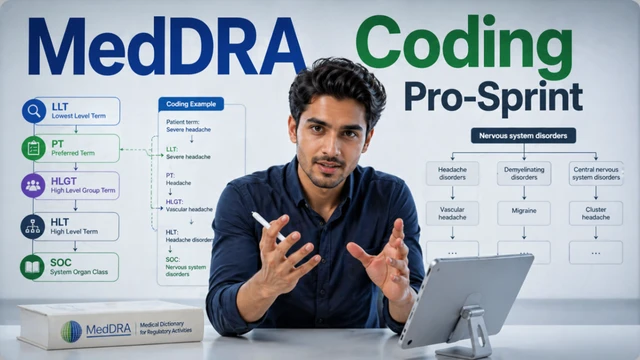
- Perform MedDRA coding for medical terms.
- Check for completeness and follow up with reporters.
- Assess causality – was the drug likely responsible?
- Prepare narratives and submit reports to regulatory bodies.
Attention to detail, medical knowledge, and database fluency are key. That’s why practical training matters so much. Common tools include Argus Safety, ArisG, and Veeva Vault Safety. Knowing how to use these is a big advantage. If you want to dive deeper into case processing roles, read this article on pharmacovigilance case processing jobs.
Is pharmacovigilance a good career for BPharm freshers?
Absolutely. Pharmacovigilance is one of the fastest-growing fields for pharmacy and life science graduates. Here’s why:
- High demand: As more complex drugs launch, safety monitoring expands. India is a global hub for PV outsourcing.
- Clear PV career path: You can grow from Associate to Scientist, Team Lead, Manager, and even into Regulatory Affairs or Risk Management.
- Stable desk job: No sales targets, no lab hazards. You work in a structured office environment.
- Good salary growth: Compensation rises sharply with experience and specialisation.
- Work-life balance: Many PV roles offer fixed hours and work-from-home options.
Whether you are from BPharm, BSc Biotech, or MSc Microbiology, your background fits well. The key is upskilling.
What colleges teach vs what employers actually expect
You might have studied drug mechanisms, clinical trials, or microbiology theory. But in the real PV job, you rarely use that directly. Employers look for:
- Hands-on knowledge of ICSR processing workflows.
- Ability to code adverse events using MedDRA.
- Familiarity with safety databases and submission standards.
- Understanding of regulatory timelines and compliance.
Most colleges skip these tools. That’s why a pharmacovigilance course for BPharm graduates (or any life science degree) that includes simulated case processing is a game-changer. Soft skills like communication and attention to detail are also vital but rarely taught in college.
Your step-by-step roadmap to a PV job in 3–6 months
Ready to take control? Follow these six steps:
- Step 1: Commit to learning. Set aside 1–2 hours daily for focused upskilling.
- Step 2: Enrol in a simulation-based PV program. Choose one that covers ICSR triage, case processing, and MedDRA coding with real-world databases.
- Step 3: Practise daily. Work on mock cases until you can triage and code reports confidently.
- Step 4: Build your resume. Highlight certifications, hands-on projects, and relevant tools.
- Step 5: Apply strategically. Use job portals and company websites. Tailor your CV for Drug Safety Associate or PV Trainee roles.
- Step 6: Ace the interview. Prepare for case-study questions. Show your practical know-how.
Simulation-based learning: The missing piece
Reading theory isn’t enough. Employers test your ability to handle real cases during interviews. A simulation-based system lets you practise on a live database, triage reports, and code with MedDRA—just like you would on the job.
This approach cuts learning time in half and builds confidence. Instead of memorising, you develop muscle memory for PV tasks.
Build These Skills Now
Programs from ZANE ProEd Academy that directly address the skill gaps discussed above.
ZANE ProEd’s system integrates courses like ICSR Case Processing & Triage and MedDRA Medical Coding Certification directly into a simulated work environment. You learn by doing, not just watching. The ICSR course covers the complete lifecycle of a safety report—from receipt to submission. You learn triage logic, duplicate checks, and regulatory timelines. The MedDRA certification dives deep into the medical dictionary used worldwide. You code real adverse events and medical histories, building accuracy and speed. Graduates of this system have successfully moved into PV roles at top CROs and pharma companies.
Want to know if you’re ready? See how your skills compare to current industry demands.
Build These Skills Now
Programs from ZANE ProEd Academy that directly address the skill gaps discussed above.
Follow Zane ProEd on Google
Preferred SourceAdd our publication as a preferred source to get the latest clinical research guides, industry updates, and career intel directly in your Google Top Stories & AI Overviews.