Signal Detection Pharmacovigilance Career: A Guide for BPharm Freshers

Signal Detection Specialist: A signal detection pharmacovigilance career involves identifying and evaluating potential new safety issues related to medicines. Specialists analyze drug safety data from various sources to detect patterns that suggest a new adverse reaction or a change in the frequency of a known one, ensuring patient safety.
If you have a BPharm or MPharm degree, did a few internships, and are still struggling to find a job, you are not alone. Starting a signal detection pharmacovigilance career can feel impossible when every job description asks for experience you don't have. It feels like a lock you can't find the key for.
You see your classmates getting jobs, and you wonder what you're doing wrong. Your internships taught you the basics, but they didn't prepare you for the real work of a Signal Detection Specialist. This is the brutal reality of the competitive Indian job market.
Build These Skills Now
Programs from ZANE ProEd Academy that directly address the skill gaps discussed above.
This guide will break down the exact steps and skills you need. We will show you what companies actually want and how to get it, so you can finally stand out from the crowd of applicants.
What is signal detection in pharmacovigilance?
Signal detection is like being a detective for drug safety. It is the core of pharmacovigilance signal management. The main goal is to find potential connections between a drug and an adverse event that were not discovered during clinical trials.
A 'signal' is essentially a hypothesis or a question mark. It's information that suggests a new potential causal link between a drug and an adverse event. It doesn't mean the drug is unsafe, but it means we need to investigate it further.
The process includes:
- Data Collection: Gathering reports from doctors, patients, and clinical studies from databases worldwide.
- Data Mining: Using statistical methods to find patterns or 'disproportionality' in the data. This means an adverse event is reported more often for a specific drug compared to others.
- Signal Validation: Assessing the signal to see if it's a real concern or just random noise in the data.
- Prioritization & Assessment: Deciding which signals are most urgent and need immediate, in-depth evaluation.
This entire process is guided by international standards to ensure consistency and patient safety across the globe. You can learn more about these guidelines from organizations like the ICH.
What is the salary of a Signal Detection Specialist in India?
The signal detection specialist salary in India is attractive, especially as you gain experience. It's a specialized role, so companies are willing to pay for the right skills. Here is a typical breakdown for salaries in India:
- Entry-Level (0-2 years experience): As a fresher moving into this role, you can expect a starting salary between ₹4.5 Lakhs to ₹7 Lakhs per year. This depends on the company (MNC vs. Indian pharma) and your practical skills.
- Mid-Level (3-5 years experience): With a few years of solid experience in signal management, your salary can increase to ₹8 Lakhs to ₹15 Lakhs per year. At this stage, you are expected to manage signals independently.
- Senior-Level (5+ years experience): Senior specialists or managers can earn ₹16 Lakhs to ₹25+ Lakhs per year. These roles often involve leading teams, developing strategies, and interacting with regulatory bodies like the CDSCO.
Your ability to use specific tools and your understanding of global regulations, like those from the EMA, can significantly impact your salary potential.
How to become a Signal Detection Specialist?
Becoming a Signal Detection Specialist requires more than just a pharmacy degree. You need a specific set of practical skills. Here’s a clear path on how to become a signal detection specialist:
- Build a Strong Foundation: You must have a crystal-clear understanding of the entire pharmacovigilance lifecycle, not just case processing. Read our complete career guide to understand the scope.
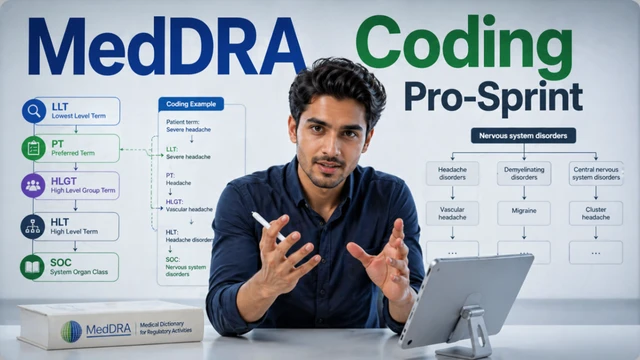
- Master MedDRA Coding: Medical coding with MedDRA is the language of pharmacovigilance. Without being an expert in it, you cannot accurately analyze safety data. It's a non-negotiable skill.
- Learn Statistical Methods: You need to understand the principles behind signal detection tools and methods, such as Proportional Reporting Ratios (PRR) and Reporting Odds Ratios (ROR). You don't need to be a statistician, but you must understand what the numbers mean.
- Get Hands-On Tool Experience: This is the biggest gap for freshers. You must have practical experience with databases and analysis tools used in the industry. Theoretical knowledge is not enough.
- Develop Analytical Skills: The job is not just about running reports. It's about looking at the data, asking the right questions, and writing clear, concise assessment reports.
What tools are used for signal detection?
Companies use a variety of specialized software and databases for signal detection. Your familiarity with these tools is a major advantage. Key signal detection tools and methods include:
- Safety Databases: Tools like Oracle Argus Safety or ARISg are used to collect and manage individual case safety reports (ICSRs).
- Global Databases: Access to large databases is crucial. The most important one is VigiBase, the World Health Organization's (WHO) global database of ICSRs. Others include FAERS (USA) and EudraVigilance (Europe).
- Statistical Software: Tools like SAS, R, or specialized platforms like Empirica Signal are used to run statistical analyses on large datasets to identify signals.
- Data Visualization Tools: Software like Tableau or Spotfire helps specialists visualize data, identify trends, and present their findings effectively.
Knowing the names of these tools is one thing. Having real, hands-on experience using them is what gets you hired.
What qualifications are needed for signal detection roles?
The signal detection job description always lists specific qualifications. While a degree is the entry ticket, the skills are what truly matter.
What Your College Teaches You:
- Basic pharmacology and drug classifications.
- Theoretical knowledge of pharmacovigilance from textbooks.
- An overview of regulatory affairs.
- Maybe a short internship focused on basic case entry.
What Employers Actually Expect:
- Degree: A BPharm, MPharm, PharmD, or Life Science degree (BSc/MSc) is the minimum requirement.
- MedDRA Proficiency: You must be able to code complex medical terms accurately and understand the MedDRA hierarchy.
- Regulatory Knowledge: Deep understanding of ICH guidelines, GVP modules (especially GVP IX on Signal Management), and CIOMS reports.
- Analytical Mindset: The ability to look at data, connect the dots, and write a clear scientific assessment.
- Hands-On Software Skills: Proven ability to navigate a safety database and use data analysis tools. This is where most freshers fail.
The gap is clear. Your degree gets you in the door for an interview, but your practical skills get you the job offer. This is especially true for pharmacovigilance jobs for freshers in India.
Your Step-by-Step Pathway to a Signal Detection Career
Feeling overwhelmed? Don't be. Here is a structured pathway to bridge that gap and become a top candidate.
- Step 1: Master PV Fundamentals: Go beyond your college syllabus. Understand the entire drug safety lifecycle, from pre-clinical to post-marketing.
- Step 2: Become a MedDRA Expert: This is not optional. Learn to code adverse events with precision. This skill alone puts you ahead of 50% of applicants.
- Step 3: Understand Signal Methodologies: Learn the difference between qualitative and quantitative signal detection. Understand what ROR, PRR, and other metrics mean in a practical context.
- Step 4: Get Real-World Tool Experience: This is the most critical step. You need to work on projects that use industry-standard tools and real, anonymized datasets. This is where internships often fail to deliver.
- Step 5: Build a Portfolio of Work: Create your own signal assessment reports based on case studies. This portfolio becomes your proof of skill during interviews, making your 'fresher' status irrelevant.
The System to Bridge Your Skill Gap
Reading about tools and methods isn't enough. You wouldn't learn to drive a car by reading the manual. The same logic applies here. The only way to gain real confidence and prove your skills to an employer is through hands-on, simulation-based learning.
This approach lets you work in a virtual environment that mirrors a real pharmaceutical company's setup. You work on complex case studies, use the actual software, and make decisions just like a real Signal Detection Specialist would. This is how you build experience without having a job first.
Build These Skills Now
Programs from ZANE ProEd Academy that directly address the skill gaps discussed above.
A System Designed for Real Job Outcomes
At ZANE ProEd, we don't just sell courses; we provide a system built for one purpose: to get you hired for high-growth roles. Our programs are designed to fill the exact gaps left by traditional education and internships.
The Pharmacovigilance Signal Detection with AI program gives you hands-on experience in the entire signal management workflow. You will work with large datasets, use analytical techniques, and learn how AI is changing the field. This gives you a massive competitive advantage.
Paired with the MedDRA Medical Coding Certification, you build the foundational skills that every signal detection role demands. This combination shows employers that you are not just a fresher; you are a prepared professional ready to contribute from day one.
Check Your Job Readiness Today
Stop guessing what employers want. It's time to find out exactly where you stand. The Indian job market is competitive, but with the right skills, you can beat the competition.
See how your current skills compare to what top pharmaceutical companies are looking for in a Signal Detection Specialist. Understanding your gaps is the first step to building a successful career. Your journey from a stuck fresher to a confident professional starts now.
Build These Skills Now
Programs from ZANE ProEd Academy that directly address the skill gaps discussed above.
Follow Zane ProEd on Google
Preferred SourceAdd our publication as a preferred source to get the latest clinical research guides, industry updates, and career intel directly in your Google Top Stories & AI Overviews.