Site Management Associate Job Profile: A Guide for Medical Graduates

Site Management Associate (SMA) Job Profile: A Site Management Associate is a key support role in clinical trials, primarily working from an office. They assist Clinical Research Associates (CRAs) by managing study documents, communicating with hospital sites, tracking trial progress, and ensuring regulatory compliance from a central location.
If you have a BDS, BAMS, BHMS, or Nursing degree and feel stuck after facing multiple placement rejections, this guide to the site management associate job profile is for you. It's frustrating when you have a solid medical degree but can't seem to land the right job. You're not alone in this feeling.
The problem isn't your degree; it's the gap between your academic knowledge and the specific skills companies need. The clinical research industry offers a stable and rewarding career path, and the Site Management Associate (SMA) role is an excellent entry point for medical graduates.
Build These Skills Now
Programs from ZANE ProEd Academy that directly address the skill gaps discussed above.
This role allows you to use your medical background in a corporate setting without extensive travel. Let's break down exactly what an SMA does and how you can become one, especially in the competitive Indian market.
What does a Site Management Associate do?
A Site Management Associate (SMA) is the backbone of a clinical trial's operational team. They are based in the office and provide remote support to the clinical trial sites (hospitals and clinics). Think of them as the central coordinator who ensures everything runs smoothly behind the scenes. The primary site management associate responsibilities revolve around documentation, communication, and support.
Key tasks include:
- Trial Master File (TMF) Management: You will be responsible for collecting, reviewing, and filing essential study documents. This is a critical task to ensure the trial is always ready for an audit.
- Site Communication: You will be the main point of contact for hospital staff (like Clinical Trial Coordinators) for non-monitoring issues. You'll answer their questions, send them documents, and follow up on pending items.
- Supporting CRAs: Clinical Research Associates (CRAs) travel to sites. As an SMA, you support them by preparing site visit documents, tracking their reports, and resolving issues they report from the field.
- System Updates: You will update various clinical trial management systems (CTMS) with the latest information on site status, patient enrollment, and document collection.
- Regulatory Compliance: You help ensure that all sites have the necessary approvals and their documents comply with regulations like ICH-GCP and guidelines from bodies like CDSCO.
What is the salary of an SMA in India?
The SMA salary in India is competitive, especially for an entry-level role that doesn't require extensive travel. For a fresher with a relevant degree (BDS, BAMS, BHMS, Nursing, BPharm) and proper certification, the starting salary is quite attractive.
- Fresher (0-1 year experience): The typical starting salary for an SMA in India ranges from ₹3.5 Lakhs to ₹5.5 Lakhs per annum. This can vary based on the company (MNC vs. local CRO) and city.
- Experienced (2-4 years experience): With a few years of experience, you can grow into a Senior SMA or transition to a CRA role. Your salary can increase to ₹6 Lakhs to ₹9 Lakhs per annum or more.
The SMA role is not just a job; it's a stepping stone. Many professionals start as an SMA to learn the fundamentals of clinical operations before moving into higher-paying roles like a Clinical Research Associate (CRA) or Project Manager.
What is the difference between SMA and CRA?
This is a very common question for freshers. Both roles are vital for clinical trials, but their work environment and core tasks are different. Understanding the SMA vs CRA distinction is key to choosing the right career path for you.
Site Management Associate (SMA)
- Location: Office-based role with minimal to no travel.
- Focus: Remote support, documentation (TMF), central coordination, and data review.
- Primary Interaction: Communicates with sites via phone and email. Supports the CRA.
- Goal: To ensure all trial documentation is complete, accurate, and filed correctly, providing a strong foundation for the trial.
Clinical Research Associate (CRA)
- Location: Field-based role with extensive travel (50-70% of the time).
- Focus: On-site monitoring, source data verification (SDV), and ensuring site compliance in person.
- Primary Interaction: Meets face-to-face with doctors (Principal Investigators) and hospital staff.
- Goal: To verify the quality and integrity of data collected at the hospital and ensure patient safety. You can learn more about this role in our guide on how to become a Clinical Research Associate.
In simple terms, the SMA manages the trial 'from' the office, while the CRA manages the trial 'at' the site. Many SMAs eventually become CRAs after gaining 1-2 years of solid experience.
How to become a Site Management Associate?
Becoming an SMA is a straightforward process if you follow the right steps. Your medical degree gives you a strong advantage, but it's not enough on its own. Here is a clear path on how to become an SMA in India.
- Complete Your Graduation: You need a degree in life sciences or a medical field. Your BDS, BAMS, BHMS, or Nursing degree makes you a perfect candidate.
- Gain Foundational Knowledge: Your college degree taught you medicine, not clinical research regulations. You must learn ICH-GCP (Good Clinical Practice) guidelines. This is non-negotiable. All interview questions will be based on this.
- Understand the Core Processes: You need practical knowledge of clinical trial processes. This includes understanding the roles of different team members, the lifecycle of a trial, and key documents like the Trial Master File (TMF).
- Develop Specific Skills: Employers look for skills like TMF management, basic knowledge of CTMS software, professional communication, and attention to detail. These are not taught in your academic curriculum.
- Get Certified: A credible certification that provides practical, job-ready skills is the most effective way to bridge the gap between your degree and the job requirements. It signals to employers that you are serious and trained.
- Tailor Your CV: Update your CV to highlight your knowledge of GCP, clinical trial phases, and any project work from your certification. Frame your skills in the language of the clinical research industry.
What are the daily tasks of an SMA in a CRO?
A day in the life of an SMA in a Contract Research Organization (CRO) is structured and detail-oriented. The SMA role in clinical trials is about consistent execution of tasks to keep the project on track.
A typical day might look like this:
- Morning (9 AM - 1 PM):
- Check emails for urgent requests from sites or CRAs.
- Review and file documents submitted by sites into the electronic Trial Master File (eTMF).
- Call 2-3 clinical trial sites to follow up on pending documents or data entry queries.
- Update the Clinical Trial Management System (CTMS) with the status of your assigned sites. - Afternoon (2 PM - 6 PM):
- Attend a team meeting to discuss project milestones and challenges.
- Prepare packages of study supplies or documents to be sent to new sites.
- Perform quality checks on filed documents to ensure they meet regulatory standards.
- Assist a CRA in preparing for an upcoming monitoring visit by ensuring all site documents are in order.
This role is perfect for individuals who are organized, have strong communication skills, and prefer a stable office environment. It's less about travel and more about being the central pillar of support. You are closely connected to roles like the Clinical Trial Coordinator at the hospital site.
The Skill Gap: What Your Medical Degree Didn't Teach You
Your BDS, BAMS, or Nursing degree gave you a deep understanding of human anatomy, physiology, and patient care. That's a huge asset. However, it did not prepare you for the business and regulatory side of drug development.
Employers expect you to know things like:
- The 13 core principles of ICH-GCP.
- The structure and purpose of a Trial Master File (TMF).
- The difference between a protocol deviation and a violation.
- How to use a Clinical Trial Management System (CTMS).
- The process of obtaining ethics committee approvals.
This is the gap that causes so many qualified graduates to fail interviews. You have the 'medical' knowledge but lack the 'clinical research operations' knowledge.
Your 4-Step Roadmap to Becoming a Confident SMA
Feeling overwhelmed? Don't be. Here is a simple, actionable plan to get you from 'rejected' to 'hired'.
- Master the Fundamentals (1 Month): Dedicate yourself to learning the language of clinical research. Focus exclusively on ICH-GCP, the Schedule Y guidelines, and the overall clinical trial process. Don't just read; understand the practical application.
- Build Practical Skills (2 Months): Theory is not enough. You need hands-on experience. This is where you practice reviewing documents, learn how to manage an eTMF, and understand how to track study progress using simulated software.
- Craft an Industry-Standard CV: Translate your academic projects and new skills into a CV that recruiters understand. Instead of 'Patient Counseling', write 'Subject Communication Protocols'. Highlight your certification and practical skills.
- Prepare for Scenario-Based Interviews: Companies won't ask you to define GCP. They will give you a scenario, like "A site has lost a patient's informed consent form. What are your immediate next steps as an SMA?" You need to be ready to answer these practical questions confidently.
Bridging the Gap with Real-World Simulation
How can you get practical experience without having a job? The answer is simulation-based learning. Modern training programs put you in a virtual environment where you work on real-world case studies and use tools like an eTMF, just like you would on the job. This method builds confidence and gives you real stories to tell in your interviews.
This is the fastest way to build the practical, job-ready skills that companies are desperately looking for.
Build These Skills Now
Programs from ZANE ProEd Academy that directly address the skill gaps discussed above.
ZANE ProEd: Your System for a Successful Career
At ZANE ProEd, we don't just offer courses; we provide a complete system designed to make you job-ready. Our training, like the Clinical Operations Certification, is built on the principle of simulation. You don't just learn theory; you perform the tasks of an SMA in a controlled, guided environment.
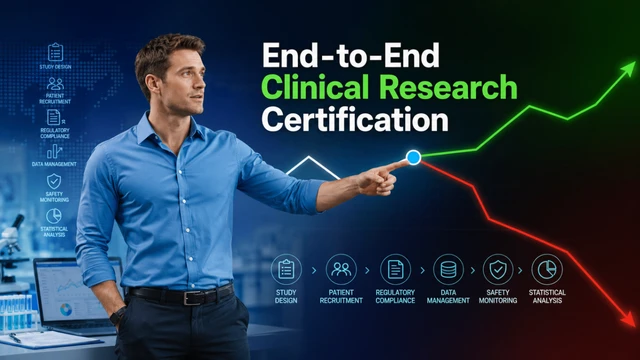
Our End-to-End Clinical Research Certification gives you a holistic view of the industry, preparing you not just for your first job but for a long-term career path. We focus on building the practical skills and the confidence you need to clear interviews with top CROs and pharmaceutical companies in India.
Ready to Take the Next Step?
Stop feeling stuck. Your medical degree is valuable, but it needs to be combined with the right industry skills. A structured approach is all you need to enter this high-growth field.
Check how your current skills compare to what top employers are looking for. Understanding your specific gaps is the first step toward building a successful career as a Site Management Associate.
Build These Skills Now
Programs from ZANE ProEd Academy that directly address the skill gaps discussed above.
Follow Zane ProEd on Google
Preferred SourceAdd our publication as a preferred source to get the latest clinical research guides, industry updates, and career intel directly in your Google Top Stories & AI Overviews.