Site Management Associate Job Profile in India: The 6-Month Roadmap for BSc & MSc Chemistry Graduates

Site Management Associate (SMA) job profile covers site-level support in clinical trials: tracking site activation, maintaining eTMF documents, supporting monitoring visits, resolving queries, and coordinating between investigators and the CRO sponsor. It is an entry-level clinical operations role ideal for BSc/MSc Chemistry graduates in India.
If you are a BSc or MSc Chemistry graduate in India who has sent out 40, 60, or even 100 applications and heard nothing back, you are not imagining the wall. You are also not the problem. What recruiters are quietly screening for is a working site management associate job profile — and nobody ever showed you what that actually looks like.
Chemical Sciences graduates are genuinely strong candidates for clinical operations. You already understand protocols, documentation discipline, regulatory language, and lab-grade accuracy. The gap is not your degree. The gap is the system — the tools, the terminology, and the proof of work.
Build These Skills Now
Programs from ZANE ProEd Academy that directly address the skill gaps discussed above.
This playbook breaks down the SMA role, SMA salary in India, the SMA vs CRA confusion, and a 6-month execution roadmap built for non-medical, non-pharmacy backgrounds. No false promises. Just the exact steps.
What does a Site Management Associate do?
A Site Management Associate (SMA) is the operational backbone of a clinical trial site. While the CRA travels for monitoring visits and the sponsor holds the strategy, the SMA keeps the day-to-day site machinery running so that patient data stays clean and audit-ready.
In simple terms, the SMA role in clinical trials sits between the site staff and the CRO or sponsor. You are the person who makes sure nothing falls through the cracks between visits.
Core site management associate responsibilities include:
- Site activation support: Collecting investigator CVs, GCP certificates, lab certificates, IRB/IEC approval letters, and site contracts so a site can go live.
- Regulatory document tracking: Building and updating the ISF (Investigator Site File) and the eTMF (electronic Trial Master File) with correct document filing and version control.
- Data query resolution: Following up on EDC queries raised by the sponsor and getting responses from site coordinators within timelines.
- Visit preparation: Prepping the site before a monitoring visit — scheduling, confirming patient files, and flagging open action items.
- Site communication: Being the single point of contact for coordinators on document requests, protocol clarifications, and training logs.
- System updates: Logging visit dates, enrolment numbers, and site status into the CTMS and sharing trackers with the Clinical Trial Manager.
Everything here is governed by ICH-GCP guidelines, which you can study in detail on the official ICH website. In India, the regulatory layer comes from CDSCO and global ethics principles outlined by the World Health Organization.
What is the salary of an SMA in India?
This is the question every fresher wants answered honestly. SMA salary in India depends on whether you join a global CRO, a domestic CRO, a sponsor company, or a site management organisation.
Realistic INR (LPA) bands in 2025:
- Fresher SMA / Site Support Associate: ₹3.0 LPA – ₹4.5 LPA
- 1–3 years (SMA II / Sr. Site Support): ₹4.5 LPA – ₹7.0 LPA
- 3–6 years (Lead SMA / Site Activation Lead): ₹7.0 LPA – ₹11.0 LPA
- 6+ years (CTM / Clinical Operations Manager path): ₹12.0 LPA – ₹20.0 LPA
City-wise reality check: Hyderabad and Bangalore tend to pay 10–20% higher for global CRO roles. Pune has a strong domestic CRO base. Mumbai and Navi Mumbai have a mix of sponsor-side and CRO roles. Ahmedabad is growing fast on the site support and clinical data side.
One important nuance: entry-level salary rarely depends on your marks. It depends on whether you can walk into an interview and talk about eTMF filing conventions, query turnaround, and site activation checklists like someone who has already done the job.
What is the difference between SMA and CRA?
The SMA vs CRA comparison confuses almost every fresher. Both sit in clinical operations, but the nature of the work is very different.
- SMA: Site support and documentation-focused. Largely desk-based, tracker-driven, highly process-oriented. Entry point for BSc/MSc Chemistry and Life Science graduates.
- CRA: Monitoring-focused. Requires site travel, source data verification, SDV, and independent judgement on protocol deviations. Usually needs 6–18 months of operations exposure or an MSc with a strong clinical training background.
Here is the honest insider view: many successful CRAs in India started as SMAs or Clinical Trial Assistants. The SMA role is not a lower-grade job — it is the fastest legitimate entry door into clinical research for a non-pharmacy, non-medical graduate.
If you want to map the longer arc, read the detailed breakdown in how to become a Clinical Research Associate in India. It shows exactly how the SMA-to-CRA bridge works in real hiring cycles.
How to become a Site Management Associate?
The good news: how to become an SMA does not require an MBBS, BDS, or MPharm. What it requires is demonstrable operational competence. Here is what recruiters actually check.
Minimum qualifications
- BSc or MSc in Chemistry, Biochemistry, Biotechnology, Microbiology, or Life Sciences
- Understanding of ICH-GCP E6 and clinical trial phases
- Basic Excel skills — VLOOKUP, filters, conditional formatting, tracker building
- Clear written English for emails and document logs
What gives you an edge
- Hands-on familiarity with Medidata Rave EDC, Veeva Vault eTMF, and a CTMS
- A portfolio showing site activation trackers, TMF indexing, and query logs you have personally built
- Knowledge of FDA 21 CFR Part 11 expectations around electronic records
- Confidence explaining a protocol deviation scenario without rambling
Notice what is missing from that list: your percentage, your college ranking, and your chemistry project title. Recruiters in clinical operations care about operational readiness, not academic prestige.
What are the daily tasks of an SMA in a CRO?
A typical SMA day in a global CRO in Hyderabad or Bangalore looks like this:
- 9:00 AM — Email triage: Check overnight emails from US or EU sites and CTMs. Flag urgent document requests.
- 9:30 AM — eTMF filing: File newly received regulatory documents into Veeva Vault eTMF, correct misfiled items, and close outstanding TMF queries.
- 11:00 AM — Query follow-up: Chase site coordinators for EDC query responses due within 5–10 days.
- 12:30 PM — Site activation tracker update: Update the activation milestone document — IEC approval, contract execution, SIV scheduled, first patient in.
- 2:00 PM — Internal sync: Stand-up call with the Clinical Trial Manager to review site health and escalations.
- 3:30 PM — Visit prep: Send the pre-visit document request list to a site ahead of the CRA's monitoring visit.
- 5:00 PM — CTMS updates: Log enrolment numbers, visit dates, and action items.
Days are structured, deadline-driven, and measurable. If you enjoy checklists, clean documentation, and clear ownership, you will genuinely like this job.
For the broader landscape of where this role fits, see the Clinical Operations career path guide for India.
Why Do Chemistry Graduates Get Rejected by CROs Even With Good Marks?
Here is the skill gap nobody tells you about. Compare what your degree taught you against what hiring managers actually screen for.
- College taught: Organic synthesis, spectroscopy, thermodynamics, lab technique.
Employer expects: ICH-GCP application, eTMF structure, EDC query cycles. - College taught: Writing a dissertation in academic format.
Employer expects: Writing a site activation status email in three bullet points. - College taught: Individual lab results.
Employer expects: Working inside a CTMS with 40 sites, deadlines, and escalation paths. - College taught: Theory exams.
Employer expects: A portfolio, a tracker, a mock TMF — proof you have done the task once.
That is the entire reason you are getting rejected. The recruiter is not judging your intelligence. They are checking whether you will need three months of hand-holding. Most freshers signal that they will.
Fix the signal, and the callbacks change.
What Is the Step-by-Step Roadmap to Become an SMA in 3 to 6 Months?
Follow these six steps in order. Do not skip step 4 — it is the one that converts interviews into offers.
- Master the regulatory foundation (Weeks 1–3): Study ICH-GCP E6(R3), clinical trial phases, informed consent, protocol deviations, and CDSCO's New Drugs and Clinical Trials Rules. Aim for concept clarity, not memorisation.
- Build tool fluency (Weeks 3–7): Learn how Medidata Rave EDC query workflows operate, how documents are filed in a Veeva Vault eTMF using the DIA TMF Reference Model, and how a CTMS tracks site milestones.
- Rebuild your CV as an operations CV (Week 8): Remove the chemistry-heavy technical skills block. Add Regulatory Documentation, eTMF Management, Site Activation Support, EDC Query Resolution. Lead with capability, not coursework.
- Create verifiable portfolio proof (Weeks 8–14): Build a sample site activation tracker, a TMF index for a mock study, and a query resolution log. This is your interview ammunition.
- Target the right titles and employers (Weeks 14–20): Search for Site Management Associate, Site Support Associate, Clinical Trial Assistant, Site Activation Coordinator, Regulatory Document Specialist. Focus on Hyderabad, Bangalore, Pune, Mumbai, and Ahmedabad.
- Interview with simulation-level confidence (Weeks 20–24): Practice scenario answers — 'the site is non-responsive on queries', 'the IEC letter has expired', 'the site wants to enrol before contract execution'. Structured answers beat rehearsed ones.
Six months is realistic if you treat this like a job search project, not a passive waiting period.
How Do You Build Verifiable Proof Before You Get Hired?
This is the shift that separates candidates who get hired from candidates who keep applying. Instead of claiming skills on a CV, you produce evidence.
Simulation-based learning lets you work inside the same environments used on live studies — not watch videos about them. When you have processed an ICSR case, filed documents into an eTMF structure, and resolved EDC queries in a simulated workflow, your interview answers carry a different weight.
A verifiable portfolio does three things at once: it closes the qualification gap, it removes the recruiter's risk of hiring you, and it puts you in the bracket for roles that pay ₹4.5 LPA and above instead of ₹2.5 LPA entry-level support positions.
Build These Skills Now
Programs from ZANE ProEd Academy that directly address the skill gaps discussed above.
Which Professional Certification Actually Closes the SMA Skill Gap?
Not every certificate moves the needle. What matters is whether the training replicates real industry systems. At ZANE ProEd, professional certification is built around industry-grade simulation toolkits — the same categories of platforms you will use on the job.
Learners work with simulated environments covering Argus Safety ICSR case processing, Medidata Rave EDC, Veeva Vault eTMF, CTMS workflows, and FDA 21 CFR submission documentation. The output is not a certificate alone — it is an audit-ready portfolio you can speak to in an interview.
Two programs map directly to the SMA job profile:
- Clinical Operations Certification — builds your end-to-end understanding of trial documentation, site support, monitoring support, and regulatory filing standards.
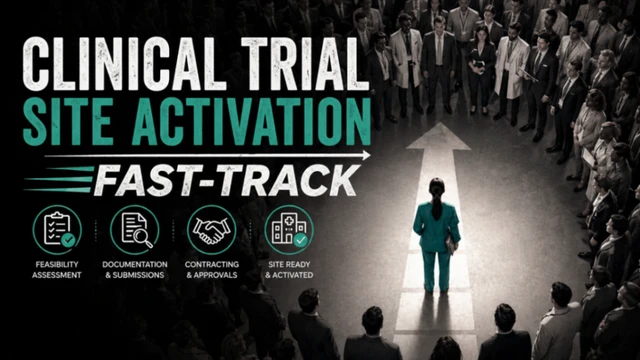
- Clinical Trial Site Activation Fast Track — deep-dives into site start-up: feasibility, IEC/IRB submissions, essential document collection, contract milestones, and activation trackers.
This is structured professional preparation, not passive content consumption. The goal is simple: walk into an interview able to describe exactly how you would handle a site activation delay, a misfiled TMF document, or a query that is 12 days overdue.
For chemistry graduates, this is what converts an unrelated-looking degree into a credible clinical operations profile.
What Should You Do in the Next 30 Days?
Stop applying blindly. Start building the profile that gets shortlisted.
- Audit your industry readiness: score yourself honestly on GCP knowledge, eTMF awareness, EDC familiarity, and portfolio proof. Most freshers score 2 out of 10 — and that is fixable.
- Explore Professional Certification Blueprints designed specifically for non-medical graduates entering Clinical Operations.
- Review the simulation curriculum and check whether the tools covered match the job descriptions you are applying to.
- Rewrite your CV around operational capabilities instead of chemistry coursework.
Rejection is not a verdict on your ability. It is feedback that your profile is not yet speaking the language of the hiring manager. Six months of structured, system-driven preparation can change that outcome completely — and for a BSc or MSc Chemistry graduate in India, the SMA role is one of the most accessible, stable, and growth-ready doors into clinical research.
Build These Skills Now
Programs from ZANE ProEd Academy that directly address the skill gaps discussed above.
Follow Zane ProEd on Google
Preferred SourceAdd our publication as a preferred source to get the latest clinical research guides, industry updates, and career intel directly in your Google Top Stories & AI Overviews.