The 2024 CDM Playbook: Stop Collecting Certificates, Start Managing Clinical Data

Stop Chasing Worthless Paper. Start Building Your CDM Playbook.
Let's be blunt. Stop collecting certificates. Stop hoarding PDFs. Stop thinking another online quiz will make you a qualified Clinical Data Manager (CDM). If you are a fresher with a BSc, BPharm, or any Life Sciences degree in India, you are being sold a lie: the lie that more academic knowledge is the bridge to a high-value industry role. It’s not.
The truth is, the industry doesn’t care about your college topper status or the logo on your latest certificate. It cares about one thing: your ability to protect the integrity of multi-million dollar clinical trial data from day one. In today's AI-augmented healthcare landscape, the gap between your textbook knowledge and the real-world workflow of a CDM is no longer a gap; it's a chasm. And generic certifications are doing nothing but helping you leap confidently into that chasm.
The Great Disconnect: Why Your Degree Didn't Prepare You
Your BPharm degree taught you about drug mechanisms. Your Life Science degree taught you about human biology. These are important, but they are the foundational 'what,' not the operational 'how.' The industry operates on a completely different plane. A hiring manager for a top CRO isn't going to ask you to recite the Krebs cycle. They're going to ask you how you would handle a data discrepancy flagged in an Electronic Data Capture (EDC) system for a pivotal Phase III trial.
Build These Skills Now
Programs from ZANE ProEd Academy that directly address the skill gaps discussed above.
They want to know if you understand the operational implications of ICH-GCP E6 (R2), not just its definition. They need to know you can navigate a Data Validation Plan (DVP), not just spell it out. Your degree was your entry ticket to the stadium, but it didn't teach you how to play the game. As many freshers discover, this makes their resumes look identical and, frankly, unemployable. This is a common theme, not just in data management, but across roles like CRAs, as noted by recruiters themselves in how they reject fresher CRA resumes.
The Industry Insider View: What We ACTUALLY Look For
As insiders who build and place talent, let us tell you what happens to your resume. We don't see your grades. We scan for keywords that signal capability. We are looking for evidence that you can step into a live project without needing six months of hand-holding. Here's the checklist:
- EDC Fluency: Have you worked in a simulated Medidata Rave, Oracle Clinical, or Veeva Vault environment? Do you understand user roles, eCRF design, and audit trails?
- Query Management Logic: Can you articulate the difference between a system-generated query and a manual query? Can you write a query that is concise, non-leading, and easily understood by site staff?
- Regulatory Application: Do you understand how 21 CFR Part 11 applies to electronic data, not just as a rule, but in practice within an EDC system?
- Data Lifecycle Awareness: Can you describe the flow of data from protocol design to database lock and archival?
Notice that none of these are 'subjects' in your college syllabus. They are workflows. They are processes. They are the language of the industry.
The Data Integrity Pyramid: A Framework for Mastery
Most freshers are stuck at the bottom of what we at ZANE call the Data Integrity Pyramid. They have the base layer but are completely missing the critical components that define a competent Clinical Data Manager.
- Level 1: Foundational Knowledge (The Academic Base): This is your degree. You know biology, chemistry, and basic regulations like GCP. This is where 99% of freshers are.
- Level 2: Operational Skills (The Workflow Engine): This is the core of the CDM role. EDC proficiency, query management, SAE reconciliation, medical coding (MedDRA/WHODrug), and creating data validation specifications. This is the massive gap.
- Level 3: Strategic Acumen (The Industry Leader): This involves understanding Risk-Based Monitoring (RBM), applying AI tools for anomaly detection, and contributing to protocol design from a data perspective. You cannot reach this level without mastering Level 2.
Your goal is not to get another Level 1 certificate. It's to aggressively build your skills in Level 2.
The Playbook: Your 5-Step Pathway to CDM Competence
Stop learning randomly. Start building systematically. This is not about 'studying,' it's about executing a playbook. This approach is similar to what's needed for other data-heavy roles, like the path from a general IT background to a specialized Clinical SAS Data Analyst.
- Master Regulatory Grammar: Don't just read the guidelines from CDSCO or the EMA. Learn to interpret them. For every rule in ICH-GCP, ask: "How does this translate to a feature or a process within an EDC system?"
- Develop EDC Fluency: Get your hands on a system that mimics a real EDC. Learn to perform data entry, review audit trails, and see how different user roles (Data Entry, CRA, Investigator, Data Manager) interact. Theory is useless here.
- Learn the Art of the Query: A query is a surgical instrument, not a hammer. Practice writing queries for common issues: date inconsistencies, out-of-range values, and logical errors. Good queries get clean data; bad queries create confusion and delay trials.
- Execute a Mock Data Lifecycle: Go through the entire process on a mock project. From reviewing the protocol, drafting an eCRF, writing validation checks, managing data entry, performing reconciliations (e.g., SAEs), to finally executing a database lock.
- Embrace the AI Co-pilot: Modern CDM is not just manual checking. Understand how AI algorithms are being used to flag anomalies, predict data entry errors, and automate parts of the data cleaning process. This is the new frontier and a massive differentiator.
Micro-Scenario: The 39.1°C Problem
It's week 8 of a global oncology trial. The EDC system flags a patient's body temperature entered as 39.1°C. The upper limit in the protocol is 38.5°C. What do you do?
A textbook-trained fresher might freeze. An industry-trained professional executes a workflow:
- Verify the Edit Check: Confirm the system query was triggered based on the correct validation rule in the DVP.
- Raise a Manual Query: Write a clear, precise query to the site: "Per protocol, temperature values >38.5°C are flagged. Please confirm if the recorded value of 39.1°C is correct or a data entry error. If correct, please confirm if a Grade 1 Fever Adverse Event has been reported."
- Check for Trends: Run a quick listing. Is this the only patient with a high temperature at this site? Is this a trend? This could indicate a wider issue.
- Document Everything: Every action is captured in the audit trail, creating a permanent, inspection-ready record.
This is the job. It's a series of logical, repeatable, high-stakes workflows.
Building Workflow Reflexes, Not Just Knowledge
You cannot learn this from a book. Reading about swimming will not save you from drowning. These workflows must be practiced until they become reflexes. This requires an environment that simulates the pressure, the tools, and the data complexity of a real Clinical Research Organization (CRO) or pharma company. You need a system that forces you to perform these tasks, make mistakes in a safe environment, and learn from a feedback loop guided by industry experts.
Build These Skills Now
Programs from ZANE ProEd Academy that directly address the skill gaps discussed above.
The ZANE System: Simulation Over Memorization
At ZANE ProEd, we don't sell courses. We provide access to a system designed to build these workflow reflexes. Our approach is built on high-fidelity simulation, not passive learning. We immerse you in the very environment you're trying to enter.
In our Clinical Data Management & EDC Certification, you aren't just 'learning about' an EDC. You are working inside a simulated EDC environment, performing the exact tasks of a CDM. You will manage data, resolve queries, and follow SOPs on a project that mirrors industry reality. It is a pure, hands-on, workflow-driven experience.
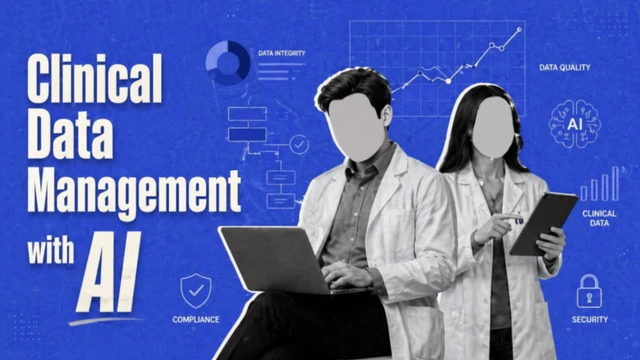
We then elevate this with our Clinical Data Management with AI program. Here, you don't just learn the traditional process; you learn to leverage the next generation of tools. You'll work with AI-powered systems to detect complex data anomalies and learn how technology is amplifying the role of the modern CDM, making them more strategic and valuable than ever before.
Your Next Step: Stop Collecting, Start Building
Your career won't be defined by the number of certificates on your LinkedIn profile. It will be defined by the complexity of the problems you can solve. The path forward is not through more theory, but through deliberate, simulated practice.
Stop being a passive learner. It's time to become an active practitioner. Explore the workflows. Understand the system. Build the skills that the industry is desperately searching for.
Build These Skills Now
Programs from ZANE ProEd Academy that directly address the skill gaps discussed above.
Follow Zane ProEd on Google
Preferred SourceAdd our publication as a preferred source to get the latest clinical research guides, industry updates, and career intel directly in your Google Top Stories & AI Overviews.