Your Step-by-Step Clinical Operations Career Path in India (For Career Switchers)

Clinical Operations Executive: The clinical operations career path in India starts with entry-level roles like Clinical Trial Assistant or Clinical Operations Executive. From there, you can advance to a Clinical Research Associate (CRA), then to a Clinical Project Manager, and ultimately to a senior leadership role like Clinical Operations Manager.
If you have a BSc, BCA, or BTech degree and are feeling stuck after a career gap, this guide is for you. Many people from IT or BPO backgrounds think a high-growth medical career is out of reach. We're here to show you the step-by-step clinical operations career path India offers.
You don't need a pharmacy or medical degree to get started. What you need is a clear plan to build the right skills. Recruiters often reject candidates with gaps, but not because of the gap itself. They reject them because of a skill gap.
Build These Skills Now
Programs from ZANE ProEd Academy that directly address the skill gaps discussed above.
This roadmap will show you exactly how to bridge that gap. We will cover the roles, salaries, and specific skills you need to successfully switch into this stable and rewarding field, even from a non-healthcare background.
What does a Clinical Operations Executive do?
A Clinical Operations Executive is the backbone of a clinical trial team. They don't do the scientific research, but they make sure the research happens smoothly. Think of them as the project coordinators for a medical study.
Their main job is to support the Clinical Research Associates (CRAs) and Project Managers. The clinical operations job description focuses on logistics, documentation, and coordination. They ensure that all trial activities follow the plan and comply with regulations.
Here are some of the daily tasks you might handle:
- Document Management: You will be responsible for maintaining the Trial Master File (TMF). This is the central collection of all documents for a clinical trial. You'll track, collect, and file everything from site contracts to patient consent forms.
- Site Communication: You'll communicate with hospitals and clinics (called 'sites') to ensure they have the necessary supplies and information to run the trial.
- Tracking Progress: You will help track trial timelines, patient enrollment numbers, and payments to investigator sites.
- Meeting Coordination: You'll schedule meetings for the trial team, prepare agendas, and take minutes. This is a common task in a Contract Research Organization (CRO), a company that manages trials for pharma giants. This is a core part of clinical operations in CRO settings.
What is the salary of a Clinical Operations Executive in India?
Salary is a major factor when considering a career switch. The good news is that clinical operations offers competitive pay and strong growth potential. The clinical operations executive salary depends on your location, the size of the company (CRO vs. Pharma), and your skills.
Here’s a realistic breakdown for salaries in India:
- Entry-Level (0-2 years experience): As a fresher or career switcher, you can expect a starting salary between ₹3.5 Lakhs to ₹5.5 Lakhs per year. Your certified skills in areas like ICH-GCP can place you at the higher end of this range.
- Mid-Level (3-5 years experience): After a few years, you can move into a CRA or Senior Executive role. Salaries here typically range from ₹6 Lakhs to ₹9 Lakhs per year.
- Senior-Level (5+ years experience): The clinical operations manager career path is very lucrative. Managers and Project Leaders can earn anywhere from ₹10 Lakhs to ₹20+ Lakhs per year.
Your ability to learn quickly and master clinical trial software will directly impact how fast your salary grows.
How to start a career in clinical operations?
Starting a career in clinical operations is more about having the right skills than a specific degree. Your BSc, BCA, or BTech degree provides a strong foundation. Here’s how you can make the switch, especially after a career gap:
- Understand the Fundamentals: Learn the basics of drug development and clinical trials. You must understand concepts like Good Clinical Practice (GCP), which are international quality standards. You can find official guidelines on websites like ICH.org.
- Bridge Your Skill Gap with Certification: A generic degree won't teach you about TMF management or regulatory documentation. A targeted certification program is the fastest way to learn job-ready skills that recruiters are looking for.
- Highlight Transferable Skills: If you come from IT or BPO, you already have valuable skills! Attention to detail, process management, communication, and experience with software are all highly relevant. Frame these skills correctly on your resume.
- Target Entry-Level Roles: Look for job titles like 'Clinical Trial Assistant (CTA)', 'Clinical Operations Executive', 'Project Coordinator', or 'Clinical Trial Administrator'. These are the best entry points. You can learn more about related roles like Clinical Trial Coordinator jobs here.
What is the difference between clinical operations and clinical research?
This is a common point of confusion. Many people use these terms interchangeably, but they are different. Understanding the distinction is key to finding the right role for you. Let's compare clinical operations vs clinical research.
Think of it this way:
- Clinical Research is the 'what'. It is the scientific part. It involves designing the study protocol, defining the medical questions, analyzing the data, and writing the final study report. Roles here are often for scientists, doctors, and statisticians.
- Clinical Operations is the 'how'. It is the management and execution part. It involves setting up the trial sites, managing budgets and timelines, ensuring regulatory compliance, and collecting the data according to the protocol. This is where you, as a career switcher, can fit in perfectly.
Essentially, the research team creates the blueprint, and the operations team builds the house. You don't need to be a scientist to be an expert builder. This is also why roles like a Clinical Research Associate bridge both worlds.
What skills are needed for clinical operations roles?
To succeed, you need a mix of technical knowledge (hard skills) and professional abilities (soft skills). Recruiters will test you on both during interviews.
Hard Skills (Technical Knowledge)
- ICH-GCP Guidelines: This is non-negotiable. You must know the principles of Good Clinical Practice. This ensures patient safety and data integrity. India's regulatory body, CDSCO, follows these guidelines. You can learn more at cdsco.gov.in.
- Documentation Management: Knowledge of the Trial Master File (TMF) structure and how to manage essential documents is critical.
- Clinical Trial Software: Familiarity with tools like Electronic Data Capture (EDC), Clinical Trial Management Systems (CTMS), and electronic TMF (eTMF) is a huge advantage.
- Regulatory Awareness: Basic understanding of the roles of regulatory bodies like the FDA and EMA.
Soft Skills (Professional Abilities)
- Attention to Detail: Clinical trials involve vast amounts of data and documentation. A small mistake can have big consequences.
- Communication: You will be talking to doctors, nurses, and internal team members. Clear and professional communication is essential.
- Problem-Solving: Trials rarely go exactly as planned. You need to be able to think on your feet and find practical solutions.
- Time Management: You will be juggling multiple tasks with strict deadlines. Strong organizational skills are a must.
The Gap: What Your Degree Didn't Teach You
Your BSc, BCA, or BTech degree gave you a great theoretical base. You learned how to study and think critically. However, it did not prepare you for the specific, practical demands of a clinical operations job. Employers expect you to know how to manage a TMF, review a site regulatory binder, and use a CTMS from day one. This is the gap that holds most career switchers back.
A Structured Pathway for Career Switchers
Feeling overwhelmed? Don't be. Here is a clear, step-by-step plan to get you from your current role to your first clinical operations job.
- Month 1: Foundation Building. Dedicate this month to learning the language of clinical research. Master the concepts of ICH-GCP, trial phases, and key terminology.
- Month 2-3: Practical Skill Acquisition. This is where you go beyond theory. Enroll in a certification program that focuses on practical, job-based skills. You need to learn how to perform the actual tasks of a Clinical Operations Executive.
- Month 4: Resume and Interview Prep. Rebuild your resume to highlight your new skills and transferable experience. Practice answering interview questions with real-world examples learned from your training.
- Month 5-6: Job Application and Networking. Start applying for entry-level roles on platforms like LinkedIn and Naukri. Connect with industry professionals and recruiters. Be persistent and prepared to demonstrate your practical knowledge.
Why Theory Alone Is Not Enough
Reading about clinical operations is like reading a book about how to swim. You can understand the theory, but you'll never be confident until you get in the water. Recruiters know this. They don't just ask 'what is a TMF?'. They ask, 'How would you handle a situation where a site has missing documents in the TMF?'.
To answer that, you need experience. But how do you get experience without a job? This is where simulation-based learning becomes the bridge. By working on simulated projects that mirror real-world clinical trials, you build the practical confidence and portfolio that employers are desperate to see.
Build These Skills Now
Programs from ZANE ProEd Academy that directly address the skill gaps discussed above.
Building Your Career with a System, Not Just a Course
At ZANE ProEd, we provide a complete system for career transformation. Our programs like the Clinical Operations Certification are designed to give you the exact skills employers demand. You learn by doing, working on simulated trials and mastering the software used in top CROs.
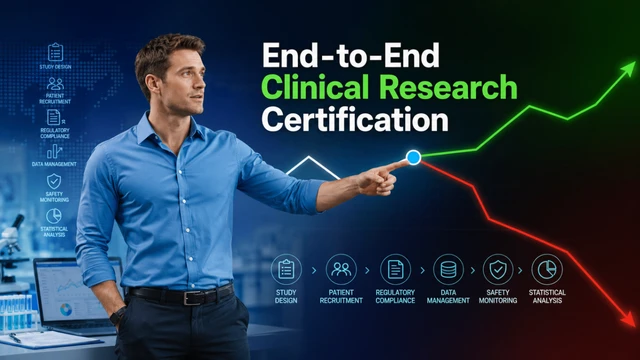
The End-to-End Clinical Research Certification provides a broader view of the entire industry, helping you understand how your role in operations fits into the larger picture of drug development. This knowledge makes you a more valuable and strategic team member from day one.
We focus on building your confidence and your portfolio, so you can walk into interviews ready to prove your worth, not just talk about it.
Are You Ready for a Career in Clinical Operations?
Switching careers after a gap can feel daunting, but the path into clinical operations is clear and achievable with the right strategy. It's a field that values process, organization, and diligence—skills you may already have from your previous roles.
Instead of just sending out resumes, take the first step towards building real, in-demand skills. See how your current skills compare to what's needed for a high-growth career in clinical operations. Your future in a stable, impactful industry is waiting.
Build These Skills Now
Programs from ZANE ProEd Academy that directly address the skill gaps discussed above.
Follow Zane ProEd on Google
Preferred SourceAdd our publication as a preferred source to get the latest clinical research guides, industry updates, and career intel directly in your Google Top Stories & AI Overviews.