Clinical Trial Coordinator Jobs in India for Freshers: A Guide for Chemistry Graduates

Clinical Trial Coordinator (CTC) jobs for freshers in India involve managing daily clinical trial activities at a hospital or research site. As a CTC, you will coordinate patient visits, manage documentation, ensure regulatory compliance, and act as the central point of contact for the research team.
If you've completed your BSc or MSc in Chemistry and are struggling to find clinical trial coordinator jobs in India for freshers, you are not alone. You did the internships, you have the degree, but the job offers aren't coming. It feels like you're missing a key piece of the puzzle.
This feeling is common for chemical sciences graduates. Your academic background is strong in theory, but the clinical research industry demands specific, practical skills that internships often fail to provide. You are stuck between having a qualification and being truly job-ready.
Build These Skills Now
Programs from ZANE ProEd Academy that directly address the skill gaps discussed above.
This guide is your playbook. We will break down the exact steps to go from a chemistry graduate to a confident, hired Clinical Trial Coordinator in India's competitive market. We will reverse engineer what successful candidates do differently.
What does a Clinical Trial Coordinator do?
A Clinical Trial Coordinator (CTC), also known as a Site Coordinator, is the backbone of a clinical trial at the hospital or research site level. Think of them as the project manager on the ground. They don't design the trial, but they make sure it runs smoothly every single day. The clinical trial coordinator job description focuses on execution.
Your daily tasks would include:
- Patient Coordination: Scheduling patient visits, explaining procedures, and ensuring they follow the trial protocol.
- Documentation Management: Maintaining accurate and complete records like Informed Consent Forms (ICFs), Case Report Forms (CRFs), and site files. This is critical for audits.
- Regulatory Compliance: Making sure the trial follows Good Clinical Practice (GCP) guidelines and protocols set by bodies like the CDSCO in India.
- Team Communication: Acting as the main link between the Principal Investigator (the lead doctor), the patients, and the Clinical Research Associate (CRA) from the sponsor company.
- Data Entry: Accurately entering patient data into clinical trial management systems (CTMS).
As a site coordinator in clinical research, you work where the research happens, interacting directly with patients and medical staff.
What is the salary of a Clinical Trial Coordinator in India?
The clinical trial coordinator salary for a fresher in India is a key motivator. It's a stable and growing field. While numbers can vary by city (like Mumbai, Bangalore, or Hyderabad) and the size of the hospital or research organization, you can expect a clear range.
- Fresher (0-1 year experience): The starting salary for a CTC is typically between ₹2.5 Lakhs to ₹4.5 Lakhs per annum.
- Experienced (2-4 years experience): With some experience, your salary can increase to ₹5 Lakhs to ₹8 Lakhs per annum or more.
Your background, the skills you have, and any specialized training can significantly impact your starting package. The goal is to enter at the higher end of the fresher bracket by demonstrating job-readiness from day one.
How to become a Clinical Trial Coordinator?
Becoming a CTC with a chemistry degree is very achievable. The core requirement is bridging your science background with the specific knowledge of clinical operations. The primary clinical trial coordinator qualification is not just a degree, but proven knowledge of trial processes.
Here is a simple path:
- Understand the Fundamentals: Your BSc/MSc in Chemistry is your foundation. Now, you must learn the language of clinical research. Master Good Clinical Practice (GCP) guidelines. These are the rules for ethical and scientific quality in trials, outlined by the ICH.
- Gain Specific Knowledge: Focus on site-level operations. Learn about informed consent, source data verification, and regulatory documentation. This is what separates a candidate from an applicant.
- Get Certified (The Right Way): A generic certificate isn't enough. You need training that simulates real-world tasks. Employers want to see that you can manage documents and solve site-level problems, not just define terms.
- Tailor Your CV: Highlight skills relevant to the CTC role. Mention your understanding of GCP, documentation, and data management. Frame your internship experience in the context of coordination and compliance, even if it was a lab role.
What is the difference between CTC and CRA?
This is a common point of confusion. The CTC vs CRA career paths are different, though they work together. Understanding this helps you target your job search effectively.
- The Clinical Trial Coordinator (CTC):
- Location: Site-based. You work at a single hospital or research clinic.
- Role: You are an employee of the hospital/site. You manage the trial's day-to-day activities on the ground.
- Travel: Minimal to no travel required.
- Interaction: You work directly with patients and the site's medical team.
- The Clinical Research Associate (CRA):
- Location: Field-based. You work for a pharmaceutical company or a Contract Research Organization (CRO).
- Role: You monitor multiple research sites to ensure they are following the trial protocol and GCP. You are the sponsor's representative.
- Travel: Extensive travel is a core part of the job.
- Interaction: You work with the CTCs and Principal Investigators at different sites.
Many people start as a CTC to gain foundational site-level experience before moving into a CRA role. To learn more about that path, you can read our guide on how to become a Clinical Research Associate.
What skills are needed for a clinical trial coordinator role?
Employers are looking for a specific mix of hard and soft skills. Your chemistry degree proves your scientific aptitude, but these skills will get you hired.
Hard Skills:
- Knowledge of GCP: Non-negotiable. You must understand the principles of ethical clinical research.
- Documentation Expertise: Meticulous record-keeping is the most important part of the job.
- Familiarity with Medical Terminology: You don't need to be a doctor, but you must understand basic medical terms related to the trial.
- Proficiency with Tools: Experience with Microsoft Office Suite (Excel, Word) and an understanding of what a CTMS (Clinical Trial Management System) is.
Soft Skills:
- Attention to Detail: A small error in documentation can have big consequences.
- Communication Skills: You will be talking to doctors, nurses, patients, and CRAs. Clear and professional communication is key.
- Organizational Skills: Juggling patient schedules, paperwork, and team requests requires excellent organization.
- Problem-Solving: Things go wrong at a research site. You need to be able to think on your feet and find solutions.
The Skill Gap for Chemistry Graduates
Your BSc or MSc taught you analytical thinking and scientific principles. But it did not teach you how to manage an Investigator Site File (ISF), how to review an Informed Consent Form for compliance, or how to prepare a site for an audit. Internships often provide observation, not hands-on experience with these critical tasks.
This is the gap. Employers need you to handle these tasks from week one. They don't have six months to train you on the absolute basics of site operations. This is why many freshers, even with good grades and internships, fail to get hired.
Your 4-Step Pathway to Becoming a Job-Ready CTC
Let's build your practical roadmap. This is how you bridge the gap and stand out in the competitive Indian market.
Step 1: Master the Regulatory Framework.
Don't just read about GCP. Internalize it. Understand *why* each rule exists. Connect the guidelines from the ICH and CDSCO to a CTC's daily tasks.
Step 2: Learn the 'Paperwork' Inside Out.
Focus on the core documents: Informed Consent Forms, Case Report Forms, and Source Documents. Learn what makes them compliant and how they connect. This knowledge is more valuable than any theory.
Step 3: Develop Your 'Site-Level' Mindset.
Think like a coordinator. How do you schedule a patient visit around the doctor's availability? What do you do if a patient reports an adverse event? Understanding this workflow is critical for interviews.
Step 4: Gain Verifiable, Practical Experience.
Since real-world internships fall short, you need a way to practice these skills in a controlled environment. This is where you build the confidence and the CV points that employers are desperately looking for.
The Bridge from Theory to Job Offer
The missing piece is a system that lets you *perform* the tasks of a CTC before you even get the job. Reading about tasks is not the same as doing them. A traditional certification that only gives you video lectures is not enough to make you job-ready.
Simulation-based learning is the answer. It's a system where you work on real-world case studies and project work, like managing a mock trial's documentation or resolving common site-level issues. This is how you build practical skills that you can talk about confidently in an interview.
Build These Skills Now
Programs from ZANE ProEd Academy that directly address the skill gaps discussed above.
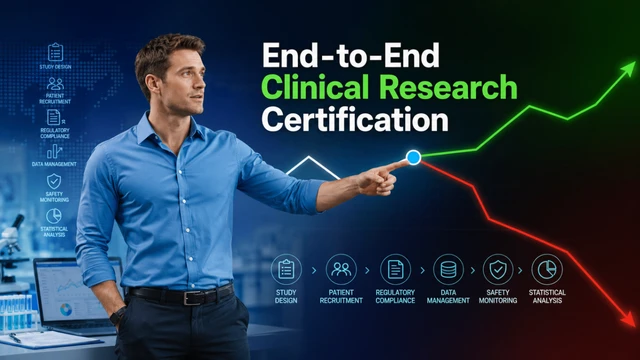
At ZANE ProEd, we build systems, not just courses. Our approach is designed for science graduates who need to become job-ready for demanding roles in clinical operations careers. Our End-to-End Clinical Research Certification and Clinical Operations Certification programs use this simulation-first methodology.
You don't just watch videos. You perform the tasks. You work on projects that mirror the daily work of a Clinical Trial Coordinator. You build a portfolio of work that proves your skills to employers, making your non-medical background an advantage, not a weakness.
This is how you stop being just a qualified fresher and become the most prepared candidate in the interview room. You will have the confidence that comes from experience, not just theory.
Ready to see how your current skills stack up against what employers want? Take the first step and evaluate your job-readiness. Understand where your gaps are so you can build a clear plan to land the job you deserve.
Build These Skills Now
Programs from ZANE ProEd Academy that directly address the skill gaps discussed above.
Follow Zane ProEd on Google
Preferred SourceAdd our publication as a preferred source to get the latest clinical research guides, industry updates, and career intel directly in your Google Top Stories & AI Overviews.