Hospital Quality Assurance Jobs in India: A Guide for Pharmacy Graduates

QA/QC Executive (Hospital / NABH): Hospital quality assurance jobs in India involve implementing and monitoring standards, primarily NABH, to ensure patient safety and quality of care. A BPharm or MPharm degree is the typical entry point, with roles focused on documentation, audits, incident management, and continuous improvement within a hospital setting.
If you have a pharmacy degree but are stuck in an unrelated job, it’s time to stop collecting random certificates. The search for hospital quality assurance jobs in India is not about having the most credentials. It’s about having the right, practical skills that hospitals desperately need.
Many BPharm and MPharm graduates believe another academic qualification is the answer. It's not. Hospitals are not looking for more theory. They are looking for people who can step in and manage quality systems from day one.
Build These Skills Now
Programs from ZANE ProEd Academy that directly address the skill gaps discussed above.
This guide gives you a clear roadmap. We will break down the exact steps to move from your current role into a rewarding career in hospital quality assurance, focusing on the skills that get you hired.
What is NABH accreditation and why does it matter?
NABH stands for National Accreditation Board for Hospitals & Healthcare Providers. Think of it as a seal of quality for hospitals in India. It is a constituent board of the Quality Council of India. An NABH-accredited hospital has proven it meets very high standards in patient care and safety.
Why is this important for your career? Because hospitals are constantly working to get or maintain this accreditation. This creates a huge demand for professionals who understand NABH standards. This is the foundation of a strong NABH accreditation career.
When a hospital has this certification, it signals trust to patients. For you, working in an NABH-accredited hospital means you are part of a system that values quality. It's a stable and growing field because quality is no longer optional in healthcare.
How to become a Quality Officer in a hospital?
Becoming a Quality Officer, also known as a QA Executive, is a clear, step-by-step process. You don't need to be a gold medalist, but you do need to be focused.
Here's a typical quality officer hospital job description condensed into key responsibilities:
- Documentation: Creating, updating, and managing all documents related to quality, like Standard Operating Procedures (SOPs).
- Audits: Conducting internal audits to check if departments are following NABH standards.
- Training: Training hospital staff on quality protocols and patient safety measures.
- Incident Management: Investigating errors or patient complaints using tools like Root Cause Analysis (RCA).
- Data Analysis: Tracking key quality indicators (like infection rates) and preparing reports for management.
To start, you need a Bachelor's degree, and a BPharm or MPharm is perfect. Your knowledge of medicines and patient care is a huge advantage. From there, you need to gain specific knowledge in healthcare quality management, especially NABH standards.
What is the salary of a hospital QA executive in India?
Salary is always an important question. The hospital QA executive salary in India is competitive and grows well with experience. It's a great field for pharmacy graduates looking for a non-clinical career path.
Here’s a realistic breakdown:
- Fresher (0-1 year of experience): As a Quality Assistant or Trainee, you can expect a starting salary between ₹2.5 lakhs to ₹4.0 lakhs per year. This depends on the city and the size of the hospital.
- Executive (2-4 years of experience): Once you have some hands-on experience with audits and documentation, your salary can increase to ₹4.5 lakhs to ₹7.0 lakhs per year.
- Manager (5+ years of experience): As a Quality Manager overseeing a team, you can earn ₹8.0 lakhs to ₹15.0 lakhs per year or more.
The key to increasing your salary is practical skill. Hospitals pay more for people who can solve problems, not just point them out. For more details on pharma salaries, you can read our guide on QA/QC pharma jobs for freshers.
What are the key NABH standards a fresher should know?
The NABH 5th edition book is huge, but you don't need to memorize all 600+ objective elements. For an interview, focus on understanding the *intent* behind the core chapters. These are the key NABH standards for freshers to master:
- Access, Assessment, and Continuity of Care (AAC): This is about the patient's journey, from registration to discharge. How do we ensure they receive the right care at the right time?
- Care of Patients (COP): This covers the actual clinical care, including procedures, nursing care, and pain management.
- Management of Medication (MOM): As a pharmacy graduate, this is your strength! It covers everything from how medicines are procured and stored to how they are prescribed and administered safely.
- Patient Rights and Education (PRE): How does the hospital protect patient rights and inform them about their condition and treatment?
- Hospital Infection Control (HIC): This is a massive chapter, especially post-COVID. It deals with preventing infections through practices like hand hygiene and sterilization.
Understanding these five chapters will prepare you for over 60% of interview questions related to NABH.
What skills are needed for hospital quality assurance?
Success in hospital quality assurance requires a mix of technical knowledge and soft skills. Companies are looking for well-rounded professionals who can manage processes and people.
Technical Skills (The 'What')
- Knowledge of NABH Standards: You must know the key chapters and their practical application.
- Audit & Inspection Skills: The ability to check a process against a standard and identify gaps.
- Root Cause Analysis (RCA): A problem-solving method to find the real cause of an incident, not just the symptoms.
- Documentation: Writing clear, concise SOPs and reports.
- Basic Data Analysis: Using tools like MS Excel to track quality metrics.
Soft Skills (The 'How')
- Attention to Detail: Quality is all about precision. A small mistake can have big consequences.
- Communication Skills: You need to explain complex quality concepts to doctors, nurses, and support staff.
- Problem-Solving: You are a solution-provider for the hospital.
- Teamwork: Quality is a team effort. You will work with every single department.
The Skill Gap Your College Left You With
Your BPharm or MPharm degree gave you a great foundation. You learned about pharmacology and pharmaceutics. But colleges rarely teach the industry-specific skills needed for a hospital quality assurance jobs India search.
- College Teaches: The names of drugs and their mechanisms.
- Industry Demands: How to investigate why the wrong drug was given to a patient (Root Cause Analysis).
- College Teaches: Theory of Good Manufacturing Practices (GMP).
- Industry Demands: How to conduct an internal audit of the hospital pharmacy based on NABH's 'Management of Medication' chapter.
This gap is why many freshers struggle to get hired. They have the degree, but not the job-ready skills. This is a common issue for many graduates, including those in life sciences, as discussed in our guide for life science graduates.
Your Step-by-Step Pathway to a Hospital QA Job
Feeling overwhelmed? Don't be. Here is a simple, actionable plan to get you from where you are to your first job as a Quality Officer.
- Master the 'Why': Before memorizing standards, understand the goal of healthcare quality management. It's about patient safety. Every rule and document serves this purpose.
- Focus on the Core 5 NABH Chapters: Go deep into AAC, COP, MOM, PRE, and HIC. Learn the intent behind the standards, not just the words.
- Learn the Tools of the Trade: Get practical training on how to conduct a Root Cause Analysis (RCA), a Failure Mode and Effects Analysis (FMEA), and an internal audit.
- Practice with Real-World Scenarios: Theory is not enough. You need to practice applying your knowledge. How would you handle a medication error? What steps would you take to investigate a patient fall?
- Build Your 'Interview-Ready' Portfolio: Create sample documents like a mock audit report or an RCA for a case study. This shows employers you can *do* the job.
- Network Intelligently: Connect with hospital quality managers on LinkedIn. Ask them about their daily challenges. Show genuine interest in the field.
Bridging the Gap from Theory to Practice
Following this roadmap is tough on your own. Reading books won't teach you how to handle the pressure of a real audit or investigate a sensitive patient complaint. This is where the concept of a 'system' becomes more powerful than just another 'course'.
The fastest way to become job-ready is through simulation-based learning. This allows you to practice real-world tasks in a safe environment, so you build confidence and competence before your first interview. As the Indian healthcare system aligns more with global standards from bodies like the CDSCO, this practical skill is becoming mandatory.
Build These Skills Now
Programs from ZANE ProEd Academy that directly address the skill gaps discussed above.
How to Build Job-Ready Skills Systematically
At ZANE ProEd, we don't just give you videos to watch. Our programs are systems designed to build practical skills. For a career in hospital QA, you need to learn how to manage systems and solve problems.
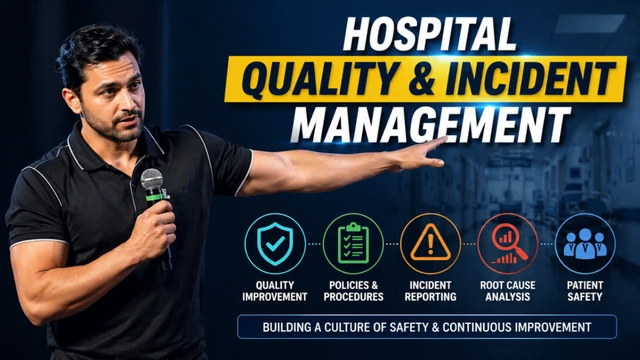
Our Hospital Quality Management Certification is not about memorizing NABH. It's a simulation where you act as a Quality Officer for a virtual hospital. You'll learn to create SOPs, track quality indicators, and prepare for audits. The Hospital Quality Incident Management program takes this further, training you on advanced tools like Root Cause Analysis to investigate and resolve real-world quality failures.
This systematic approach ensures that when an interviewer asks, "How would you handle a medication error?", you can give a step-by-step answer based on practical experience, not just textbook theory. It's about becoming a valuable asset to the hospital from your first day.
Are You Ready for a Real Hospital QA Role?
The demand for skilled quality assurance professionals in Indian hospitals is growing rapidly. Hospitals need people who can protect patients and improve processes. Your pharmacy degree is the perfect starting point.
Now it's time to build the practical skills that employers are willing to pay a premium for. Don't just collect another certificate. Build real-world competence.
Explore our job-readiness simulations and see how your skills compare to what top hospitals are looking for today.
Build These Skills Now
Programs from ZANE ProEd Academy that directly address the skill gaps discussed above.
Follow Zane ProEd on Google
Preferred SourceAdd our publication as a preferred source to get the latest clinical research guides, industry updates, and career intel directly in your Google Top Stories & AI Overviews.