Medical Coding Jobs for Freshers in India: A Step-by-Step Guide

Medical Coder: To get medical coding jobs for freshers in India, a life science graduate (BPharm, BSc, BDS) needs to master ICD-10 and CPT coding systems. Obtaining a CPC certification is highly recommended. Entry-level salaries typically range from ₹2.5 Lakhs to ₹4 Lakhs per annum.
If you've just finished your BSc, BPharm, BDS, or nursing degree, you might be looking for a stable career away from labs and clinics. The search for high-growth medical coding jobs for freshers in India is a smart move, but many graduates don't know where to start. This is a hidden career path that uses your medical knowledge in a new way.
Your degree in life sciences gave you a strong foundation in anatomy and physiology. But in today's competitive Indian market, that degree alone is often not enough to land a great job. Companies need specific skills that colleges don't teach.
Build These Skills Now
Programs from ZANE ProEd Academy that directly address the skill gaps discussed above.
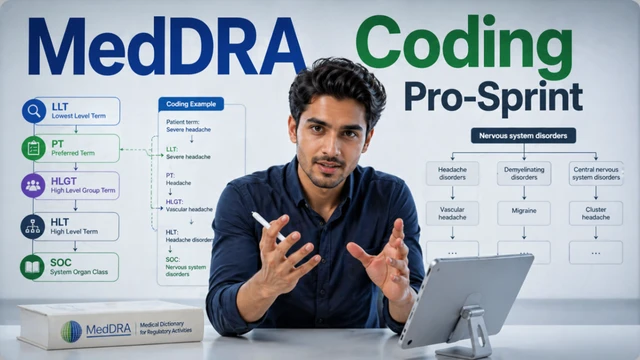
This guide is your simple, step-by-step roadmap. We will break down what medical coding is, the salary you can expect, and exactly how to start your journey from a fresher to a confident professional.
What is medical coding and how does it work?
Medical coding is like being a translator. It's the process of converting diagnoses, procedures, and medical services from a patient's record into universal alphanumeric codes. Think of it as turning a doctor's detailed notes into a simple, standard language that computers and insurance companies can understand.
Here’s how it works:
- A patient visits a doctor. The doctor documents everything in the patient's chart.
- A medical coder reads this chart.
- The coder assigns specific codes for each diagnosis and procedure using standardized systems.
The most common code sets you will use in your ICD-10 coding career are:
- ICD-10-CM: International Classification of Diseases, 10th Revision, Clinical Modification. Used for diagnosing diseases and health conditions. You can learn more about its global standards from the World Health Organization (WHO).
- CPT: Current Procedural Terminology. Used for coding medical procedures and services.
- HCPCS Level II: Healthcare Common Procedure Coding System. Used for products and supplies not covered in CPT (like ambulance services).
These codes are critical for healthcare billing. Insurance companies use them to decide how much to pay the hospital or doctor. This process ensures billing is accurate and consistent across the entire healthcare system.
What is the salary of a medical coder in India?
The medical coder salary in India is one of the biggest attractions for freshers. It offers a competitive starting package with clear growth potential. Your salary depends on your certification, skills, city, and the company you work for.
Here is a realistic breakdown for medical coders in India:
- Fresher (0-1 year experience): As a certified fresher, you can expect a starting salary between ₹2.5 Lakhs to ₹4 Lakhs per annum. Non-certified freshers might start at a lower range.
- Junior Coder (2-4 years experience): With a few years of experience and good performance, your salary can increase to ₹4 Lakhs to ₹6 Lakhs per annum.
- Senior Coder (5+ years experience): Experienced coders with specialized skills can earn ₹6 Lakhs to ₹9 Lakhs per annum or more.
Getting a certification like the CPC can significantly boost your starting salary and make you more attractive to top healthcare BPOs and hospitals.
How to start a career in medical coding as a fresher?
Starting a career in medical coding is a clear, straightforward process. If you have a degree in any life science field (BPharm, BSc, BDS, BHMS, BAMS, Nursing), you are already eligible. Here is a simple plan to follow:
- Strengthen Your Basics: Your degree gave you a head start. Revisit your knowledge of Human Anatomy, Physiology, and Medical Terminology. This is the foundation of all medical coding.
- Choose the Right Training: You need specialized training. Look for a good medical coding course for BPharm or life science graduates that focuses on practical skills, not just theory.
- Get Certified: This is a crucial step. The CPC certification India from AAPC (American Academy of Professional Coders) is the gold standard and is recognized by employers everywhere.
- Build a Professional Resume: Highlight your life science degree, your certification, and any practical projects you completed during your training. Tailor your resume for medical coding roles.
- Apply for Jobs: Start applying for entry-level medical coder or trainee coder positions in healthcare KPOs, BPOs, and hospitals across India.
What certifications are needed for medical coding?
While a degree is the first step, a professional certification is what makes you truly job-ready. Certifications prove to employers that you have the specific skills needed to do the job accurately and efficiently. For freshers in India, one certification stands out above all others.
The most important certification is the:
- Certified Professional Coder (CPC): Offered by the AAPC, the CPC is the most respected and widely recognized certification in the medical coding industry globally. Passing this exam shows you have a strong understanding of coding guidelines for CPT, ICD-10-CM, and HCPCS Level II. Most employers in India prefer or require CPC-certified candidates.
Other certifications exist, but for a fresher, the CPC is the best one to focus on. It opens the maximum number of doors for medical coding jobs for freshers in India.
Is medical coding a good career for life science graduates?
Yes, medical coding is an excellent career for life science, pharmacy, and allied health graduates. It allows you to use your deep medical knowledge in a professional, non-clinical setting. It is a stable, desk-based job with regular hours and strong growth potential.
Here’s why it’s a great fit:
- Leverages Your Degree: You don't have to forget what you learned in college. Your understanding of anatomy and medicine is a huge advantage.
- High Demand: The healthcare industry is always growing, and so is the need for accurate coders. Job security is very high.
- Less Competitive Than Other Fields: When you compare medical coding vs clinical research or pharmacovigilance, the entry barrier can sometimes be lower, especially with the right certification. It offers a faster path to a stable corporate job. You can read more about pharmacovigilance jobs or a career in clinical data management to compare your options.
- Global Career Path: The skills you learn, especially with a CPC certification, are recognized worldwide.
The Gap: What Your College Degree Didn't Teach You
Your BPharm or BDS degree taught you about the human body. But it didn't teach you how to translate a complex medical report into a set of billable codes. Employers expect you to know ICD-10-CM and CPT guidelines from day one. They expect you to understand modifiers, NCCI edits, and payer-specific rules. This is the critical skill gap that freshers face.
Your Step-by-Step Pathway to a Medical Coder Role
Feeling overwhelmed? Don't be. Here is a clear pathway to follow.
Step 1: Commit to the Fundamentals. Seriously review your anatomy and medical terminology. This is non-negotiable.
Step 2: Learn the Coding Systems. You must learn the rules and guidelines for ICD-10-CM and CPT. This is not about memorizing codes, but understanding how to use the codebooks and apply the guidelines.
Step 3: Prepare and Pass the CPC Exam. Dedicate 2-3 months to preparing for the CPC certification. This exam is tough, and you need focused preparation to pass.
Step 4: Gain Practical, Hands-On Experience. This is where most freshers get stuck. How do you get experience without a job? The key is to work on real-world case studies and simulated projects that mimic what you'll do on the job.
Bridging the Gap with Simulation-Based Learning
Reading textbooks is not enough. To get hired, you need to show you can actually DO the work. This is where simulation-based learning changes everything. By working on real-world medical charts in a simulated environment, you build practical skills and confidence before your first interview. You learn to think like an experienced coder.
Build These Skills Now
Programs from ZANE ProEd Academy that directly address the skill gaps discussed above.
How ZANE ProEd Builds Your Skills Systematically
At ZANE ProEd, we don't just give you video lectures. We provide a complete system designed to make you job-ready. Our approach is built on hands-on practice with real-world scenarios. Through programs like our MedDRA Medical Coding Certification, you learn by doing.
This practical approach ensures you don't just know the theory; you have the skills to apply it from day one. This is what top companies are looking for. While medical coding is a great start, you can also explore related data-heavy fields like pharmacovigilance with our End-to-End Pharmacovigilance Certification.
Are You Ready for a Career in Medical Coding?
A career in medical coding is waiting for you. It's a chance to build a stable, rewarding career that uses the degree you worked so hard for. The path is clear, and the opportunity is huge.
Instead of just sending out resumes, find out if you have the skills employers actually need. See how your current knowledge compares to the requirements of a real medical coder job.
Build These Skills Now
Programs from ZANE ProEd Academy that directly address the skill gaps discussed above.
Follow Zane ProEd on Google
Preferred SourceAdd our publication as a preferred source to get the latest clinical research guides, industry updates, and career intel directly in your Google Top Stories & AI Overviews.