Medical Coding Jobs for Freshers in India: A Step-by-Step Guide

Medical Coder: To get medical coding jobs for freshers in India, you need a life science degree (BSc, BPharm) and a professional certification like CPC. Freshers can start with salaries from ₹2.5 to ₹4.5 LPA, working in hospitals, IT companies, and BPOs by translating medical reports into universal codes.
Are you a recent BSc, BCA, or BTech graduate from a Tier-2 or Tier-3 college? You might feel like your degree didn't give you a clear path to a job. This is a common problem. But there is a hidden, high-growth career perfect for you: exploring medical coding jobs for freshers in India.
This field doesn't require a medical degree, but it values analytical skills and attention to detail. It's a stable and rewarding career path, especially in today's AI-driven healthcare industry where data is king. Many people switching from IT or BPO roles also find great success here.
Build These Skills Now
Programs from ZANE ProEd Academy that directly address the skill gaps discussed above.
This guide is your simple, step-by-step roadmap. We will break down everything you need to know to start your journey from a fresher to a professional medical coder, no complex jargon involved.
What is medical coding and how does it work?
Medical coding is like being a translator for healthcare. When you visit a doctor, they write down your symptoms, diagnosis, and the treatment they gave you. A medical coder's job is to translate this information into a set of universal alphanumeric codes.
Think of it this way: every disease, procedure, and medical supply has a specific code. This system helps insurance companies understand what they need to pay for. It also helps researchers track diseases and treatments across large populations. It’s a crucial part of the healthcare system that runs silently in the background.
The main codebooks you will use are:
- ICD-10-CM: International Classification of Diseases, 10th Revision, Clinical Modification. Used for diagnoses. This is a global standard maintained by the World Health Organization (WHO).
- CPT: Current Procedural Terminology. Used for medical services and procedures.
- HCPCS: Healthcare Common Procedure Coding System. Used for supplies, equipment, and drugs.
Your daily job involves reading patient charts and accurately assigning these codes. It requires a good understanding of anatomy, physiology, and medical terms, which is why an ICD-10 coding career is a great fit for life science graduates.
What is the salary of a medical coder in India?
The medical coder salary in India is one of the most attractive parts of this career, especially for freshers. You don't have to wait years to earn a good income.
Here is a realistic breakdown of what you can expect:
- Fresher (Trainee): As a fresher just starting out, you can expect a salary between ₹2.5 Lakhs to ₹4.5 Lakhs per annum. The exact amount depends on the city and the company.
- Certified Coder (1-3 Years Experience): Once you get your CPC certification and have a couple of years of experience, your salary can jump to ₹4 Lakhs to ₹7 Lakhs per annum.
- Senior Coder / Team Lead (4+ Years): With experience and specialization, you can earn ₹7 Lakhs to ₹12 Lakhs per annum or even more.
Companies like Optum, Cognizant, and Omega Healthcare are some of the top employers in India. Getting certified is the fastest way to increase your starting salary and prove your skills to employers.
How to start a career in medical coding as a fresher?
Starting a career in medical coding is straightforward if you follow the right steps. You don't need a medical degree, which opens the door for many graduates.
Here is a simple plan to get started:
- Check Your Eligibility: Most companies prefer graduates from a life science background (BSc, BPharm, Biotechnology). However, graduates from other streams like BCA or BTech with good analytical skills can also enter this field.
- Build a Strong Foundation: Refresh your knowledge of human anatomy, physiology, and medical terminology. This is the base upon which all your coding skills will be built.
- Get Professional Training: This is the most important step. A good medical coding course for BPharm or other graduates will teach you the practical skills of using ICD-10, CPT, and HCPCS codes.
- Aim for Certification: The gold standard is the CPC certification. It makes you instantly valuable to employers.
- Create a Professional Resume: Highlight your training, certification, and any projects you worked on. Tailor your resume for medical coding roles.
What certifications are needed for medical coding?
While a degree gets your foot in the door, a certification proves you have the specific skills for the job. It tells employers you are serious and ready to work from day one.
The most recognized certification in India and globally is the:
- Certified Professional Coder (CPC): This certification is offered by the AAPC (American Academy of Professional Coders). It is the most requested certification by employers in India. Passing the CPC exam shows you have a high level of knowledge in coding for physician services.
Getting your CPC certification in India is a clear signal to recruiters that you are qualified. It often leads to higher starting salaries and better job opportunities. While there are other certifications, the CPC is the best one to start with as a fresher.
Is medical coding a good career for life science graduates?
Absolutely. For life science graduates, medical coding is one of the best career choices for several reasons. Many graduates often consider medical coding vs clinical research or pharmacovigilance.
Here’s why medical coding is a great fit:
- Uses Your Knowledge: Your degree in life sciences gives you a head start in understanding medical terminology, anatomy, and physiology. You are not starting from zero.
- Fast Entry into the Industry: Unlike research roles that may require a Master's or PhD, you can become a professional medical coder in just a few months with the right training and certification. You can explore other related fields like clinical data management later on.
- Stable and Growing Demand: The healthcare industry is always growing. As long as there are patient visits, there will be a need for medical coders. It is a very stable career.
- Good Work-Life Balance: Most medical coding jobs are desk jobs with regular hours, often with work-from-home options. This is a big advantage compared to other demanding healthcare roles. It is a different path from fields like pharmacovigilance which can have on-call duties.
The Gap: What Your College Degree Didn't Teach You
Your BSc or BTech degree gave you a good foundation of theoretical knowledge. But it likely did not prepare you for the specific, practical skills that medical coding employers demand. Companies need people who can read a complex medical chart and instantly apply the correct coding guidelines from day one.
Employers expect you to know:
- How to navigate the ICD-10-CM, CPT, and HCPCS codebooks.
- The official coding guidelines and rules.
- How to use coding software and EHR (Electronic Health Record) systems.
- How to handle claim denials and appeals.
This is the gap that professional training needs to fill. You need to move from 'knowing about' anatomy to 'applying' that knowledge in a real-world coding scenario.
Your Step-by-Step Pathway to a Medical Coder Job
Feeling overwhelmed? Don't be. Here is a clear, actionable plan to become a medical coder.
- Confirm Your Foundation: Make a list of your core strengths in anatomy and medical terminology. Be honest about what you need to revise.
- Choose a Credible Training Program: Look for a program that focuses on practical skills, not just theory. It should cover all three major codebooks and prepare you for the CPC exam.
- Practice, Practice, Practice: The only way to become a good coder is by coding. You need to work on hundreds of sample medical charts to build speed and accuracy.
- Get CPC Certified: Schedule and pass your CPC exam. This is your key to unlocking the best job opportunities.
- Build Your Professional Profile: Update your LinkedIn profile and resume. Highlight your CPC certification and the practical skills you learned during your training.
- Apply to the Right Companies: Target major healthcare KPOs and IT companies that hire freshers for medical coding roles.
The Bridge from Theory to a High-Paying Job
Reading books and watching videos is not enough. To get hired, you need to prove you can do the job. The best way to do this is through hands-on practice that feels like the real work you'll do in a company.
This is where simulation-based learning comes in. Imagine working on a system that gives you real patient case files (with all private information removed) and asks you to code them. You get immediate feedback, learn from your mistakes, and build confidence before you even face an interviewer.
This method bridges the gap between your college education and the employer's expectations. It's the fastest way to become job-ready.
Build These Skills Now
Programs from ZANE ProEd Academy that directly address the skill gaps discussed above.
How ZANE ProEd Builds Your Skills Systematically
At ZANE ProEd, we don't just sell courses. We have built an entire ecosystem designed to make you a skilled professional. Our approach is built on a 'Practice-First' model.
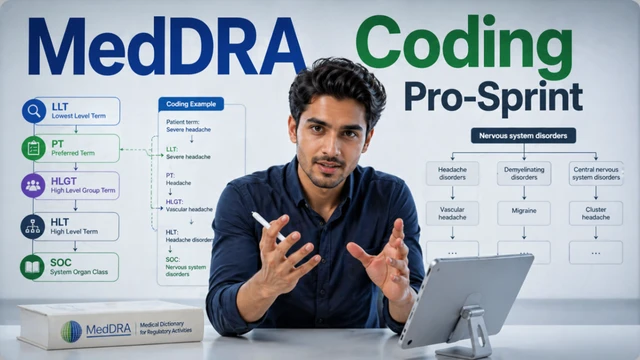
For instance, our MedDRA and Medical Coding Certification program is designed to give you that critical hands-on experience. You work within a simulated environment that mirrors what you'll use in a top healthcare company. You don't just learn the 'what'; you master the 'how'.
This system ensures that when you complete the program, you are not just a 'certified' fresher. You are a confident professional with practical skills that employers are actively looking for. To learn more about our unique approach, you can read about us here.
Are You Ready for a Career in Medical Coding?
You have the degree. Now, it's time to get the skills that lead to a real career. Medical coding offers a stable, well-paying path for any graduate willing to learn the practical side of the industry.
Don't just hope for a job. Build the skills that guarantee one. Take the first step by understanding where your current knowledge stands and what you need to learn to succeed.
Check your job readiness and see how your skills compare to what top companies are looking for in a medical coder today.
Build These Skills Now
Programs from ZANE ProEd Academy that directly address the skill gaps discussed above.
Follow Zane ProEd on Google
Preferred SourceAdd our publication as a preferred source to get the latest clinical research guides, industry updates, and career intel directly in your Google Top Stories & AI Overviews.