Medical Coding Jobs for Freshers in India: Complete Career Guide

Medical Coder Medical coding jobs for freshers in India are entry-level roles where you read patient records and assign standard codes like ICD-10 and CPT. With CPC certification and basic pharmacy knowledge, freshers can earn ₹2.5–4 LPA. Most employers test your coding speed and accuracy before hiring.
Are you a BPharm or MPharm graduate who has faced failed placements multiple times? It feels heavy, but you are not stuck. Medical coding jobs for freshers in India are a real path where your degree already gives you an edge. You know anatomy, pharmacology, and medical terms—skills that many arts or commerce graduates start without.
Recruiters do not reject you because you lack intelligence. They reject you because they see a skill gap between what college taught and what the job needs. This guide will close that gap and help you crack interviews confidently.
Build These Skills Now
Programs from ZANE ProEd Academy that directly address the skill gaps discussed above.
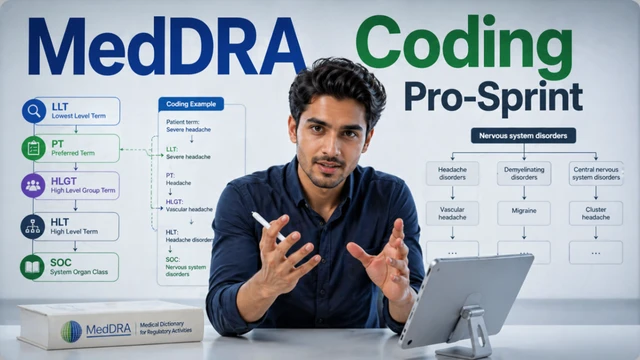
What is medical coding and how does it work?
Medical coding means converting a patient's diagnosis, treatment, and procedures into universal alphanumeric codes. These codes are used for insurance claims, medical billing, and health records. The most common systems are ICD-10 for diagnoses and CPT for procedures.
Think of it like this: A doctor writes 'type 2 diabetes with neuropathy'. A medical coder reads that note and assigns the exact ICD-10 code, like E11.40. Insurers then process the claim without confusion.
- Read patient charts and operative notes
- Assign ICD-10 and CPT codes
- Use coding software like 3M Encoder or Optum
- Check for missing documentation
- Work with billing and audit teams
The World Health Organization (WHO) maintains the ICD-10 standard globally. This makes an ICD-10 coding career stable and transferable across hospitals, insurance firms, and KPOs.
What is the salary of a medical coder in India?
The medical coder salary in India depends on your certification, city, and employer. For freshers with CPC certification, the typical range is ₹2.5 to ₹4 lakh per year. In metro cities like Bengaluru, Hyderabad, or Chennai, starting pay can go up to ₹4.5 LPA.
- Fresher (0–1 year): ₹2.2 – ₹3.5 LPA
- 1–3 years with CPC: ₹3.5 – ₹5.5 LPA
- Senior coder / auditor: ₹6 – ₹10 LPA
- Remote / US healthcare roles: ₹5 – ₹8 LPA
After 3–4 years, many coders move into medical coding audits, denial management, or team lead roles. US healthcare clients follow FDA documentation standards, so coding accuracy is monitored strictly. Check this detailed medical coding jobs guide for freshers to see real salary data and employer expectations.
How to start a career in medical coding as a fresher?
A medical coding course for BPharm helps you learn the exact frameworks employers test. But you need more than a certificate. You need practice on real-style charts and a clear interview plan.
- Choose the right certification: CPC from AAPC is the most accepted in India.
- Learn anatomy and medical terminology: BPharm graduates already have this; refresh it with coding focus.
- Practice ICD-10 and CPT daily: Do at least 2–3 case studies per day.
- Build a sample portfolio: Show coded charts, query forms, and audit findings.
- Apply through healthcare KPOs: Companies like Optum, R1, and WNS hire freshers in bulk.
Do not wait for a referral. For medical coding jobs for freshers in India, your practical speed matters more than your degree percentage.
What certifications are needed for medical coding?
The most asked certification is CPC certification India from AAPC. Some employers also accept CCS from AHIMA or CIC for inpatient coding. But for freshers, CPC is the fastest route.
- CPC (Certified Professional Coder) – best for outpatient and physician coding
- CCS (Certified Coding Specialist) – for hospital inpatient coding
- CIC (Certified Inpatient Coder) – niche for inpatient facility coding
- COC (Certified Outpatient Coder) – for ambulatory surgery
You do not need all of these. Start with CPC. It covers ICD-10, CPT, and HCPCS. The exam has 100 questions in 4 hours. Most BPharm graduates pass with 2–3 months of focused practice.
Is medical coding a good career for life science graduates?
Yes, especially if you want a stable desk job with clear growth. But compare medical coding vs clinical research. Clinical research pays more for experienced professionals but has fewer fresher openings. Medical coding hires freshers in large numbers and offers faster entry.
- Medical coding: faster entry, remote options, steady salary, repetitive work
- Clinical research: higher salary ceiling, more travel, slower fresher hiring
- Pharmacovigilance: similar skill set, but coding has more US healthcare opportunities
As a life science graduate, your ability to read medical records and understand drug interactions gives you an advantage. You can move into pharmacovigilance roles later if you want variety.
Skill Gap Exposure: What College Teaches vs What Employers Expect
Your BPharm or MPharm degree taught you drug mechanisms, formulations, and pharmacy law. That is important. But employers for medical coding jobs do not test these directly.
Here is the reality:
- College teaches: pharmacology theory, pharmaceutics, industrial pharmacy
- Employers expect: ICD-10 coding speed, CPT modifier logic, medical record abstraction, denial management basics
- College teaches: memorize drug names and categories
- Employers expect: read a messy clinical note and pick the most specific code in under 5 minutes
This is why many pharmacy graduates get rejected. The job is not about memorizing drugs; it is about applying coding rules under time pressure. In today's AI-driven healthcare industry, recruiters also test whether you can work with encoder software and handle AI-assisted coding suggestions without blindly accepting them.
Structured Pathway to Crack Medical Coding Interviews
- Week 1–2: Refresh medical terminology. Focus on systems: cardiovascular, musculoskeletal, respiratory, and endocrine. These appear in 70% of CPC exam questions.
- Week 3–6: Learn ICD-10 guidelines. Study the official conventions, chapter-specific rules, and how to use the alphabetic index and tabular list.
- Week 7–10: Practice with real-world charts. Use coding workbooks, case studies, and free hospital case samples. Time yourself on every case.
- Week 11–12: Take mock exams. Do at least 4 full-length CPC mock tests. Review every wrong answer.
- Interview week: Prepare answers for common questions: 'How do you handle an unclear diagnosis?', 'What is a modifier 25?', 'Tell me about a time you found a coding error.'
- Apply in bulk: Target 20–30 fresher coding jobs per week. Use LinkedIn, Naukri, and direct company portals.
System Bridge: Simulation-Based Learning
Reading coding books is not enough. You need to make the same decisions a coder makes every day. That is where simulation-based learning helps. In a simulated setting, you see a patient chart, pick the right code, and get instant feedback. You learn from mistakes without risking your job.
This is exactly how successful freshers bridge the gap between theory and interview confidence. They do not just read; they perform under pressure.
Build These Skills Now
Programs from ZANE ProEd Academy that directly address the skill gaps discussed above.
How ZANE ProEd Builds Interview-Ready Medical Coders
ZANE ProEd offers a structured system, not just video lectures. The meddra-medical-coding-certification course focuses on real coding practice. You work with ICD-10 and MedDRA scenarios that mirror what employers use in hospitals and KPOs.
The system includes guided case studies, mock CPC exams, and coding audits. You build a portfolio of coded charts that you can show in interviews. This is what turns a pharmacy graduate into a hireable coder. You can learn more about how the program works on the ZANE ProEd approach.
Your Next Step
Do not wait for another failed placement to decide. Check your job readiness now. See how your current ICD-10 and CPC skills compare to what employers actually expect. The gap is smaller than you think, but you need to act.
Build These Skills Now
Programs from ZANE ProEd Academy that directly address the skill gaps discussed above.
Follow Zane ProEd on Google
Preferred SourceAdd our publication as a preferred source to get the latest clinical research guides, industry updates, and career intel directly in your Google Top Stories & AI Overviews.