Medical Writing Career for Freshers in India: Why 90% Fail

Medical Writer Career: A medical writing career for freshers in India is a high-growth field for life science, BSc, BTech, and BPharm graduates. It involves creating clear, accurate scientific documents like clinical trial reports and regulatory submissions for pharmaceutical companies, ensuring compliance with global standards.
Facing another placement rejection? If you are a BSc, BCA, or BTech graduate trying to switch from IT or BPO roles, this feeling is common. But what if the problem isn't your degree, but a specific skill gap? A medical writing career for freshers in India is a huge opportunity, yet 90% of applicants fail their interviews for the same few reasons.
This is not about your academic knowledge. Recruiters don't care about your college scores. They care about one thing: can you do the job from day one? The reality is, most freshers can't.
Build These Skills Now
Programs from ZANE ProEd Academy that directly address the skill gaps discussed above.
This guide is a mistake audit. We will break down what companies actually want, why they reject freshers, and give you a clear, step-by-step plan to get hired, even if you don't have a pharmacy background.
What does a medical writer do?
A medical writer is a translator. They take complex scientific and clinical data and translate it into clear, easy-to-understand documents. They are the bridge between scientists and the rest of the world, including doctors, regulators, and patients.
The scientific writing job description is not just about writing. It's about analysis, understanding regulations, and telling a clear story with data. A typical day might involve:
- Reading and understanding a clinical study report.
- Collaborating with doctors and statisticians to get the right information.
- Writing a section of a regulatory document, following strict templates.
- Checking documents for scientific accuracy and grammatical errors.
- Ensuring all work follows guidelines from bodies like the ICH. You can learn more about these guidelines at https://www.ich.org.
They work in pharmaceutical companies, Contract Research Organizations (CROs), and medical communication agencies. It is a detail-oriented job that requires both scientific knowledge and strong language skills.
What is the salary of a medical writer in India?
The medical writer salary in India is very competitive, especially for a fresher-friendly role. It is a key reason many graduates from different fields are attracted to this career.
Here is a realistic breakdown:
- Entry-Level (Fresher): A fresher can expect a starting salary between ₹3.5 Lakhs to ₹5.5 Lakhs per annum. This depends on the company (MNC vs. local CRO) and your negotiation skills.
- With 2-4 Years of Experience: Once you have some experience, your salary can quickly jump to ₹7 Lakhs to ₹12 Lakhs per annum.
- Senior/Managerial Roles: With over 5-7 years of experience, salaries can go well above ₹15 Lakhs per annum.
Specializing in areas like regulatory medical writing or publications can lead to even higher pay. Your ability to write complex documents like clinical study reports or safety reports directly impacts your value.
How to become a medical writer without experience?
This is the biggest challenge for BSc, BTech, or other non-healthcare graduates. The key is to build practical skills, not just collect certificates. Here's how to become a medical writer when you are starting from zero:
- Master the Fundamentals: Don't just read about the drug development process. Understand it deeply. Learn the different phases of clinical trials and the purpose of each.
- Learn the Guidelines: You must know about ICH-GCP (Good Clinical Practice). This is the rulebook for clinical trials. Recruiters will ask you questions about it.
- Focus on One Document Type: Don't try to learn everything. Start with one key document, like a Clinical Trial Protocol or a PSUR (Periodic Safety Update Report). Learn its structure and purpose inside out.
- Build a Sample Portfolio: Take publicly available clinical trial data and create a sample document. This proves you can do the work. One good sample is better than a hundred certificates.
- Network Intelligently: Connect with medical writers on LinkedIn. Don't just ask for a job. Ask for advice on what skills their company looks for in a fresher.
Your degree gets you the interview; your practical skills get you the job. This is especially true if you are transitioning from a non-scientific background.
What qualifications are needed for medical writing?
While companies often list pharmacy or life science degrees, the real qualification is your skill set. Recruiters are becoming more open to diverse backgrounds if you can prove your ability.
Required Degrees (Typically):
- Bachelor of Pharmacy (BPharm)
- Master of Pharmacy (MPharm)
- PhD in a life science field
- Bachelor of Science (BSc) in Biotechnology, Microbiology, Zoology, etc.
- Bachelor of Technology (BTech) in Biotechnology
However, the most important 'qualification' is demonstrable skill. A medical writing course for BPharm graduates can be helpful, but only if it's practical. For a BSc or BTech graduate, a skill-focused program is even more critical to bridge the gap. You need to show you understand the context of the documents you will be writing.
What types of documents does a medical writer create?
Medical writing is not one single activity. It is divided into different specializations, each with its own document types. Understanding this helps you target your career path.
The main categories are:
- Regulatory Medical Writing: This involves creating documents for regulatory agencies like the Indian CDSCO (https://cdsco.gov.in) or the US FDA. Examples include:
- Clinical Trial Protocols
- Investigator's Brochures (IBs)
- Clinical Study Reports (CSRs)
- Common Technical Document (CTD) modules
- Safety Writing: This is a sub-specialty focused on drug safety, often linked to pharmacovigilance. Documents include:
- Periodic Safety Update Reports (PSURs)
- Development Safety Update Reports (DSURs)
- Risk Management Plans (RMPs)
- Scientific Communications: This is for a broader audience, like doctors and researchers. Documents include:
- Journal manuscripts and publications
- Abstracts and posters for conferences
- Slide decks for medical presentations
For freshers, regulatory medical writing and safety writing offer the most structured entry points because the documents follow clear templates and guidelines. This is a great area to focus on, and you might find our guide on careers in regulatory affairs useful for context.
The Skill Gap: What Your College Didn't Teach You
Recruiters reject you because there's a huge difference between what your BSc/BTech degree taught you and what a medical writing job demands.
What College Teaches:
- Theoretical knowledge of biology, chemistry, or code.
- How to write lab reports or academic essays.
- Basic understanding of science.
What Companies Expect:
- Deep knowledge of ICH-GCP and drug development stages.
- Ability to read and interpret statistical data from a clinical trial.
- Hands-on experience with the exact structure of a Clinical Study Report or PSUR.
- Understanding the 'why' behind each section of a regulatory document.
- Zero-error writing and attention to detail under tight deadlines.
Your degree is the entry ticket, but it doesn't teach you the job. This is the gap you must fill to get hired.
Your 5-Step Pathway to a Medical Writer Job
Stop applying randomly. Follow this structured plan to build the skills that get you hired.
- Foundation First (2 Weeks): Forget everything else and master the ICH-GCP E6 (R2) guideline. This is the bible of clinical research. You will be asked about it in every single interview.
- Choose Your Weapon (4 Weeks): Pick ONE complex document type. We recommend either a Clinical Trial Protocol or a PSUR. Find templates online and learn the purpose of every single section. Why is it there? What information does it provide?
- Build Your Proof (3 Weeks): Find a published clinical trial on a site like clinicaltrials.gov. Use the summary data to create a 2-page sample document, like the introduction and objectives section of a protocol. This becomes your portfolio.
- Master the Language: This is not about fancy English. It's about clarity and precision. Practice writing short, simple sentences. Active voice over passive voice. This is crucial for a field connected to drug safety, which you can learn more about in our guide to pharmacovigilance jobs.
- Targeted Interview Prep: Prepare for questions like, 'What are the essential components of a clinical trial protocol?' or 'What is the purpose of an Investigator's Brochure?'. Your sample document is your main talking point.
The Bridge from Theory to Practice
Reading about medical writing is not enough. You wouldn't hire a programmer who has only read books about code but never written any. The same applies here. The fastest way to become job-ready is to work on real-world document templates and simulations that mimic the tasks you will do on day one of your job.
This is how you close the gap between your academic knowledge and the practical skills that companies pay for. It’s about building muscle memory for the job.
Build These Skills Now
Programs from ZANE ProEd Academy that directly address the skill gaps discussed above.
A System for Building Job-Ready Skills
At ZANE ProEd, we don't just provide courses; we provide a system that mirrors the industry's workflow. You learn by doing the actual work.
For instance, in the Clinical Trial Protocol Writing with AI certification, you don't just learn the theory. You build a complete protocol from scratch for a simulated drug, learning how to structure each section from objectives to statistical analysis plans. You learn how to build the 'blueprint' for a clinical trial.
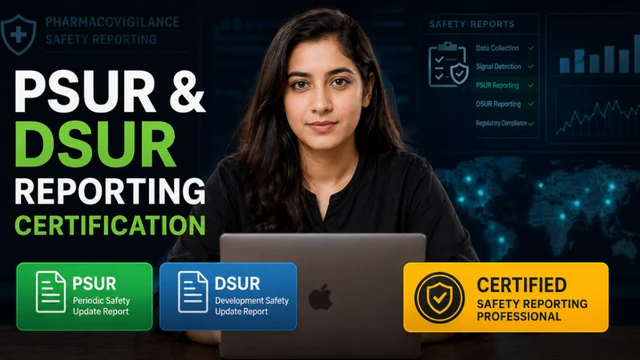
Similarly, in the PSUR/DSUR Reporting Certification, you work with mock data to create a comprehensive safety report. You learn how to analyze safety information and present it according to strict regulatory guidelines. This is how you master the 'safety report cards' for approved drugs.
This system makes you confident and competent, ready to handle the tasks your future manager will give you.
Check Your Readiness
A career in medical writing is not for everyone. It requires a unique combination of scientific understanding, attention to detail, and clear communication skills.
Instead of sending out another 100 resumes, take a moment. See how your current skills compare to what a hiring manager for a Medical Writer role is looking for. Are you ready to prove you can do the job before you even get the interview?
Build These Skills Now
Programs from ZANE ProEd Academy that directly address the skill gaps discussed above.
Follow Zane ProEd on Google
Preferred SourceAdd our publication as a preferred source to get the latest clinical research guides, industry updates, and career intel directly in your Google Top Stories & AI Overviews.