Pharmacovigilance Case Processing Jobs for Freshers: Your Complete Guide

Pharmacovigilance Case Processor: Freshers can get pharmacovigilance case processing jobs that involve collecting, coding, and reporting adverse drug events. You don't need a medical degree—companies hire for ICSR processing and MedDRA coding skills. With the right training, you can start within 3-6 months.
No one tells you this—but your degree doesn't guarantee a job anymore. If you're a BSc, BCA, or BTech graduate feeling stuck, there's a path you haven't considered: pharmacovigilance case processing jobs for freshers. Even with zero healthcare experience, you can build a stable, well-paying career in drug safety. If you’re curious about the day-to-day, check our deep dive into pharmacovigilance case processing jobs for freshers.
Recruiters aren't looking for perfect resumes. They're looking for skills you can learn fast. And right now, in the AI-driven healthcare industry, trained freshers are in high demand.
Build These Skills Now
Programs from ZANE ProEd Academy that directly address the skill gaps discussed above.
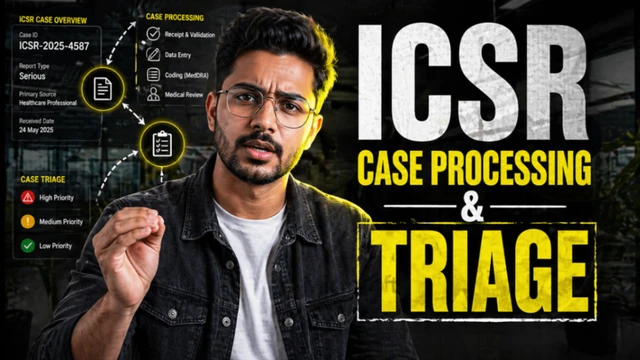
What does a Pharmacovigilance Case Processor do?
A pharmacovigilance case processor reviews reports of medicine side effects, also called adverse events. Your daily tasks would include:
- Receiving and triaging case reports from patients, doctors, or clinical trials
- Entering data into drug safety databases like Argus or ArisG
- Coding medical terms using the MedDRA dictionary
- Checking the seriousness and expectedness of an event
- Writing clear narratives and submitting the case to authorities like CDSCO
In short, the pharmacovigilance case processor job description is all about accuracy and speed—turning raw reports into structured safety data that protects patients. Even if you come from a BSc, BCA, or BTech background, these skills are learnable.
What is the salary of a PV Case Processor in India?
The PV case processor salary India varies by city and company. For freshers, typical packages are:
- Small CROs or startups: ₹2.5–3.2 LPA
- Mid-size pharma companies: ₹3–3.8 LPA
- Top multinationals (Mumbai, Bangalore, Hyderabad): ₹3.6–4.5 LPA
With 2–3 years of experience, you can reach ₹5–7 LPA. Many companies also offer night shift allowances and performance bonuses. More importantly, PV roles are stable—no matter what happens in the economy, drug safety reporting never stops.
How to get a PV case processing job as a fresher?
Recruiters look for specific skills, not just degrees. Follow these steps:
- Learn the basics of ICSR processing: Understand how a case flows from intake to submission. The ICH E2B guidelines are the global standard.
- Get comfortable with MedDRA coding: You need to know how to browse and select terms. Even 20 hours of practice makes a difference.
- Practice on real software: Tools like Oracle Argus are used everywhere. If you don't have access, simulation platforms give you the same experience.
- Build a portfolio of processed cases: Create a few sample ICSRs with narratives and coding. Show that you can do the job before you even get it.
- Apply strategically: Target entry-level adverse event reporting jobs at CROs (Cognizant, Accenture, TCS, IQVIA) and pharma companies. Check their career pages weekly.
Many freshers land jobs in 3–6 months by following this path. It's not magic—it's preparation.
What is ICSR processing in pharmacovigilance?
ICSR stands for Individual Case Safety Report. It's the core document you'll handle daily. ICSR processing career means you manage these reports from start to finish:
- Intake: Receive the report (email, phone, database)
- Triage: Prioritize based on severity and regulatory deadlines
- Data entry: Fill in patient demographics, drug details, and reaction
- Coding: Map medical terms to MedDRA codes
- Medical review: A physician reviews the case
- Submission: Send to regulatory authorities within timelines
The FDA and EMA have strict rules, and companies rely on processors to avoid fines. That's why even freshers with solid ICSR skills are valued.
What is MedDRA coding and how is it used in PV?
MedDRA (Medical Dictionary for Regulatory Activities) is the universal language of pharmacovigilance. It's a huge dictionary of medical terms, maintained by the ICH. When a patient says "stomach pain," you code it as "Abdominal pain" in MedDRA. This skill—MedDRA coding for freshers—is non-negotiable. MedDRA is updated annually, so staying current is part of the job.
You'll use MedDRA to:
- Standardize adverse event terms across countries
- Translate local terms into globally accepted codes
- Analyze data for safety signals
- Ensure reports meet regulatory standards
Without MedDRA, PV simply doesn't work. Training usually takes a few weeks, and then you code like a pro.
What Colleges Teach vs What Recruiters Need
Here's the reality check: Your degree may have covered biology or chemistry, but it likely missed:
- Real case processing workflows
- Hands-on database navigation in Argus or ArisG
- MedDRA coding from day one
- Regulatory guidelines (ICH, CDSCO)
Recruiters see hundreds of resumes with "BSc" or "BCA." The ones that stand out mention "ICSR processing," "MedDRA," or "adverse event reporting." That's the gap. And it's not your fault—the system never prepared you. But you can fix it.
Your Step-by-Step Roadmap to the First Job
If you're starting from zero, here is a 5-step plan:
- Step 1: Understand the Industry – Read about pharmacovigilance and why it's growing. Explore our guide on PV jobs for freshers.
- Step 2: Get Certified in Core Skills – Enroll in a program that covers ICSR triage and MedDRA coding. Look for hands-on practice, not just videos. (More on this below.)
- Step 3: Practice, Practice, Practice – Use a simulation environment to process at least 20-30 cases. Make mistakes, learn from them.
- Step 4: Build a PV-Specific Resume – Highlight your coding speed, accuracy, and familiarity with software. Mention any projects or sample cases you've done.
- Step 5: Apply and Interview Smart – Prepare for common questions like "What is a serious adverse event?" or "Walk me through an ICSR." Show your process knowledge. Check job boards and apply to at least 5 roles a week.
Bridging the Skill Gap with Simulation
Reading alone won't land you a job. Employers want proof you can do the work. That's where simulation-based learning comes in—you actually use the same tools and follow the same steps as a real processor. It's like a flight simulator for pharmacovigilance. You gain confidence and a portfolio of completed cases.
Build These Skills Now
Programs from ZANE ProEd Academy that directly address the skill gaps discussed above.
Programs like ZANE ProEd's ICSR Case Processing Triage and MedDRA Medical Coding Certification are built this way. They simulate real safety databases, so you practice coding, triage, and narrative writing just like on the job. Graduates walk into interviews with practical knowledge, not just theory.
Ready to See Where You Stand?
Take a moment to ask yourself: Do you know what an ICSR lifecycle looks like? Can you code a common adverse event in MedDRA? If not, no shame—but start now. The demand for pharmacovigilance case processing jobs freshers is high, and the right preparation makes all the difference. Explore the pathway that matches your background and build your career from the ground up.
Build These Skills Now
Programs from ZANE ProEd Academy that directly address the skill gaps discussed above.
Follow Zane ProEd on Google
Preferred SourceAdd our publication as a preferred source to get the latest clinical research guides, industry updates, and career intel directly in your Google Top Stories & AI Overviews.