Pharmacovigilance Case Processing Jobs for Freshers: Complete Workflow Roadmap

Pharmacovigilance Case Processing Jobs for Freshers are entry-level roles where graduates and career switchers document, triage, and code adverse event reports (ICSRs) using MedDRA and ICH-GCP standards. In India, freshers can earn ₹3.5–₹8.5 LPA after practical case handling training, with hubs in Hyderabad, Bangalore, Pune, and Mumbai.
If you hold a BSc, BCA, or BTech degree and feel stuck with only theoretical knowledge, pharmacovigilance case processing jobs freshers are one of the fastest entry points into the life science industry – but here's the insider truth: Indian employers don't hire you for memorizing definitions. They hire you for how fast you can handle an ICSR without breaking a sweat.
Most freshers apply with a certificate but zero hands-on exposure. In a market where 500+ candidates compete for one PV opening in Hyderabad or Pune, your ability to process a real adverse event report on day one is the only currency that matters.
Build These Skills Now
Programs from ZANE ProEd Academy that directly address the skill gaps discussed above.
This guide breaks down the exact workflow, salary benchmarks, and the simulation-based path that makes you job-ready – not just 'certified'.
What does a Pharmacovigilance Case Processor do? (Pharmacovigilance Case Processing Jobs for Freshers)
A Pharmacovigilance Case Processor is the first line of defense in drug safety. Your core job is to receive, validate, and enter adverse event reports from patients, healthcare professionals, or clinical trials into a safety database.
In a typical Indian pharmacovigilance case processor job description, your daily tasks include:
- Triage and data entry: Assess incoming reports for seriousness, expectedness, and validity.
- ICSR processing: Create Individual Case Safety Reports (ICSRs) following ICH E2B guidelines.
- MedDRA coding: Map adverse events and medical history to standardized MedDRA terms.
- Narrative writing: Draft a concise clinical summary of the event for regulatory submission.
- Follow-up and quality checks: Send queries for missing information and ensure data accuracy.
Tools you'll use daily include Argus, ArisG, and Veeva Vault Safety. No university teaches you the click-by-click workflow of these platforms – that's the gap we'll address later.
For a detailed career roadmap, see Pharmacovigilance Jobs for Freshers in India.
What is the salary of a PV Case Processor in India?
Salary data for PV case processor salary India varies by city, company type, and whether you have practical simulation exposure. Here's the realistic range for freshers:
- No practical exposure, only certification: ₹2.5–₹3.5 LPA
- With simulation training and a verifiable portfolio: ₹3.5–₹6.0 LPA
- Top MNCs or niche CROs (with 1–2 years experience): ₹6.0–₹8.5 LPA
Indian pharma hubs paying the highest fresher salaries include Hyderabad, Bangalore, Pune, and Mumbai. Companies like TCS, Accenture, and IQVIA often recruit non-healthcare IT/BPO switchers, but they screen for hands-on ICSR familiarity – not just a degree.
For broader medical coding roles that overlap with PV, check Medical Coding Jobs for Freshers in India.
How to get a PV case processing job as a fresher?
Here's the insider sequence that works in the Indian market, especially for BSc, BCA, and BTech non-healthcare switchers:
- Learn the regulatory backbone: Understand ICH guidelines – specifically ICH E2B for ICSR transmission and ICH GCP for safety reporting.
- Master MedDRA coding basics: You don't need to be a coder, but you must know how to search and select the correct Lowest Level Term (LLT).
- Practice on a real database interface: Use simulation platforms that mimic Argus or ArisG. This is what separates you from 90% of applicants.
- Build a portfolio of 10–15 processed ICSRs: Showcase triage decisions, coding rationale, and narrative drafts.
- Apply in PV hubs: Target Hyderabad, Bangalore, and Pune. Use job titles like 'Drug Safety Associate', 'PV Case Processor', or 'ICSR Specialist'.
Remember: certifications without practice are useless in a highly competitive Indian market. Hiring managers repeatedly reject freshers who cannot navigate a safety database for a simple adverse event.
What is ICSR processing in pharmacovigilance?
ICSR processing is the core workflow of a pharmacovigilance case processing career. ICSR stands for Individual Case Safety Report – the structured document that captures a single patient's adverse event experience.
The typical ICSR processing lifecycle includes:
- Receipt and validation: Check minimum four criteria: identifiable patient, reporter, suspected drug, and adverse event.
- Triage: Determine seriousness and expectedness based on the reference safety information.
- Data entry: Enter all details into the safety database following E2B fields.
- Coding: Code adverse events, medical history, and indications using MedDRA; code drugs using WHO Drug Dictionary.
- Narrative writing: Summarize the case in a clinical narrative that tells 'what happened, when, and why it matters'.
- Quality review and submission: Submit to regulatory authorities like CDSCO within mandated timelines (e.g., 15 days for serious unexpected reports).
Global standards from WHO and ICH govern this workflow. Employers expect you to know these steps before your first interview.
What is MedDRA coding and how is it used in PV?
MedDRA coding for freshers often feels intimidating, but it's a structured medical dictionary used globally in adverse event reporting jobs. MedDRA = Medical Dictionary for Regulatory Activities.
It organizes medical terms into a hierarchy:
- System Organ Class (SOC) – e.g., 'Cardiac disorders'
- High Level Group Term (HLGT) – e.g., 'Coronary artery disorders'
- High Level Term (HLT) – e.g., 'Ischaemic coronary artery disorders'
- Preferred Term (PT) – e.g., 'Myocardial infarction'
- Lowest Level Term (LLT) – e.g., 'Heart attack'
As a case processor, you'll search the MedDRA browser, locate the most specific LLT, and select the corresponding PT for database entry. Incorrect MedDRA coding can lead to missed safety signals and regulatory audit findings.
Since medical coding and PV coding often overlap, see this medical coding roadmap for complementary skills.
The Skill Gap: What College Taught You vs. What Indian PV Employers Demand
If you're a BSc, BCA, or BTech non-healthcare switcher, you likely learned theory but never saw a real safety database. Here's the stark comparison:
- Conventional education: You read about pharmacovigilance definitions, maybe memorized MedDRA hierarchy.
- Employer expectation: You can log into Argus, triage a case, write a narrative, and code an adverse event in under 20 minutes.
- Conventional education: You have a certificate saying 'PV trained'.
- Employer expectation: You have a portfolio of 20+ simulated ICSRs with audit-ready documentation.
- Conventional education: You know ICH guidelines in theory.
- Employer expectation: You can apply ICH E2B fields to a real spontaneous report without asking 'where do I enter the reporter's email?'.
This gap is why many freshers remain unemployed for 12+ months after certification. The Indian market has thousands of 'certified' candidates but very few who can handle the workflow on day one.
Your 5-Step Pathway to Become a Job-Ready PV Case Processor
- Build Regulatory Foundations: Study ICH E2B, GCP, and CDSCO reporting timelines. Create a one-page cheat sheet.
- Practice MedDRA Coding Daily: Use public MedDRA browsing tools to code 5 mock adverse events every day for 2 weeks.
- Simulate ICSR Processing: Work on a platform that replicates Argus or ArisG. Process at least 20 cases covering serious, non-serious, and follow-up scenarios.
- Create a Case Processing Portfolio: Compile your triage decisions, coding choices, and narrative drafts into a PDF or online portfolio link.
- Target PV Hubs and Optimize Your Resume: Tailor your resume with keywords like 'ICSR', 'MedDRA', 'case narratives', and 'Argus simulation'. Apply to Hyderabad, Bangalore, and Pune roles.
This pathway is not optional – it's the minimum standard for standing out in the current market.
How Simulation-Based Training Bridges the Practical Gap
Reading about PV is like reading about swimming. You can quote ICH guidelines all day, but until you process a simulated case with real-time feedback, you haven't built the muscle memory employers pay for.
Modern simulation systems recreate the exact interface, fields, and validation errors of industry databases like Argus and Veeva Vault. You practice triage, MedDRA coding, and narrative writing – and produce a verifiable portfolio that proves your speed and accuracy.
This is the difference between a certificate holder and a hireable candidate. In a highly competitive Indian market, only simulation-based proof breaks through the noise.
Build These Skills Now
Programs from ZANE ProEd Academy that directly address the skill gaps discussed above.
Inside ZANE ProEd's PV Case Processing Simulation Programs
ZANE ProEd builds industry simulation systems, not passive video courses. Two programs directly address the fresher skill gap:
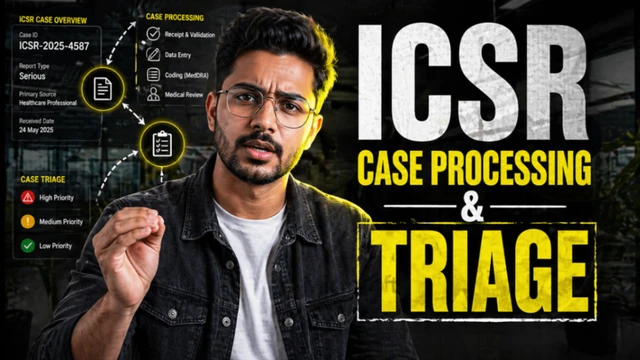
- ICSR Case Processing & Triage: You work through 20+ real-world case scenarios on a simulated Argus-like database. Each case forces triage decisions, MedDRA coding, and narrative writing under time pressure.
- MedDRA Medical Coding Certification: You master the MedDRA hierarchy and code hundreds of adverse events across therapeutic areas, learning audit-ready documentation and ICH-GCP international compliance.
Both programs emphasize audit readiness and practical trial simulation. You leave with a portfolio link, not just a certificate. For more on ZANE ProEd's approach, see About ZANE ProEd.
Audit Your Industry Readiness
Ask yourself: If a PV manager in Hyderabad handed you an adverse event report right now, could you triage it, code it in MedDRA, and write a compliant narrative within 20 minutes?
If the answer is no, your next step is not another certificate. It's hands-on simulation. Audit your current skill gaps, explore simulation workflows, and start building the proof employers actually want.
Build These Skills Now
Programs from ZANE ProEd Academy that directly address the skill gaps discussed above.
Follow Zane ProEd on Google
Preferred SourceAdd our publication as a preferred source to get the latest clinical research guides, industry updates, and career intel directly in your Google Top Stories & AI Overviews.