Pharmacovigilance Jobs for Freshers in India: Complete Career Guide

Pharmacovigilance Jobs for Freshers in India are entry-level drug safety roles. You review and report adverse drug reactions. BPharm or MPharm graduates can start as Drug Safety Associates. Starting salary is ₹2.5–4 LPA. Key skills include case processing and medical coding.
You just finished your BPharm or MPharm. Now you feel lost. The job market is tough. But there is a clear path: pharmacovigilance jobs for freshers in India are growing every year.
Many pharmacy graduates think they need to do sales or hospital work. That is not true. Drug safety is a desk job. It pays well. And you can start right now.
Build These Skills Now
Programs from ZANE ProEd Academy that directly address the skill gaps discussed above.
What is pharmacovigilance and why is it important?
Pharmacovigilance (PV) is the science of monitoring drug safety. It means collecting, assessing, and preventing side effects of medicines. The goal is to keep patients safe. This field offers many pharmacovigilance jobs for freshers in India for pharmacy graduates.
Every drug has risks. PV teams track those risks after the drug is on the market. Regulators like the WHO and FDA require companies to report safety data. In India, CDSCO oversees this work.
That is why PV is important. It saves lives. And it creates many jobs for pharmacy graduates.
What is the salary of a Drug Safety Associate in India?
Pharmacovigilance salary in India for freshers is between ₹2.5 LPA and ₹4 LPA. In cities like Hyderabad, Bengaluru, and Pune, the starting pay is often higher.
With 2–3 years of experience, you can earn ₹5–8 LPA. Senior roles like PV Scientist or Team Lead can go up to ₹12–15 LPA. Your salary depends on:
- City and company type (MNCs pay more)
- Certification and practical skills
- Knowledge of tools like Argus and MedDRA
How to start a career in pharmacovigilance?
The PV career path for a BPharm fresher is clear. Follow these steps:
- Learn the basics: Understand what drug safety is. Read about ICSR (Individual Case Safety Report).
- Get certified: A pharmacovigilance course for BPharm graduates can teach you case processing and medical coding.
- Practice on real-like cases: Simulation training helps you learn software without a job.
- Build a portfolio: Show sample narrative writing and coded cases.
- Apply for jobs: Target CROs, pharma companies, and IT firms like Accenture, TCS, and Cognizant.
You do not need a master's degree. Employers want skills, not just marks.
What are the job responsibilities of a PV Associate?
The drug safety associate job description includes many daily tasks. You are the first person who handles safety reports. Your main responsibilities are:
- Receive and triage adverse event reports from patients, doctors, or clinical trials.
- Enter data into safety databases like Argus or ArisG.
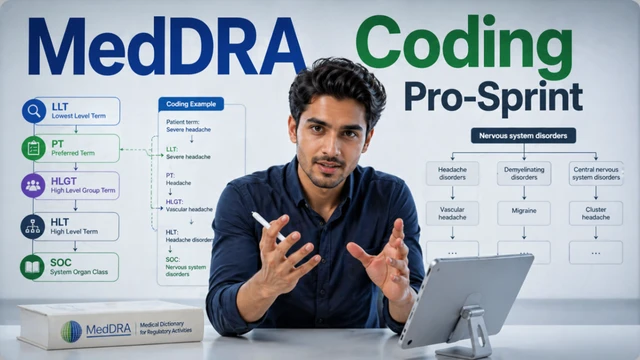
- Code medical terms using MedDRA.
- Write clear narratives of the event.
- Perform follow-up queries to get missing information.
- Ensure compliance with regulatory timelines.
These are the drug safety associate roles and responsibilities. You will work with a team but need attention to detail.
Is pharmacovigilance a good career for BPharm freshers?
Yes. Pharmacovigilance is one of the best desk jobs for pharmacy graduates. You get a stable career, fixed hours, and global exposure. Many PV professionals work with international teams.
But you must stand out. A plain BPharm degree is not enough. You need practical skills in case processing and coding. Check this guide on case processing jobs to see what employers expect.
If you enjoy analysis and patient safety, PV is a strong long-term choice.
What colleges teach vs what employers expect
Your BPharm syllabus covers pharmacology, pharmaceutics, and quality assurance. But employers in PV do not ask about those subjects. They ask:
- Can you process an ICSR from start to finish?
- Do you know MedDRA coding rules?
- Have you used safety databases like Argus?
- Can you write a clear medical narrative?
Most colleges do not teach these skills. That is the skill gap. And it stops many freshers from getting hired.
Your 6-step roadmap to a PV job
- Understand the PV workflow: Learn how a case moves from intake to submission.
- Master case processing basics: Study triage, data entry, and narrative writing.
- Learn MedDRA coding: Practice coding simple terms like 'headache' or 'rash'.
- Get simulation experience: Work on mock cases in a safe environment.
- Prepare your resume: Highlight certifications and practical skills, not just your degree.
- Apply strategically: Target companies that hire freshers in bulk. Check job portals and LinkedIn.
Following these steps will move you from confusion to clarity.
Why simulation beats theory
Reading about PV is not enough. You need to do the work. Simulation-based learning lets you practice on real-like cases without risking patient safety.
ZANE ProEd's platform gives you a virtual PV environment. You will process cases, code terms, and write narratives. This is the fastest way to build job-ready skills.
Build These Skills Now
Programs from ZANE ProEd Academy that directly address the skill gaps discussed above.
Skills that employers actually want
Two certifications can change your job search: ICSR Case Processing & Triage and MedDRA Medical Coding Certification. These are not just theory. They train you on the exact tasks you will do daily.
At ZANE ProEd, we focus on systems, not just courses. You learn by doing. Our approach is built for pharmacy freshers who want to enter PV fast.
Are you ready for a PV job?
Most freshers are not. But you can close the gap quickly. Check your job readiness against real employer expectations. See how your skills compare.
Read this guide on signal detection to understand the next step in the PV career path.
Build These Skills Now
Programs from ZANE ProEd Academy that directly address the skill gaps discussed above.
Follow Zane ProEd on Google
Preferred SourceAdd our publication as a preferred source to get the latest clinical research guides, industry updates, and career intel directly in your Google Top Stories & AI Overviews.