Pharmacovigilance Jobs for Freshers in India: Complete Career Guide

Pharmacovigilance jobs for freshers in India are entry-level roles where you monitor drug safety reports. You can get these jobs with a BPharm, BSc, or even BCA/BTech background. Key skills needed: case processing, MedDRA coding, and regulatory knowledge. Starting salary is ₹2.5–4 LPA.
You are from a Tier-2 or Tier-3 college. You have a BSc, BCA, or BTech degree. You are working in IT or BPO and want to switch. You see pharmacovigilance jobs for freshers in India everywhere. But recruiters reject you. Why? Because you lack the exact skills they need. This blog breaks the brutal truth and gives you a clear path to enter.
The reality is harsh: automation is coming for basic data entry roles. If you do not upskill now, you will be left out. But there is a way. You do not need a medical degree. You need the right training and proof of skill.
Build These Skills Now
Programs from ZANE ProEd Academy that directly address the skill gaps discussed above.
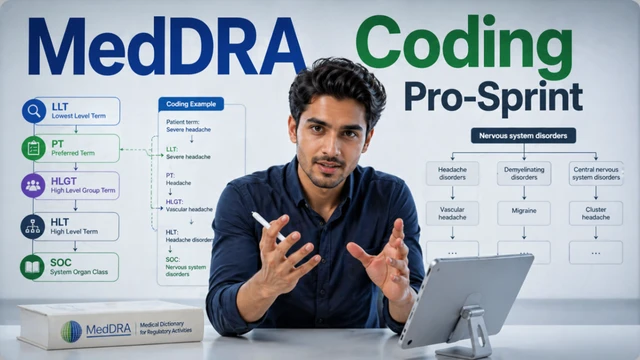
This is not another sugar-coated guide. I will show you what employers actually test, what they pay, and how to get hired from a non-healthcare background.
What is pharmacovigilance and why is it important?
Pharmacovigilance (PV) is the science of detecting, assessing, and preventing side effects of medicines. It keeps patients safe. After a drug is launched, companies must track every adverse event. They report these to regulators like the WHO, ICH, and CDSCO. In India, every pharma company needs PV teams to stay compliant. That is why pharmacovigilance jobs for freshers in India are growing fast.
- Drug safety is a legal requirement, not optional.
- Every new drug needs monitoring for years after launch.
- PV teams handle case reports from patients, doctors, and clinical trials.
- Non-medical graduates can work in data processing and coding.
What is the salary of a Drug Safety Associate in India?
The pharmacovigilance salary in India depends on your skills and location. Freshers in Tier-1 cities earn more. But even in Tier-2 cities, it is a stable start.
- Fresher Drug Safety Associate: ₹2.5–4 LPA (Lakhs per annum)
- 1–3 years experience: ₹4–7 LPA
- Senior PV Associate or PV Scientist: ₹7–12 LPA
- PV Manager or Team Lead: ₹12–20+ LPA
Many BPO and IT switchers accept a slight pay cut initially because PV offers better long-term growth. Check this detailed guide on pharmacovigilance jobs for BPharm freshers to see real salary progression.
How to start a career in pharmacovigilance?
You do not need a pharmacy degree. But you need specific industry skills. Here is the fastest route for a non-healthcare background:
- Learn the basics: Understand what an ICSR (Individual Case Safety Report) is. Know the difference between serious and non-serious events.
- Get trained in case processing: Employers want you to handle real case data from day one. A good pharmacovigilance course for BPharm or non-pharma graduates teaches you triage, data entry, and narrative writing.
- Master MedDRA coding: MedDRA is the medical dictionary used globally. Every PV associate must code adverse events. Practice coding real cases.
- Build a portfolio with simulations: Show recruiters you have done mock case processing. Real experience matters more than certificates.
- Apply smart: Target contract research organizations (CROs) and pharma companies that hire freshers in bulk. Use LinkedIn and job portals.
What are the job responsibilities of a PV Associate?
Here is a drug safety associate job description explained in simple terms. Your daily tasks include:
- Case intake and triage: Receive adverse event reports from emails, calls, or literature. Check if they are valid.
- Data entry: Enter patient details, drug details, and event details into the safety database.
- MedDRA coding: Assign standard medical codes to the adverse events and medications.
- Narrative writing: Write a clear summary of the case for regulators.
- Quality check: Ensure no data errors before submission to regulatory authorities.
- Follow-up: Request missing information from reporters.
These are the core drug safety associate roles and responsibilities. You will use tools like Argus, ArisG, or Veeva Vault. But you can learn these systems through simulation.
Is pharmacovigilance a good career for BPharm freshers?
Yes, it is one of the best entry-level options for BPharm graduates. But it is also open to BSc, BCA, and BTech freshers. Here is why the PV career path is strong:
- Low entry barrier: No hospital experience required. You work in an office.
- Global demand: India is a hub for pharmacovigilance outsourcing. Companies need thousands of associates.
- Clear growth: Associate → Senior Associate → PV Scientist → Team Lead → Manager.
- Stable work: Pharma is recession-proof compared to IT projects.
Automation is a real threat, but only for repetitive data entry. If you upgrade to case processing, medical coding, and quality review, you become irreplaceable.
Why do freshers get rejected? The skill gap explained
Colleges teach you theory. Employers expect you to do the job from day one. Here is the brutal comparison:
What colleges teach:
- Pharmacology concepts (if you studied pharmacy)
- General computer skills
- No real PV software training
What employers expect:
- You can triage an ICSR within 15 minutes
- You know MedDRA coding without mistakes
- You have used a safety database interface
- You can write a clean regulatory narrative
This gap is why many freshers fail interviews. You need practical exposure, not just a degree.
A step-by-step plan to get pharmacovigilance jobs for freshers in India
- Assess your current skill level. Can you define an adverse event? Do you know what a case narrative looks like? If not, start from zero.
- Complete a structured simulation-based program. Look for training that gives you real case scenarios, not just video lectures.
- Practice on mock cases. Do at least 20–30 case processing exercises. Get feedback on your errors.
- Build a job-ready portfolio. Show sample ICSRs you have processed and MedDRA-coded. Recruiters love proof.
- Apply to 50–100 jobs per week. Use Naukri, LinkedIn, Indeed. Target companies like Parexel, IQVIA, Accenture, and TCS.
- Prepare for interview tests. Many companies give you a case to triage on the spot. Practice under time pressure.
How to bridge the skill gap: Simulation-based learning
Reading theory is not enough. You must practice in a risk-free environment that mimics a real PV database. Simulation-based learning lets you:
- Work on realistic case reports
- Use MedDRA coding tools
- Get instant feedback on your mistakes
- Build confidence before interviews
This is how you stand out from thousands of other freshers. You prove you can do the job, not just talk about it.
Build These Skills Now
Programs from ZANE ProEd Academy that directly address the skill gaps discussed above.
ZANE ProEd's system: From learner to job-ready
ZANE ProEd has built a simulation-first training system for pharmacovigilance. Their ICSR Case Processing and Triage course puts you inside a real case workflow. You learn to triage reports, enter data, and write narratives. The MedDRA Medical Coding Certification course teaches you to code adverse events accurately. Both courses use real-world scenarios and performance tracking. This is not a course provider; it is a system that turns you into a productive PV associate before you even step into an interview.
Are you ready to test your PV skills?
Do not wait for automation to replace you. Check your job readiness today. See how your current skills compare to what employers actually require. Take the first step toward a stable career in drug safety.
Build These Skills Now
Programs from ZANE ProEd Academy that directly address the skill gaps discussed above.
Follow Zane ProEd on Google
Preferred SourceAdd our publication as a preferred source to get the latest clinical research guides, industry updates, and career intel directly in your Google Top Stories & AI Overviews.