Pharmacovigilance Jobs for Freshers in India: A Step-by-Step Career Guide

Pharmacovigilance jobs for freshers in India are entry-level roles where you monitor drug safety, record adverse events, and ensure medicine safety guidelines are followed. With targeted training in ICSR case processing and MedDRA coding, life science graduates can become Drug Safety Associates in 3-6 months, even from Tier-2/3 colleges.
If you are a BPharm, BSc, or MSc life science graduate from a Tier-2 or Tier-3 college, the search for pharmacovigilance jobs for freshers in India can feel like a dead end. You have a degree, but so do thousands of others. In today's AI-driven healthcare industry, companies demand skills that go far beyond textbooks. If you're still relying only on your college degree, you're already falling behind.
The truth is grim but clear: degrees alone don't open doors anymore. Recruiters look for candidates who can handle real-world drug safety tasks from day one. The good news? The pharmacovigilance (PV) sector is growing fast, and it's one of the few fields where a fresh graduate can land a job quickly if they have the right training. This step-by-step guide will show you exactly how to become a Drug Safety Associate (DSA) in 3-6 months, even if you're from a small town.
Build These Skills Now
Programs from ZANE ProEd Academy that directly address the skill gaps discussed above.
What is pharmacovigilance and why is it important?
Pharmacovigilance (PV) is the science of detecting, assessing, understanding, and preventing adverse effects or any other drug-related problems. In simple terms, it's about making sure medicines are safe for patients. The World Health Organization (WHO) defines it as the 'science and activities relating to the detection, assessment, understanding and prevention of adverse effects or any other medicine/vaccine related problem'.
Why is it so important? Every drug that reaches the market has been tested, but rare side effects might only appear after millions use it. Without a strong PV system, dangerous drugs could harm thousands. In India, the Central Drugs Standard Control Organization (CDSCO) oversees pharmacovigilance to protect public health. This makes PV professionals the silent guardians of patient safety.
What is the salary of a Drug Safety Associate in India?
As a fresher, you can expect a starting salary of INR 2.5 to 4.5 Lakhs per annum. The exact figure depends on the company, your location, and any additional certifications you hold. According to industry trends, a trained DSA earns higher than someone with just a degree. Senior roles like PV Scientist or Team Lead can reach INR 8-15 LPA in 5-7 years. To understand the full earning potential, check our detailed guide on pharmacovigilance jobs for freshers in India.
How to start a career in pharmacovigilance?
Breaking into PV doesn't require a medical degree. If you have a background in pharmacy, biotechnology, microbiology, or biochemistry, you're eligible. Follow these steps:
- Understand the PV landscape: Learn about global regulations like ICH E2E and local requirements from CDSCO.
- Acquire technical skills: Companies expect you to know ICSR case processing, triaging, medical coding (especially MedDRA), and safety databases like Argus or ArisG.
- Get hands-on practice: Theoretical knowledge isn't enough. You need experience with real case scenarios. Simulation-based learning platforms can give you that edge.
- Build a project portfolio: Show employers that you've handled mock cases, performed coding, and written narratives. This makes your resume stand out.
What are the job responsibilities of a PV Associate?
A Drug Safety Associate, also known as a PV Associate, plays a critical role in the drug safety lifecycle. The drug safety associate job description typically includes:
- Receiving and logging individual case safety reports (ICSRs) from various sources.
- Triaging cases to determine seriousness and priority.
- Entering data into the safety database accurately.
- Performing medical coding of adverse events and medications using MedDRA and WHO Drug dictionaries.
- Writing clear, concise case narratives for submission to regulatory bodies like FDA or EMA.
- Assisting in generating periodic safety update reports.
In essence, a PV Associate ensures that every side effect report is handled with precision and speed, directly impacting patient safety. For a deeper dive into these tasks, read our article on pharmacovigilance case processing jobs for freshers.
Is pharmacovigilance a good career for BPharm freshers?
Absolutely. The PV career path offers stability, growth, and the chance to work with global pharma companies. As a BPharm fresher, you bring a strong foundation in pharmaceuticals, which is highly valued. With experience, you can move into specialized roles like Aggregate Reporting, Signal Detection, or even PV Audit. The demand is rising as more drugs require rigorous safety monitoring, making it a recession-proof career. Plus, many companies now hire remote PV associates, offering flexibility.
The Skill Gap: What College Didn't Teach You
Your life sciences degree gave you theory, but employers want practical ability. Here's what's missing:
- ICH guidelines: You may have heard of them, but can you apply E2B standards to a real ICSR?
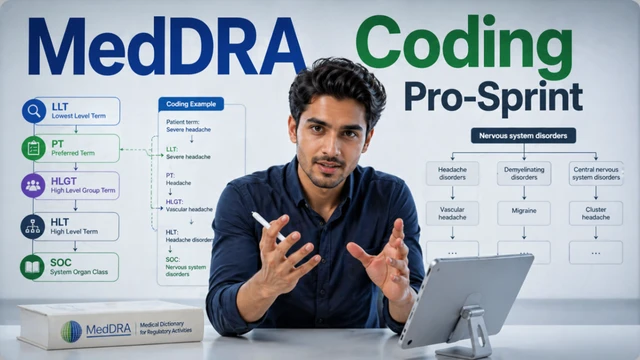
- MedDRA coding: Colleges rarely teach how to code an adverse event to the correct System Organ Class or Preferred Term.
- Safety databases: Tools like Oracle Argus, ArisG, or Veeva Vault are industry standards, yet they're not part of your curriculum.
- Case narrative writing: This is an art – concise, medical, and compliant. It's a make-or-break skill for interviews.
A Step-by-Step Roadmap to Your First PV Job
- Step 1: Learn the Fundamentals – Understand what pharmacovigilance is, key terminologies (ADRs, SAEs, SUSARs), and the drug development process. Free resources from WHO and ICH are a good start.
- Step 2: Master ICSR Processing – Take a dedicated course that teaches you how to intake, triage, enter, and code a case from start to finish. Simulation-based practice is crucial here.
- Step 3: Get MedDRA Certified – Medical coding is a core daily task. A pharmacovigilance course for BPharm that includes MedDRA certification will set you apart.
- Step 4: Build a Portfolio – As you learn, document your work. Create sample case reports, coding exercises, and narratives. Keep them ready to share with recruiters.
- Step 5: Apply Strategically – Target job portals with updated resume, mention your hands-on training and certifications. Many companies like Cognizant, TCS, and IQVIA hire freshers regularly.
Simulation-Based Learning: The Bridge to Industry
Reading about PV isn't the same as doing it. This is where simulation-based platforms come in. They replicate real-world scenarios: you receive mock ICSRs, you triage them, you code with MedDRA, and you write narratives – all under expert guidance. It's like a clinical internship, but accessible from anywhere. After this experience, you can confidently face interviews because you've already done the job.
Build These Skills Now
Programs from ZANE ProEd Academy that directly address the skill gaps discussed above.
How ZANE ProEd's System Prepares You
At ZANE ProEd, we've built a system that mirrors the industry's PV workflow. Our ICSR Case Processing & Triage module takes you through the entire case lifecycle, from receipt to submission. You'll work on diverse case scenarios, learning to spot red flags and make quick decisions. The MedDRA Medical Coding Certification dives deep into the dictionary structure, helping you select the correct term every time. It's not just theory – it's a simulated work environment that turns you into a job-ready professional.
Your Next Move: Check Your Readiness
Ask yourself: Can you process a serious adverse event case right now? Do you know how to code 'myocardial infarction' in MedDRA? If the answer is no, it's time to bridge that gap. Visit our resource hub to assess your current skills and explore how simulation-based learning can change your career trajectory. The first step is awareness – and now you have the roadmap.
Build These Skills Now
Programs from ZANE ProEd Academy that directly address the skill gaps discussed above.
Follow Zane ProEd on Google
Preferred SourceAdd our publication as a preferred source to get the latest clinical research guides, industry updates, and career intel directly in your Google Top Stories & AI Overviews.