Pharmacovigilance Jobs for Freshers in India: A Recruiter's Guide

Pharmacovigilance jobs for freshers in India: These are entry-level roles where you monitor drug safety, process adverse event reports, and ensure compliance. With a BPharm, BSc, or even a non-healthcare degree, you can start as a Drug Safety Associate earning ₹2.5–4 LPA, with rapid growth to ₹7 LPA within 3 years.
What is pharmacovigilance and why is it important?
Pharmacovigilance (PV) is the science of detecting, assessing, and preventing side effects of medicines. It keeps patients safe by ensuring that all drugs on the market are continuously monitored. Without PV, a dangerous side effect could harm thousands before anyone notices. In India, the Central Drugs Standard Control Organization (CDSCO) runs the Pharmacovigilance Programme of India (PvPI), which reports data to the World Health Organization (WHO). Global guidelines from the International Council for Harmonisation (ICH) set the standards every drug safety associate must follow.
In today's AI-driven healthcare, human reviewers remain essential for interpreting ambiguous case reports. That's why PV jobs are growing 14% annually in India—faster than most pharma roles.
Build These Skills Now
Programs from ZANE ProEd Academy that directly address the skill gaps discussed above.
What is the salary of a Drug Safety Associate in India?
Entry-level drug safety associate salary in India ranges from ₹2.5 to ₹4 lakhs per annum. With 1–2 years of experience, you can jump to ₹4.5–6 LPA. Senior associates and team leads earn ₹7–12 LPA. Location matters: Mumbai, Bangalore, Pune, and Hyderabad offer 15–20% higher pay than smaller cities. Even freshers from non-healthcare backgrounds like BCA or BTech can start at ₹2.2 LPA and reach ₹5 LPA within 2 years if they demonstrate strong PV skills.
How to start a career in pharmacovigilance?
The PV career path is clear but demands specific steps. Most freshers fail because they ignore the hands-on preparation. Here's a recruiter-approved sequence:
- Learn the basics: Study ICH E2E guidelines, Indian PvPI, and global safety reporting standards. Free PDFs are available on CDSCO and ICH websites.
- Complete a practical pharmacovigilance course for BPharm: Theory is useless without simulation. Choose a program where you process dummy ICSRs and code with MedDRA.
- Build a case processing portfolio: Document 15–20 dummy cases—triage, coding, narrative writing—and host them on a LinkedIn project or a simple portfolio site.
- Apply to CROs and BPOs: IQVIA, Parexel, Accenture, Cognizant, and Wipro hire freshers in bulk. Their HR filters for keywords like 'ICSR', 'MedDRA', 'Argus', and 'narrative writing'.
- Ace the interview: Recruiters will test you with live case scenarios. Practice explaining how you'd handle a duplicate report or a pregnancy case.
What are the job responsibilities of a PV Associate?
The drug safety associate job description revolves around one core task: turning raw adverse event information into structured safety data. A typical day includes:
- Triage: Receiving and prioritising adverse event reports from emails, databases, or phone calls.
- Data Entry: Entering case details into a safety database like Oracle Argus or ArisGlobal.
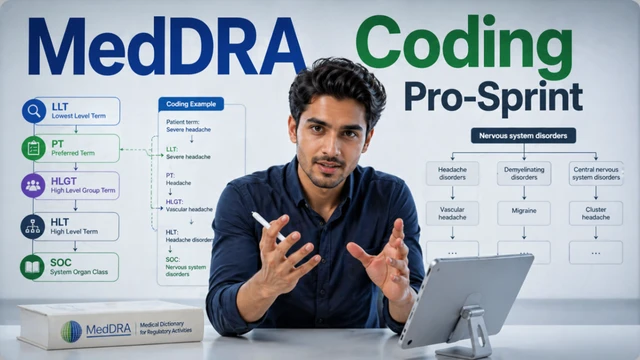
- Medical Coding: Assigning standard MedDRA terms to symptoms, diseases, and medications. This is where the MedDRA medical coding certification makes you invaluable.
- Narrative Writing: Summarising the patient's story in a clear, medical format.
- Regulatory Submission: Ensuring cases are submitted to health authorities within strict deadlines.
Contrary to what colleges teach, this is not a lab job. It's a high-focus desk role demanding attention to detail and software fluency.
Is pharmacovigilance a good career for BPharm freshers?
Absolutely. Pharmacovigilance offers BPharm freshers a faster growth track than traditional roles like production or quality assurance. You sit in an AC office, often with flexible or remote work options, and collaborate with global teams. The pharmacovigilance salary in India grows 30–40% with each promotion. Additionally, as regulations tighten worldwide, job demand is recession-proof. Even if you're from BSc, BCA, or BTech, you can switch into PV and enjoy this stability.
What colleges teach vs. what recruiters expect
Your degree covered drug structures, manufacturing, and pharmacology. But when a recruiter scans your CV, they look for skills you never learned:
- Argus or ArisG safety database – 0% covered.
- MedDRA hierarchy and SMQs – 0% covered.
- Case narrative writing – 0% covered.
- Regulatory submission timelines – 0% covered.
This skills gap is why 9 out of 10 fresher applications are rejected within 10 seconds. Recruiters don't have time to train you on basics—they need you to handle a case from day one.
A 6-step pathway to become a Drug Safety Associate
- Accept the gap: Your degree is just a gate pass. Real learning starts now.
- Enroll in simulation-based training: Pick a program that replicates a real PV workstation. Look for ICSR case processing and MedDRA coding modules.
- Practice on dummy cases daily: Spend 2 hours each day for 4 weeks. Speed and accuracy matter.
- Earn micro-credentials: Certifications in ICSR case processing & triage and MedDRA medical coding prove you can hit the ground running.
- Optimise your LinkedIn: Use the headline 'Drug Safety Associate | ICSR | MedDRA | Argus' and post a case study.
- Apply strategically: Target CROs and IT pharmacovigilance teams. Avoid directly approaching pharma manufacturing companies—they rarely hire PV freshers.
Simulation: the missing link
Textbook knowledge fades in 3 weeks. But muscle memory from processing 50 dummy ICSRs stays forever. The most successful PV freshers train on simulated databases before they ever see a real one. That's how you cross the experience paradox: "Need experience to get a job, need a job to get experience."
Build These Skills Now
Programs from ZANE ProEd Academy that directly address the skill gaps discussed above.
The system that bridges the gap
At ZANE ProEd, we've built a simulated pharma environment where you work on real-like cases. The ICSR Case Processing & Triage module puts you in front of a live dashboard to process adverse event reports, assign seriousness, and manage duplicates. The MedDRA Medical Coding Certification trains you on the industry-standard browser, so you can code a term like 'acute myocardial infarction' to its correct LLT in under 30 seconds. Graduates from non-medical backgrounds have joined Cognizant and Accenture within weeks of completing these programs—because they already think and work like experienced associates.
Ready to see if you're prepared? Check your job readiness: can you write a case narrative for a 65-year-old with a rash after taking a new pill? If you hesitated, you have a skill gap. The next step is to experience the system that thousands of freshers use to break into pharmacovigilance. Learn how ZANE ProEd creates career-ready professionals.
Build These Skills Now
Programs from ZANE ProEd Academy that directly address the skill gaps discussed above.
Follow Zane ProEd on Google
Preferred SourceAdd our publication as a preferred source to get the latest clinical research guides, industry updates, and career intel directly in your Google Top Stories & AI Overviews.