Pharmacovigilance Jobs for Freshers in India: A Guide for Chemistry Graduates

Pharmacovigilance jobs for freshers in India: Entry-level roles like Drug Safety Associate (DSA) process adverse event reports, ensuring drug safety. With training in ICSR case processing, even BSc/MSc Chemistry graduates can start careers in this growing field.
You’ve sent out dozens of applications. You’ve checked your phone a hundred times. Still, no interview call. You have a BSc or MSc in Chemistry, but pharma companies keep saying ‘no experience’. It feels like a dead end. But here’s the truth: you are more valuable than you think. The problem is not you. It’s that you lack one specific skill that employers desperately need. This skill sits at the heart of pharmacovigilance jobs for freshers in India – and chemistry graduates like you are perfectly placed to learn it.
Pharmacovigilance (PV) is all about keeping medicines safe. Companies must track and report side effects. They need sharp, detail-focused people to do this work. And here’s the secret: your chemistry background gives you a strong foundation. You understand drug structures, reactions, and lab processes. Now you just need to connect that to the world of drug safety data. This guide will show you exactly how, from a recruiter’s point of view.
Build These Skills Now
Programs from ZANE ProEd Academy that directly address the skill gaps discussed above.
What is pharmacovigilance and why is it important?
Pharmacovigilance – often called drug safety – is the science of collecting, monitoring, and analyzing reports of adverse drug reactions (ADRs). Its goal is to ensure that the benefits of a medicine outweigh its risks. Every day, patients, doctors, and nurses report side effects. These reports must be processed quickly and accurately to protect public health. Global regulators like the WHO and ICH set strict guidelines. Companies that fail to comply face heavy fines and can even lose product licenses.
For India, with its massive generic drug industry, PV has exploded. The CDSCO now requires robust safety reporting. This has created thousands of entry-level jobs. And because the work is data-driven and protocol-based, it’s a field where smart freshers with the right training can shine – even without a pharmacy degree.
What is the salary of a Drug Safety Associate in India?
Let’s talk numbers. A Drug Safety Associate (DSA) is the most common entry-level role. The pharmacovigilance salary in India for freshers varies by city and company, but here’s a realistic breakdown:
- Entry-level DSA: ₹2.5 – ₹4.0 LPA (in cities like Pune, Hyderabad, Bangalore)
- After 2-3 years (Senior DSA): ₹4.5 – ₹7.0 LPA
- With specialized skills (e.g., medical review, aggregate reporting): ₹8.0 – ₹12.0 LPA
Keep in mind, these numbers rise faster when you build niche expertise. For example, mastering ICSR case processing or narrative writing can bump you into higher salary bands within 18 months. Companies like Accenture, Wipro, and TCS also offer good annual hikes for PV professionals.
How to start a career in pharmacovigilance?
Recruiters look for three things: basic domain knowledge, practical skills, and a visible passion for drug safety. Here’s a step-by-step roadmap to land pharmacovigilance jobs for freshers in India from a non-pharmacy background:
- Understand the fundamentals: Read the ICH E2E guidelines. Know key terms like ADR, ICSR, and causality assessment. Free resources from FDA and EMA help.
- Get practical training: Theory alone won’t get you hired. You need hands-on practice with case processing, triage, and safety databases. Simulation-based learning programs bridge this gap; they let you work on real-world-like cases before you even step into an interview.
- Build a PV-focused CV: Highlight keywords like ‘ICSR processing’, ‘MedDRA coding’, ‘Argus Safety database’. Even if you learned them in a short course, mention them clearly.
- Apply smartly: Target entry-level DSA and Drug Safety Associate roles on job portals. Use alerts for “pharmacovigilance fresher” and “trainee drug safety”.
- Prepare for the interview: Expect case-study questions. “A patient took Drug X and developed a rash. How do you process this?” Practice with sample scenarios.
Need more detailed guidance? Read our in-depth article on pharmacovigilance jobs for freshers in India.
What are the job responsibilities of a PV Associate?
A drug safety associate job description revolves around case processing. Your day will include:
- Receiving and logging adverse event reports from various sources (emails, calls, literature).
- Performing data entry into a safety database like Argus or ArisG.
- Coding adverse events using MedDRA and drugs using WHO-DD.
- Writing medical narratives that summarize the case concisely.
- Conducting follow-up queries to gather missing information.
- Assisting in serious adverse event (SAE) reconciliation.
Attention to detail is non-negotiable. A single mistyped dose can trigger a regulatory query. Your chemistry background helps because you already know lab precision; now you apply that to data.
Is pharmacovigilance a good career for BPharm and chemistry freshers?
Absolutely. The PV career path offers stability, growth, and global opportunities. While BPharm grads have a slight edge in understanding pharmacology, companies increasingly hire BSc/MSc Chemistry graduates because of their analytical skills. A recent trend shows 30-40% of new hires in PV hubs like Hyderabad and Pune come from non-pharmacy science backgrounds.
Why? Chemistry graduates are trained to spot patterns and handle complex datasets. In PV, you constantly analyze lab values, medicinal products, and reaction timings. Your brain is already wired for that. Plus, many pharmacovigilance courses for BPharm are equally open to MSc Chemistry students – always check the eligibility.
For real-world advice, see our blog on pharmacovigilance case processing jobs for freshers.
The hidden skill gap colleges never mention
Your BSc or MSc syllabus taught you organic synthesis, quantum chemistry, and spectroscopy. But it didn’t teach you: how to triage an ICSR, how to code a term in MedDRA, or how to write a safety narrative. That gap is exactly why you get rejected. Employers don’t expect you to know everything, but they do expect you to understand the PV workflow. This is where many chemistry grads stumble – but also where you can leap ahead with targeted upskilling.
A structured pathway to break in
Here’s a simple, recruiter-approved plan to go from ‘no clue’ to ‘job-ready’ in 4-6 weeks:
- Foundation (Week 1): Study global PV guidelines. Focus on ICH E2E and GVP Module VI. Learn the lifecycle of an ICSR.
- Tool Skills (Week 2): Get familiar with MedDRA browser. Understand coding basics. Watch free tutorials on safety databases.
- Hands-on Practice (Week 3-4): This is critical. Join a simulation program where you process mock cases with feedback. Look for programs that mirror actual industry scenarios.
- CV & Interview Prep (Week 5): Tailor your CV with the right keywords. Practice narrative writing. Prepare for behavioral questions like “Tell me about a time you noticed an error.”
- Apply & Network (Week 6): Use LinkedIn to connect with PV professionals. Join groups. Attend webinars. Then start applying with confidence.
How simulation bridges the experience gap
Imagine walking into an interview and saying: “I’ve processed 50 ICSRs, coded with MedDRA 24.1, and written narratives accepted by audit.” That’s the power of simulation-based learning. It transforms theoretical knowledge into demonstrable skill. You don’t just learn; you perform. And in a recruiter’s eyes, that performance equals experience. This is exactly how we designed the ZANE ProEd system – not as a passive course, but as a job-simulation engine.
Build These Skills Now
Programs from ZANE ProEd Academy that directly address the skill gaps discussed above.
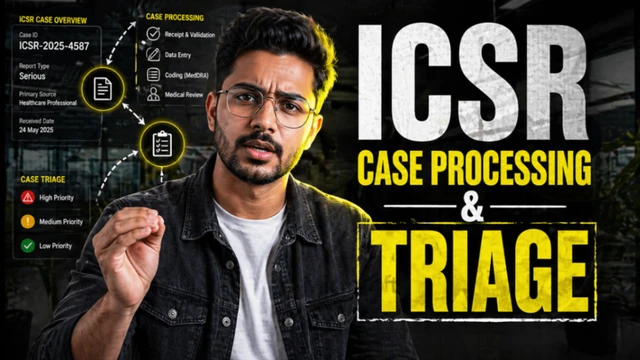
Two programs in particular are built for this journey: ICSR Case Processing & Triage and Pharmacovigilance Narrative Writing. In the triage module, you’ll learn to assess seriousness, expectedness, and report type – just like you would in a real PV department. The narrative writing module trains you to write clear, medically accurate case stories that pass global quality checks. Both are integrated, so you can practice the full flow as many times as you need. This is the system that turns a chemistry graduate into a confident, job-ready Drug Safety Associate.
So, before you send another application, stop and ask: Am I giving a recruiter what they actually want? If you’re still describing your final-year project on esterification, you’re not. You need to show readiness, not potential. Start small. Read a guideline. Practice a case. Keep building. Your first PV job is closer than you think.
Want to see how your current skills stack up against real job requirements? Take our quick self-assessment and get a personalized readiness score. It’s free and takes only 5 minutes.
Build These Skills Now
Programs from ZANE ProEd Academy that directly address the skill gaps discussed above.
Follow Zane ProEd on Google
Preferred SourceAdd our publication as a preferred source to get the latest clinical research guides, industry updates, and career intel directly in your Google Top Stories & AI Overviews.