Pharmacovigilance Jobs for Freshers in India: A Reality Check for BPharm and Allied Health Graduates

Pharmacovigilance jobs for freshers in India refer to entry-level Drug Safety Associate roles that monitor medicine safety. For BDS, BHMS, BAMS, and Nursing graduates, these jobs offer a clear entry into the pharma industry even without prior experience — provided you have practical training in case processing and medical coding.
If you feel stuck with a degree but no job-ready skills, you are not alone. Many allied health graduates in India face the same gap. Colleges teach you anatomy, disease patterns, and clinical diagnosis. But the life sciences industry today demands digital tool fluency, coding knowledge, and regulatory awareness — things your medical degree never covered.
The truth is stark: your degree proves you are qualified, but not yet skilled for the job market. Pharmacovigilance opens a door where your medical background becomes a strength, not a hurdle. This blog busts the myths and shows you exactly how to land pharmacovigilance jobs for freshers in India — without getting trapped in endless loops of rejection.
Build These Skills Now
Programs from ZANE ProEd Academy that directly address the skill gaps discussed above.
What is pharmacovigilance and why is it important?
Pharmacovigilance (PV) is the science of detecting, assessing, and preventing side effects from medicines. Think of it as the safety net of the pharma world. Every drug you study, every patient case you read — PV ensures that medicines remain safe after they reach the market. Global health bodies like the WHO and regulatory agencies like the FDA, EMA, and India's CDSCO mandate PV for all approved drugs. Without it, rare or long-term side effects would go unnoticed, endangering millions. For freshers, this field is growing fast because every drug company needs a safety department.
What is the salary of a Drug Safety Associate in India?
A Drug Safety Associate (DSA) is the most common entry-level role in pharmacovigilance. The pharmacovigilance salary in India for freshers typically ranges from ₹3.0 to ₹5.5 lakhs per annum. With 2–3 years of experience, this can jump to ₹6–8 LPA. Salaries vary by location and company type:
- Tier-1 cities (Mumbai, Bangalore, Hyderabad): ₹3.5–5.5 LPA
- CROs and MNCs often pay higher than Indian generic firms
- Adding niche skills like MedDRA coding or Argus safety database knowledge can increase starting pay by 15–20%
How to start a career in pharmacovigilance?
Starting a PV career path doesn't require a medical license. It demands a specific skill set. Follow these practical steps:
- Learn the basics of pharmacovigilance — understand ICSR, AE reporting timelines, and regulatory guidelines (ICH E6, E2A, E2B).
- Get certified in ICSR case processing and triage — this is the core task of a DSA.
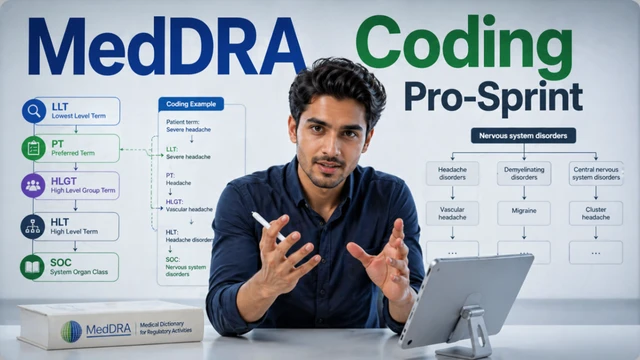
- Master medical coding with MedDRA and WHO-DD. Most companies use these to standardize adverse event terms.
- Train on industry tools like Oracle Argus, ArisG, or AB Cube. Hands-on simulation is key.
- Apply for entry-level roles through job portals, LinkedIn, and pharma company career pages.
What are the job responsibilities of a PV Associate?
The drug safety associate roles and responsibilities revolve around collecting and processing safety data. A typical drug safety associate job description includes:
- Receiving and triaging adverse event reports from patients, doctors, or clinical trials
- Entering case data into safety databases following strict regulatory formats
- Coding medical terms using MedDRA and drug names using WHO-DD
- Writing clear case narratives and medical summaries
- Performing quality checks and managing case timelines
- Ensuring compliance with ICH-GCP and local regulations
It's a detail-oriented desk job that requires strong analytical thinking and a good grasp of medical terminology—exactly what allied health graduates already have.
Is pharmacovigilance a good career for BPharm freshers?
Absolutely. For BPharm graduates, pharmacovigilance is one of the most stable and fastest-growing career tracks. The pharmacovigilance course for BPharm students or graduates is often just a short-term certification, unlike the 6-year commitment of a medical degree. The field offers:
- Clear growth ladder: DSA → Senior DSA → PV Scientist → Team Lead → PV Manager
- Global certification opportunities like ICH good clinical practice and PV professional certifications
- Work-life balance with regular office hours
- Exposure to global drug safety standards and international teams
The skill gap: what colleges don't teach you
Your BDS, BHMS, BAMS, or BSc Nursing program gave you deep clinical knowledge. But employers in pharmacovigilance look for these practical abilities:
- Case processing speed: You must be able to handle 8–12 cases per day with zero errors.
- MedDRA coding accuracy: You need to pick the correct Lowest Level Term (LLT) under time pressure.
- Safety database navigation: Tools like Argus or ArisG require hands-on practice.
- Regulatory writing: Crafting concise medical narratives that meet ICH guidelines.
- Team coordination: Communicating with physicians, pharmacists, and clinical teams.
Most freshers fail interviews because they lack this applied knowledge — not because their degree is worthless. The remedy is targeted, simulation-based training that mimics the real job.
Your step-by-step roadmap to landing a PV job
Here is a practical, no-fluff action plan you can start today:
- Build foundational PV knowledge (2 weeks): Read the ICH E2 guidelines, understand adverse event reporting, and watch free webinars from regulatory bodies.
- Enroll in a simulation-based ICSR case processing program: Look for training that provides real-world cases and live database practice, not just theory videos.
- Get certified in MedDRA coding and triage: Master the standard terminologies used by top pharma companies.
- Create a job-ready portfolio: Include dummy case reports, mock narratives, and a customized pharmacovigilance resume.
- Apply smartly: Target CROs, pharma companies, and KPOs in cities like Hyderabad, Bengaluru, and Pune. Use referrals and LinkedIn networking.
- Keep upskilling: Once you enter, learn aggregate reporting and signal detection to climb faster.
The system bridge: why simulation training works
Reading case processing theory is like learning to operate by reading a textbook — it never prepares you for the real surgery. Simulation training puts you in front of actual Argus-like dashboards, gives you timed case scenarios, and asks you to make the same decisions DSAs make every day. This is exactly how our graduates transition from “overqualified but under-skilled” to interview-ready professionals.
Build These Skills Now
Programs from ZANE ProEd Academy that directly address the skill gaps discussed above.
ZANE ProEd's practical approach for allied health graduates
Our ICSR Case Processing and Triage course takes you from understanding an adverse event report to entering it in a safety database within a few weeks. You learn to triage by seriousness, expectedness, and report type — the exact skills employers test in hiring. The MedDRA Medical Coding Certification trains you on the latest version of the global standard medical dictionary, with hundreds of practice cases. Together, these programs form a complete system that bridges the gap between your degree and the industry’s expectations.
Read more about PV job roles for freshers here. You can also check our step-by-step guide on case processing careers.
Ready to test your skills?
Your degree gave you a strong foundation — now build the practical layer that gets you hired. Try a free sample case or check your current PV knowledge with our quick career readiness quiz. Once you see where you stand, the path forward will be clear.
Build These Skills Now
Programs from ZANE ProEd Academy that directly address the skill gaps discussed above.
Follow Zane ProEd on Google
Preferred SourceAdd our publication as a preferred source to get the latest clinical research guides, industry updates, and career intel directly in your Google Top Stories & AI Overviews.