Recruiters Reveal: 3 GCP Auditor Mistakes That Get Your Resume Deleted

The Silent Rejection: Why Your GCP Knowledge Isn't Enough
We speak with clinical research recruiters every week. They see hundreds of resumes for GCP Auditor roles and tell us the same thing: the pile of candidates with theoretical knowledge is a mile high. The pile of candidates who can actually perform the job? It’s a molehill. Many promising applicants are silently moved to the 'no' pile for reasons they never understand, and it has nothing to do with their degree or the GCP guidelines they’ve memorized.
The hard truth is that in the high-stakes environment of a Contract Research Organization (CRO), hiring managers aren’t just looking for someone who can recite regulations. They’re looking for someone who can apply them under immense pressure, navigate complex human dynamics, and protect a multi-million dollar clinical trial from catastrophic compliance failures. Your theoretical knowledge is just the entry ticket; it’s not the winning hand.
Reality Disruption: Your Certification is Not a Shield
Let’s be blunt: the idea that a certificate guarantees a job is a dangerous myth. Recruiters are trained to see past the paper. They know that most academic programs and online courses teach the 'what' but completely ignore the 'how' and the 'why' in a real-world context. They’ve seen countless candidates who can define a protocol deviation but crumble when asked how they would investigate a pattern of similar deviations across multiple sites.
Build These Skills Now
Programs from ZANE ProEd Academy that directly address the skill gaps discussed above.
This isn't just a challenge for fresh graduates. As we've detailed before, even a strong pharmacy degree isn't enough to land a top-tier clinical research job in today's market. The industry’s expectations have shifted. Global hiring standards now demand demonstrable, practical skills from day one. Your resume gets rejected not because you lack knowledge, but because it shows no evidence of your ability to execute.
The Insider View: What Hiring Managers Actually Screen For
When a CRO hires a GCP Auditor, they are hiring a risk manager. They need someone who thinks several steps ahead. It’s not about finding errors; it's about identifying systemic weaknesses before they result in a Formal FDA Warning Letter. They are screening for a specific mindset, not just a knowledge base.
They’re listening for keywords that signal practical experience: 'risk-based approach,' 'root cause analysis,' 'stakeholder communication,' and 'corrective and preventive action (CAPA) effectiveness.' They want to hear how you’d handle a defensive Principal Investigator or present critical findings to a sponsor who is already behind schedule. This is the operational language of clinical quality assurance, and it’s not taught in textbooks.
Skill Gap Exposure: The University-to-CRO Chasm
The gap between academic learning and industry expectation is massive. It’s the primary reason qualified candidates fail technical interviews. The problem is that candidates are still trying to memorize textbooks instead of understanding real workflows.
- College Output: You can list the 13 core principles of ICH-GCP.
- Industry Expectation: You can explain how a failure in Principle 2.10 (maintaining accurate source documents) at a single site could jeopardize the entire Biologics License Application (BLA) for a new drug.
- College Output: You can define what an Audit Trail is for an Electronic Data Capture (EDC) system.
- Industry Expectation: During a mock audit, you can analyze an audit trail to spot a pattern of data manipulation by a clinical research coordinator and know exactly how to document it without making accusations.
The Audit Simulation Gap™: Why You're Not Interview-Ready
At ZANE ProEd, we call this the Audit Simulation Gap™. It's the critical void between knowing the rules of the game and having the reflexes to win it. Knowing the regulation is passive. Executing an audit is an active, dynamic, and often confrontational process. You can't learn how to handle a tense situation by reading a slide. You can only learn it by being put in that situation.
This gap is where careers stall. It’s why recruiters can tell within five minutes of an interview whether a candidate has only theoretical knowledge. They probe for this gap with scenario-based questions, and when candidates respond with textbook answers, the interview is effectively over.
The GCP Auditor Rejection Audit: 3 Mistakes That Disqualify You
Based on our conversations with hiring managers, here are the three most common—and fatal—mistakes candidates make.
Mistake 1: The 'Checklist' Mindset
A novice auditor uses a checklist as a crutch. A professional auditor uses it as a guide. Simply ticking boxes ('SOPs present? Yes. Training logs complete? Yes.') is worthless. The real skill is in pattern recognition. It's about noticing that while the training logs are complete, the same three staff members have been retrained on the same SOP four times this year. That isn't a training issue; it's a process issue. The checklist won't tell you that, but your critical thinking should. This mindset aligns with the risk-based quality management principles outlined by bodies like the European Medicines Agency (EMA).
Mistake 2: Fumbling Critical Communication
An auditor's findings are useless if they can't be communicated effectively and diplomatically. Interviewers will often ask: "You've found a critical deviation during an audit. How do you present this finding to a world-renowned, and notoriously difficult, Principal Investigator?" A weak answer is, "I would state the facts from the report." A strong answer involves a strategy: "I would first acknowledge their expertise and the site's contributions, then present the objective evidence factually, link it directly to specific CDSCO or other relevant regulatory risks, and frame the discussion around a collaborative solution to protect patient safety and data integrity." One is a robot; the other is a professional.
Mistake 3: Reciting SOPs Without Understanding Risk
Anyone can memorize a Standard Operating Procedure. Very few candidates can explain the 'why' behind it. Why does the SOP for temperature monitoring require checks twice a day instead of once? The answer isn't "because the SOP says so." The answer is about mitigating the risk of compromising a temperature-sensitive biologic, which could invalidate months of patient data and cost millions. A candidate who can articulate the underlying risk is demonstrating an auditor's mindset. They understand that compliance isn't about following rules; it's about managing risk to protect patients, a core tenet of the World Health Organization's research ethics.
Micro-Scenario: The Accountability Log Challenge
Imagine this: You're in the middle of a site audit with a tight deadline. While reviewing the Investigational Product (IP) accountability logs, you spot it. The logs show 50 vials were dispensed, but the patient records only account for 48 being administered. Two are missing. You bring it to the attention of the Site Coordinator, who becomes defensive and dismisses it as a simple 'paperwork typo' they'll fix later. Your debrief with the PI is in 30 minutes. What is your immediate next step?
A textbook-trained candidate freezes. An industry-trained professional knows the exact sequence: 1) Politely insist on reviewing the physical IP inventory immediately. 2) Cross-reference the dispensing records with the shipping invoices. 3) Document the conversation with the coordinator contemporaneously. 4) Prepare to present the objective discrepancy—not the coordinator's attitude—to the PI as a potential protocol deviation requiring immediate investigation.
Bridging the Gap: From Theory to Reflex
How do you develop the reflexes to handle that micro-scenario flawlessly? You can't read your way to that level of competence. You need to be put through hundreds of similar, high-pressure simulations until the correct response becomes second nature. You need a system that forces you to move beyond passive knowledge and into active problem-solving.
This is the core of simulation-based learning. It’s a controlled environment designed to replicate the chaos and ambiguity of a real CRO, allowing you to make mistakes, get feedback, and build the mental models of an elite GCP Auditor without risking a real clinical trial.
Build These Skills Now
Programs from ZANE ProEd Academy that directly address the skill gaps discussed above.
Integrating into the ZANE ProEd System
Building these reflexes is not about a single course; it's about integrating into a complete career development system. Our GCP Audit & Compliance Crash Course is engineered specifically to close the Audit Simulation Gap™. It’s not a lecture series; it's a gauntlet of real-world scenarios, mock audits, and CAPA-drafting workshops that force you to apply regulations under pressure.
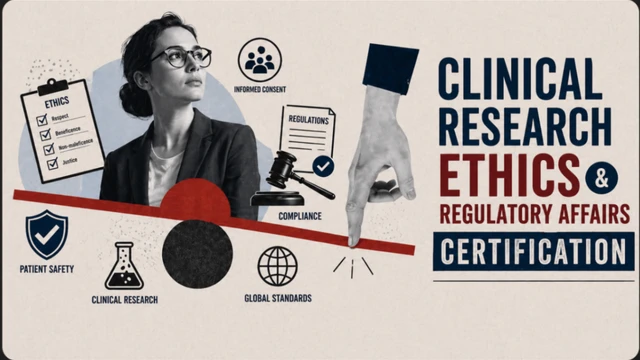
This practical training is built upon the strategic foundation provided by our Clinical Research Ethics & Regulatory Affairs Certification. This program instills the deep understanding of the 'why' behind the rules, ensuring you never make the mistake of reciting SOPs without comprehending the profound patient safety and data integrity risks they mitigate. Together, they form a system designed to transform you from a knowledgeable candidate into a sought-after professional asset.
Start Thinking Like an Auditor Today
The next time you apply for a GCP Auditor role, your resume won't be judged on the knowledge you claim to have, but on the problems you can demonstrate you're ready to solve. Stop collecting certificates and start building capabilities. Explore the system that develops the practical skills and strategic mindset that hiring managers are desperately searching for.
Build These Skills Now
Programs from ZANE ProEd Academy that directly address the skill gaps discussed above.
Follow Zane ProEd on Google
Preferred SourceAdd our publication as a preferred source to get the latest clinical research guides, industry updates, and career intel directly in your Google Top Stories & AI Overviews.