Regulatory Affairs Career Path in India: A Guide for Chemistry Graduates

Regulatory Affairs Associate: The regulatory affairs career path in India typically starts as an Associate, focusing on documentation. With experience in dossier submissions like CTD/eCTD and knowledge of CDSCO guidelines, you can advance to Specialist, Manager, and eventually Director, overseeing global regulatory strategies for pharmaceutical products.
If you have a BSc or MSc in Chemistry, you might feel stuck. You understand complex chemical reactions, but the corporate world seems to speak a different language. This is especially true when you look at the regulatory affairs career path in India. It's a stable, high-growth field, but the entry barrier feels massive for freshers.
You see job descriptions asking for experience you don't have, and interview questions feel impossible to answer. This gap between your college syllabus and industry expectations can crush your confidence. You're not alone in feeling this way.
Build These Skills Now
Programs from ZANE ProEd Academy that directly address the skill gaps discussed above.
This guide is a clear, step-by-step roadmap. It's designed specifically for Chemistry graduates to help you understand this career, build the right skills, and crack interviews with confidence in a highly competitive Indian market.
What does a Regulatory Affairs Associate do?
A Regulatory Affairs (RA) Associate is like a bridge between the pharmaceutical company and government health authorities, like the CDSCO in India. Their main job is to ensure that a company's products (medicines, medical devices) meet all legal and scientific requirements.
The regulatory affairs job description for a fresher typically includes these daily tasks:
- Preparing Dossiers: You will collect and assemble all the technical data about a drug into a specific format called a dossier. This includes information on the drug's quality, safety, and effectiveness.
- Checking for Compliance: You'll review documents, labels, and marketing materials to make sure they follow all the rules and regulations of the country where the product will be sold.
- Submitting Applications: You help prepare and submit applications to health authorities to get approval for new drugs or to make changes to existing ones.
- Maintaining Records: Keeping detailed, accurate records of all submissions, approvals, and communications with regulatory bodies is a critical part of the job.
Think of it this way: your chemistry knowledge helps you understand the 'what' (the drug's properties), while regulatory affairs teaches you the 'how' (how to get it legally approved and to the market).
What is the salary of a Regulatory Affairs Associate in India?
Salary is a major factor for any fresher. The regulatory affairs associate salary in India is competitive and grows steadily with experience. It's a field that rewards expertise.
Here’s a realistic breakdown:
- Fresher (0-1 year experience): As a trainee or Associate, you can expect a starting salary between ₹2.5 Lakhs to ₹4.5 Lakhs per annum. This can vary based on the city (Mumbai, Hyderabad, and Bangalore often pay more) and the size of the company (MNCs vs. domestic pharma).
- Junior Executive (2-4 years experience): Once you have a few years of experience, your salary can increase to ₹5 Lakhs to ₹8 Lakhs per annum. At this stage, you are handling submissions more independently.
- Senior Executive / Assistant Manager (5+ years experience): With significant experience, especially in handling international markets, your salary can range from ₹9 Lakhs to ₹15 Lakhs per annum and beyond.
The key to salary growth is skill. The more you know about different countries' regulations and complex submissions, the more valuable you become.
How to get into regulatory affairs without experience?
This is the biggest challenge for freshers. Companies want experience, but you need a job to get experience. It's a classic problem, but you can overcome it with a smart strategy.
- Build a Strong Foundation: Don't just rely on your college notes. You need to understand the drug development process, from discovery to market. Learn key terms like IND (Investigational New Drug), NDA (New Drug Application), and the different phases of clinical trials.
- Master the Basics of Regulations: Start with India's Drugs and Cosmetics Act, 1940. Then, learn about international guidelines from bodies like the ICH (International Council for Harmonisation). Knowing these basics is a huge advantage in interviews.
- Get Certified with Practical Skills: A generic degree is not enough. A good regulatory affairs course for freshers will teach you practical skills like how to prepare a dossier. This proves to employers that you are serious and have job-ready knowledge.
- Highlight Transferable Skills: Your Chemistry degree gave you important skills. On your resume, focus on your attention to detail, analytical abilities, and experience with documentation (like lab reports). Frame these as skills needed for regulatory compliance.
Instead of just saying "I am a Chemistry graduate," say "My Chemistry background gave me a strong foundation in analytical data review, which is essential for preparing the Quality (Module 3) section of a drug dossier."
What is CTD/eCTD in drug registration?
This is a very common interview question. Understanding CTD eCTD submissions shows you have done your homework.
CTD stands for Common Technical Document. It is a standard format for organizing the application dossier that a pharmaceutical company submits to regulatory authorities. Before the CTD, every country had its own format, which was very inefficient.
The CTD is organized like a pyramid into five modules:
- Module 1: Administrative Information (e.g., application forms for a specific region like India).
- Module 2: Summaries (Overviews of the entire dossier).
- Module 3: Quality (This is where your chemistry knowledge is critical! It contains data on the drug's chemical properties, manufacturing process, and stability).
- Module 4: Non-clinical Study Reports (Animal studies).
- Module 5: Clinical Study Reports (Human trials).
eCTD is the electronic Common Technical Document. It is simply the electronic version of the CTD. Instead of submitting huge stacks of paper, companies now submit everything electronically. It is the standard for submissions in most major markets.
What skills are required for regulatory affairs?
To succeed in a regulatory affairs career, you need a mix of technical knowledge and soft skills. Employers look for candidates who have both.
Technical Skills:
- Knowledge of Regulations: Deep understanding of the CDSCO registration process, Schedule Y, and other Indian guidelines. Knowledge of international regulations (US FDA, EMA) is a big plus.
- Dossier Preparation: Practical knowledge of how to compile and review CTD/eCTD modules.
- Scientific Writing: Ability to write clear, concise, and accurate technical documents.
- Computer Proficiency: Familiarity with MS Office and submission software/portals.
Soft Skills:
- Attention to Detail: A single mistake in a dossier can cause major delays and financial loss. You must be extremely meticulous.
- Communication Skills: You need to communicate clearly with scientists, managers, and government officials.
- Project Management: You will be handling multiple projects and deadlines at the same time.
- Problem-Solving: When a regulator asks a tough question, you need to be able to analyze the problem and find a solution.
The Gap Between Your Degree and The Job
Your MSc in Chemistry taught you about spectroscopy, chromatography, and synthesis. You can probably explain complex molecular structures. But in a regulatory affairs interview, they will ask:
"How would you respond to a deficiency letter from the CDSCO regarding an out-of-specification impurity result in your stability testing data?"
This is the gap. College teaches you the science. The industry needs you to apply that science within a strict legal framework. They don't just want to know *what* the impurity is; they want to know how you will document it, justify its presence, and prove the product is still safe according to the law.
Your Step-by-Step Roadmap to a Career in RA
Feeling overwhelmed? Don't be. Here is a clear path to follow.
Step 1: Solidify Your Core Knowledge. Go beyond your syllabus. Spend time learning the stages of drug development and the role regulatory affairs plays in each stage.
Step 2: Learn the Regulatory Language. Understand key acronyms and processes. Know the difference between a New Drug Application (NDA) and an Abbreviated New Drug Application (ANDA). Learn about Good Manufacturing Practices (GMP). For more on related quality roles, see our guide on QA/QC pharma jobs.
Step 3: Gain Practical Dossier Experience. This is the most important step. Find a program that doesn't just teach you theory but makes you actually prepare parts of a dossier. This is the experience employers are looking for.
Step 4: Rebuild Your CV. Rewrite your CV to focus on RA skills. Instead of listing lab techniques, list skills like 'Data Analysis', 'Technical Documentation', and 'Regulatory Guideline Research'.
Step 5: Prepare for Scenario-Based Interviews. Practice answering questions that start with "What would you do if...". These questions test your problem-solving ability, not just your memory.
The Bridge from Theory to Confidence
Reading about regulations online is not enough. You can't learn how to swim by reading a book about it. The same applies here. The only way to build real confidence for your interviews is by doing the actual work that an RA Associate does.
This is where simulation-based learning comes in. It’s a system where you work on real-world case studies and projects, like preparing a mock CTD Module 3 or responding to a query from a health authority. This is how you bridge the massive gap between being a student and becoming a professional. If you're also exploring other data-focused roles, our guide on pharmacovigilance jobs for chemistry freshers can be helpful.
Build These Skills Now
Programs from ZANE ProEd Academy that directly address the skill gaps discussed above.
A System to Build Job-Ready Skills
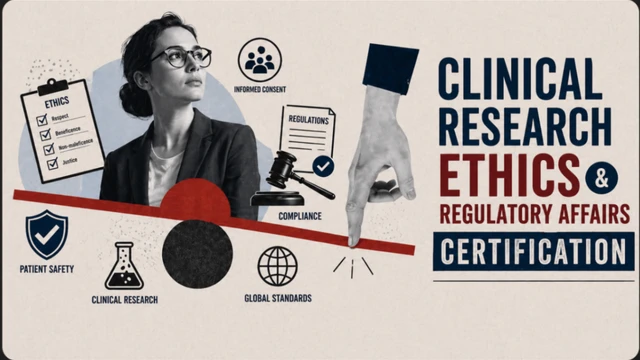
At ZANE ProEd, we have built a complete system to turn freshers into confident professionals. Our Clinical Research, Ethics & Regulatory Affairs Certification program is not just another course; it's a job-readiness system.
You won’t just listen to lectures. You will work through simulations that mirror the exact challenges you will face in your first job. You will learn how to navigate the complex documentation and compliance checks required by agencies like the CDSCO. This hands-on approach is designed to give you the practical experience that Indian pharma companies demand.
Our goal is to equip you with a toolkit of skills and experiences so you can walk into any interview and prove you can do the job from day one. We believe in building confidence through capability.
Are You Ready for a Real-World Challenge?
Stop feeling unprepared. It's time to move from theoretical knowledge to practical application. The regulatory affairs career path in India is waiting for skilled professionals.
See how your current skills compare to what top pharmaceutical companies are looking for. Check your job readiness and understand exactly what you need to do to land your first role in Regulatory Affairs.
Build These Skills Now
Programs from ZANE ProEd Academy that directly address the skill gaps discussed above.
Follow Zane ProEd on Google
Preferred SourceAdd our publication as a preferred source to get the latest clinical research guides, industry updates, and career intel directly in your Google Top Stories & AI Overviews.